
THE APEX TIMES
49ers’ Morning Report Highlights Lessons From Joint Practice With Titans
San Francisco’s latest practice recap centers on what the team is evaluating against a live opponent as training camp work pushes into its next phase.
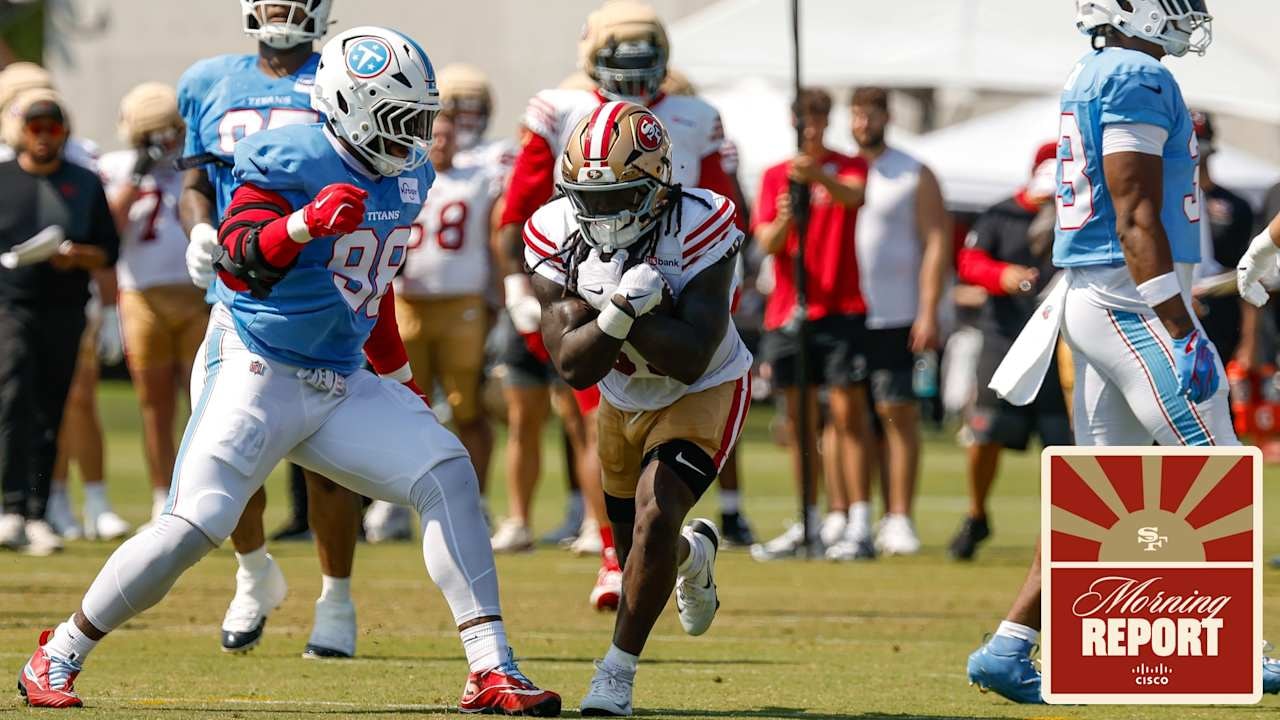
In its Wednesday morning report, the San Francisco 49ers broke down takeaways from a joint practice against the Tennessee Titans, a common offseason setting used to test preparation beyond closed drills. The report frames the session as more than a typical walkthrough, emphasizing how live tempo, positioning, and situational execution can expose both strengths and gaps in camp fundamentals.
Joint practices also tend to compress the distance between “practice plan” and “game plan.” For the 49ers, the internal emphasis of this kind of work is usually about how quickly players can process pre-snap looks, adjust routes and protections on the fly, and sustain execution when the other sideline is running its own system at real speed. The morning report’s focus reflects that evaluation mindset.
Beyond the core starters, joint work is often where coaching staffs get clearer visibility on the depth chart. The 49ers’ recap language, as presented in the team’s report, points to camp’s continuing roster-building priorities, including how second units handle moments that resemble the margins of regular-season football.
Defensively, the same principle applies, as one unit’s calls meet an opposing offense that is also trying to sharpen its reads. A practice matchup like this is typically used to see whether assignments hold under pressure, whether coverage rules are consistent across groups, and whether communication remains sharp when the cadence shifts. The report’s emphasis on takeaways underscores that these details are what matter most at this stage.
Special teams and situational reps are another key reason teams treat joint practices as must-watch moments, even when the session does not produce the same headline outcomes as a preseason game. Training camp is where those units build repeatability, and a joint practice offers a different look than team-only work, which can matter for timing on returns, coverage lanes, and execution during constrained opportunities.
What to watch next for San Francisco is whether the themes from the joint practice show up again in subsequent practices, particularly in the areas the morning report highlights. As camp continues, the gap between evaluation and refinement closes fastest for the players who can consistently carry what they learn from live periods into the next day of work.
Why It Matters
- Joint practices help NFL teams compress teaching and evaluation by putting schemes into contact, which can accelerate corrections during training camp.
- For teams building depth behind the starters, live reps against a different coaching style can clarify who is ready to handle situational responsibilities.
- The takeaways from these sessions often indicate which fundamentals coaching staffs prioritize during the next practices and any remaining preseason work.
- Defensive and special-teams units also benefit from the opponent context, which can expose communication and execution issues earlier than standard walkthroughs.
Key Facts
- The San Francisco 49ers published a Wednesday morning report summarizing takeaways from a joint practice with the Tennessee Titans.
- The report is framed as a camp evaluation exercise against a live opponent rather than only closed-team work.
- The joint practice format supports assessment of both starters and depth-chart contributors under faster, more game-like conditions.
- The 49ers’ recap is positioned as part of the team’s ongoing training camp process as the schedule progresses.