
THE APEX TIMES
49ers TE plans in focus as Jake Tonges’ $8 million deal adds another option in 22-personnel sets
San Francisco’s tight end group is being reshaped around the demands of frequent two-tight-end looks, with Jake Tonges viewed as a receiving complement as George Kittle’s return looms.
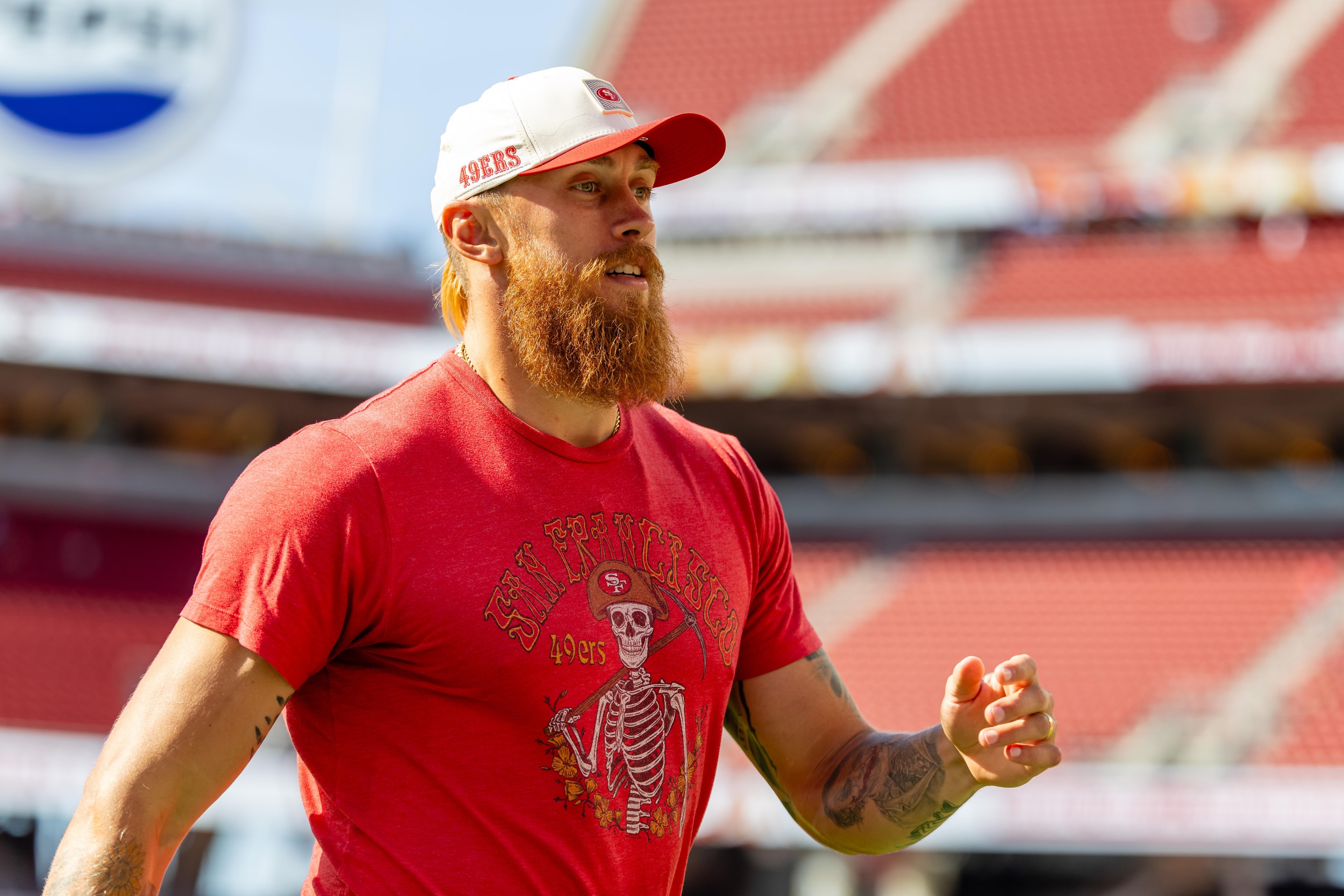
San Francisco’s tight end situation is getting fresh attention in the 2026 preseason build-up, with the 49ers highlighting how the roster could function in the muscle-and-mismatch formations the team has relied on for years. In their Monday news roundup, Yahoo Sports framed the upcoming interest around George Kittle, while also connecting the broader tight end plan to the addition of Jake Tonges, who the report described as signing a $8 million contract with the 49ers.
The central tactical idea is that the 49ers run a lot of 22-personnel. That means lineups built around two tight ends on the field, typically designed to create flexibility in the run game and to produce coverage questions in the passing game. In that framework, the report characterized Tonges as a “prototypical receiving tight end,” suggesting the team sees him as a reliable target option when the offense stays in two-tight-end personnel.
At the same time, the same report pointed to another role on the depth chart, describing Farrell as a tight end known for his blocking. Taken together, the idea is that San Francisco can keep multiple tight end skill sets active on the same play-calling canvas: one player for route running and hands, another for physicality at the line of scrimmage. For fans, that translates into a simpler visual picture of what the offense wants, even if the snap-to-snap assignments still vary by formation.
Tight ends are often asked to do more than just catch passes, and the 49ers’ frequent use of two-tight-end looks is a reminder of that. Blocking tight ends can influence protections, create lanes, and help sustain the run-game rhythm. Receiving tight ends can compress zones, stress linebackers, and win single coverage when the defense settles into a coverage shell that assumes the ball is being moved through other channels.
While the report emphasized the fit and the “full-circle” feeling tied to Tonges, it also implicitly underscored why Kittle’s presence matters to the group. Kittle’s reputation as a high-end tight end has typically made him more than a role player in the 49ers’ offensive identity, and the phrasing in Yahoo’s roundup indicates that the team’s staff and supporters will be watching for how that dynamic blends with Tonges’ receiving profile.
What to watch next, especially in the early preseason context, is how often San Francisco deploys two-tight-end sets when the ball is in motion and how the staff balances receiving opportunities against blocking priorities. If Tonges is used in routes that force linebackers to cover laterally, it would support the premise that his skill set is being tailored to the offense’s 22-personnel frequency. If Farrell is repeatedly tasked with physical work near the line, it would reinforce the intended division of labor inside the tight end group.
As with any training-camp story, some details may be fluid depending on how reps shake out from day to day. Because the Yahoo Sports item appears to be part of a paywalled or condensed news package, readers should treat the specific contract figure and role descriptions as report-based information and confirm any additional details through primary team communications or subsequent coverage. Still, the underlying roster logic described in the roundup is clear: San Francisco wants multiple tight ends who can support its two-tight-end identity without sacrificing versatility.
Why It Matters
- Two-tight-end formations can shape run-game efficiency and passing-game matchups, so additions that fit 22-personnel can affect overall offensive consistency.
- If Tonges’ receiving profile is reflected in practice usage, it would expand the offense’s options when teams defend the run with heavier fronts.
- A blocking-focused tight end alongside a receiving tight end can help San Francisco keep multiple threats on the field without changing personnel.
- Kittle’s return, as referenced in the roundup, suggests a spotlight on how the team manages roles among multiple tight ends rather than relying on one primary option.
Key Facts
- Yahoo Sports’ San Francisco 49ers roundup connects the tight end group to the team’s frequent 22-personnel usage, meaning two-tight-end formations.
- The roundup described Jake Tonges as a receiving tight end and said he signed with the 49ers for $8 million.
- The roundup also described Farrell as a tight end known for blocking, framing a complementary skill-set pairing.
- The same roundup indicated that interest will focus on George Kittle’s return to the on-field mix.
- The central roster-building concept presented is dividing responsibilities in two-tight-end sets between receiving and blocking.