
THE APEX TIMES
49ers weigh how to split the backfield between Christian McCaffrey and rookie Kaelon Black in 2026
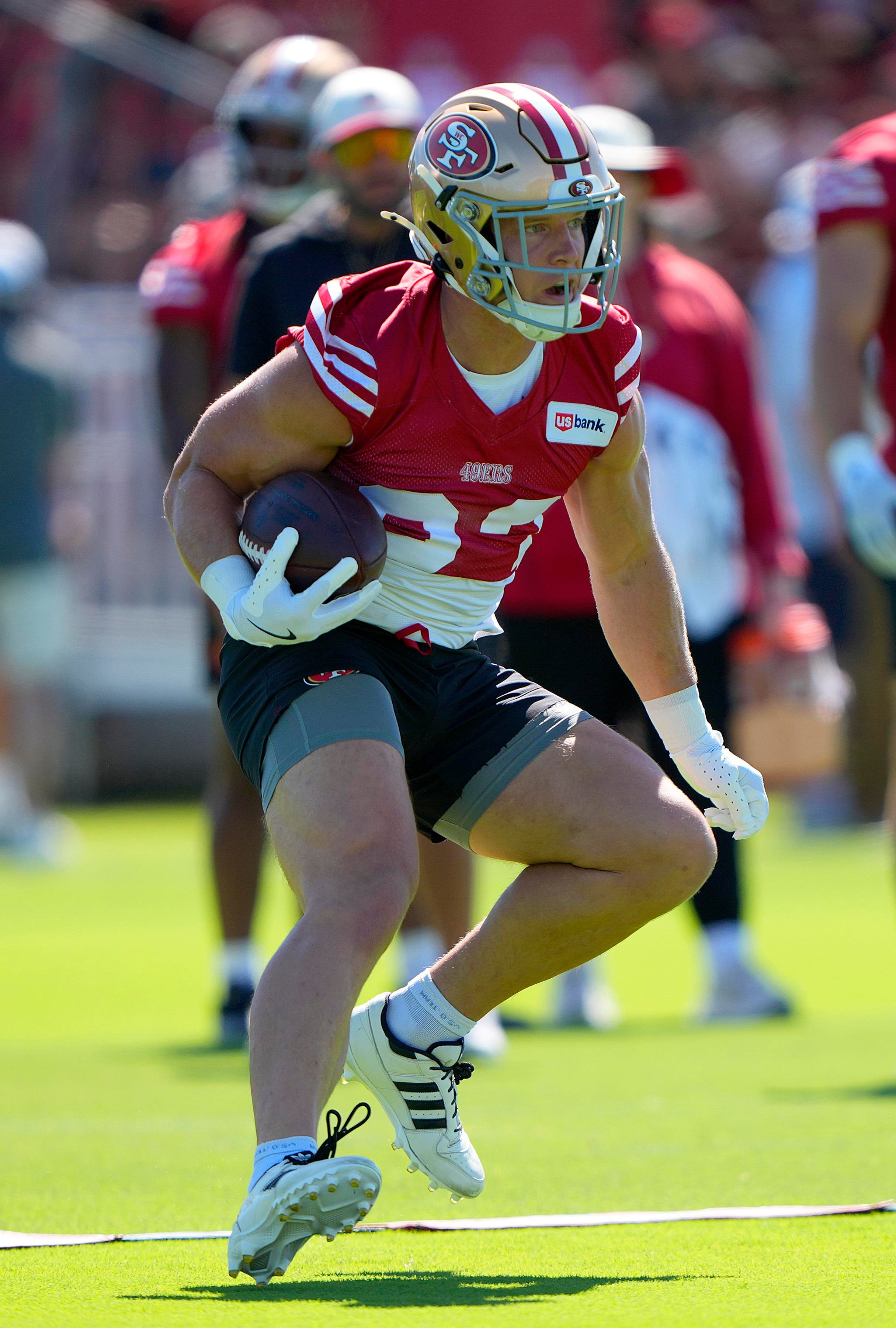
With Christian McCaffrey expected back early in the 2026 season, the 49ers’ running-back rotation is set to be a mix of proven production and a young talent getting early chances.
The 49ers’ 2026 offense is likely to turn on a simple question in the trenches: how should the workload be divided in a backfield that features Christian McCaffrey and now adds rookie Kaelon Black to the mix. McCaffrey is one of the league’s most versatile running backs, and his presence tends to define tempo, usage patterns, and play calling. With Black arriving as a promising younger option, the team’s coaching staff faces the practical problem of maximizing value from both skill sets without overworking any one player.
Yahoo Sports framed the situation around two advantages for San Francisco. First, it pointed to McCaffrey being available for Week 1 of the 2026 season. Second, it highlighted the appeal of trying a “nice rookie” in Black, suggesting the organization sees upside in what a new runner can bring to the rotation. In other words, this is not just about replacing snaps, it is about blending a clear lead role with carefully managed opportunity for a rookie.
Last season’s context matters for how the 49ers can think about distribution. Yahoo Sports referenced Brian Robinson Jr., who was the running back behind McCaffrey last year, and described his addition as a “significant upgrade.” That matters because it implies the team already has at least one reliable secondary option who can handle meaningful carries, receptions, and protection responsibilities when McCaffrey is off the field or in different game scripts.
In that framework, a workload split in 2026 is likely to become matchup-driven. McCaffrey, because he is both a runner and a receiver, generally draws defensive attention that changes the shape of run fits and coverage responsibilities. Black’s role, by contrast, would be expected to evolve as the season progresses, with the team using him as a fresh body and a different running style where defenses offer it. The key is whether San Francisco keeps McCaffrey’s touches concentrated enough to preserve efficiency or spreads carries and screens in a way that still lets the offense stay rhythm-driven.
The broader risk for any rotation is that trying to do everything with multiple backs can dilute efficiency. If the team leans too heavily into distributing snaps without a clear identity for each role, it can lead to smaller gains and less consistent third-down conversion chances, especially if the offense has to simplify protections or route concepts. The 49ers, though, have a structure that typically supports clear assignment football, and that makes a planned split more plausible than an improvisational one.
What to watch next is how the 49ers handle usage patterns in early regular-season games. Even without specific snap counts in the current reporting, preseason and opening-week play-calling will usually reveal priorities: whether McCaffrey leads by volume, whether the coaching staff uses Black to change pace or formation, and whether Robinson remains the stable “bridge” back between their top option and the rookie.
For now, this is a role-design story rather than a transaction story. The strongest confirmed elements in the current reporting are the presence of McCaffrey as an early-season availability anchor and the addition of Kaelon Black as a rookie opportunity, with Brian Robinson Jr. identified as the secondary back behind McCaffrey last year. Still, the actual balance of carries, targets, and situational duties will only be settled once the season begins and the snaps show their own logic.
Why It Matters
- A backfield workload decision affects more than carries, it changes pass protections, third-down spacing, and how defenses commit to stopping the run.
- If McCaffrey’s role is protected through workload management, the 49ers can keep his efficiency while still extracting value from a rookie.
- A successful rookie integration can expand offensive options and reduce predictability in late-game situations.
- If the snap split is mishandled, efficiency and rhythm can drop, especially in third-down and red-zone plays.
Key Facts
- Yahoo Sports discussed the 49ers’ potential 2026 backfield plan around Christian McCaffrey and rookie Kaelon Black.
- The report said McCaffrey is expected to be available for Week 1 of the 2026 season.
- The same discussion identified Brian Robinson Jr. as the running back behind McCaffrey last year.
- Yahoo described Robinson’s performance role as an “upgrade,” and suggested Black could be even better.
- The core theme is how San Francisco would divide snaps and responsibilities between veterans and a rookie in 2026.