
THE APEX TIMES
The Brewers’ high-leverage reliever picked up his 10th win, making him the first pitcher in Major League Baseball to reach double digits for victories this season.
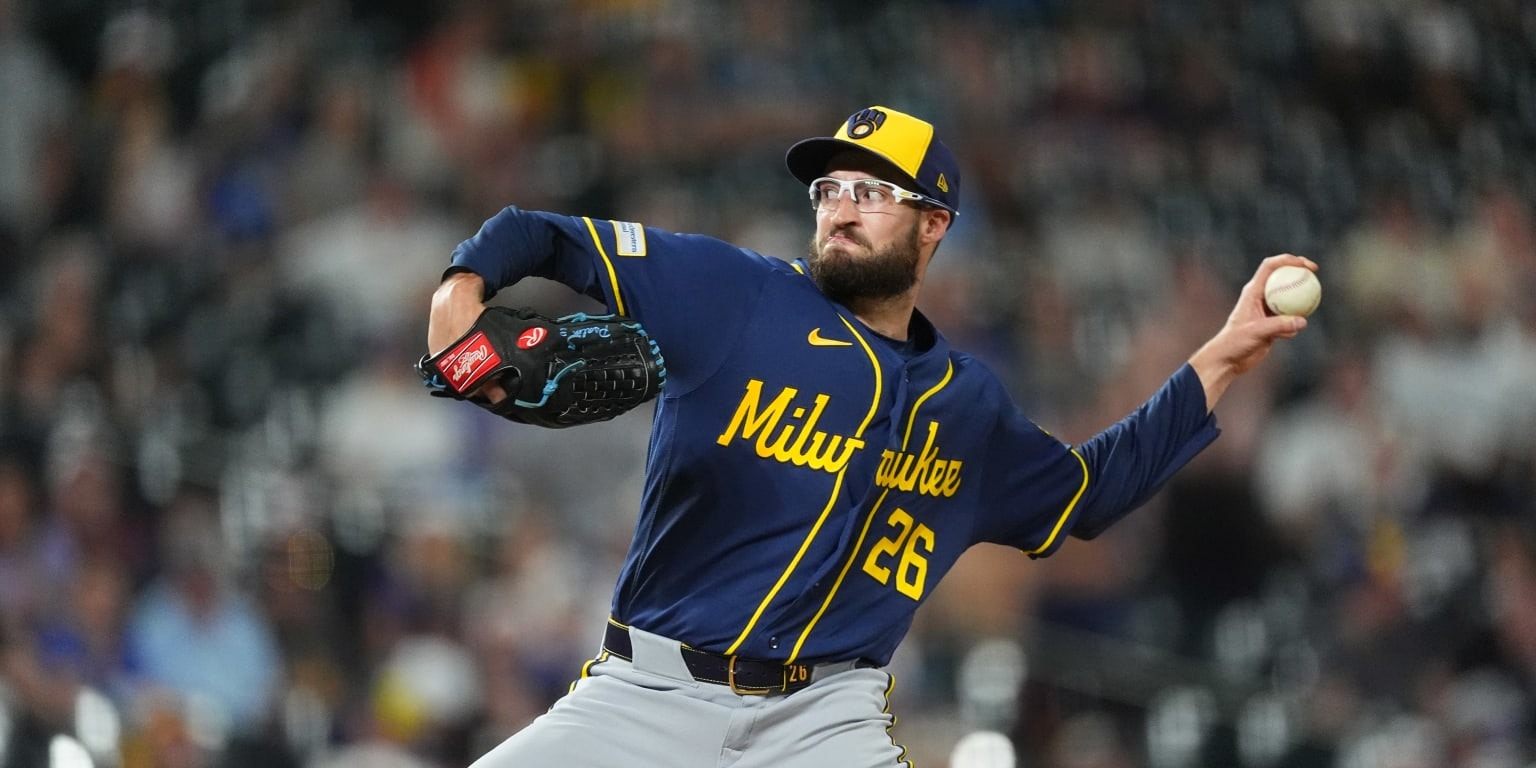
Aaron Ashby did it in the seventh inning, and the record came with it. The Brewers reliever, already one of the league’s most reliable arms in tight games, earned his 10th win in 2026 on Tuesday, becoming the first Major Leaguer to reach double-digit victories. With the Brewers holding a 1-0 lead when he entered, Ashby turned a narrow advantage into a creditable, season-defining milestone.
Ashby’s win total is especially notable because of where it typically comes from. Pitchers do not accumulate wins the way they once did in an era defined by bullpen specialization and more frequent managerial pitching changes. Yet Ashby’s results have placed him in the “decision” window often enough to lead the majors in wins, and the MLB record underscores that his success is not just limited to saves or innings pitched.
The numbers, as reported by MLB, are striking. Ashby entered Tuesday boasting a 10-0 record and a 2.86 ERA, and he reached 10 victories by taking over with Milwaukee up 1-0 and preserving the lead. That combination, winning at an elite rate while maintaining run prevention, is what separates a typical late-inning setup man from the kind of pitcher who is effectively manufacturing wins for a team when games are settled by a single run.
From a game-planning perspective, the Brewers have been able to leverage Ashby in the moments that matter most. Entering in the seventh with a one-run lead generally indicates a high-leverage situation, the kind in which the team’s margin for error is thin and each at-bat can swing the outcome. When a pitcher is both trusted in those circumstances and produces results, the advantage is not only on the scoreboard, it also shapes the way hitters and lineups are managed over the course of a week.
Ashby’s achievement also provides a clean snapshot of how standout relievers can influence a team’s season narrative. A 10-0 start for a pitcher is rare in any role, but it is particularly uncommon for a reliever, whose appearances do not always line up with the timing of the lead change. MLB’s note that he is the first pitcher in the majors to reach 10 wins adds weight to the idea that Milwaukee’s bullpen has been a stabilizing force rather than a revolving set of options.
For the Brewers, the record is a marker of both performance and dependability. A one-run game is a different environment than a multi-run buffer, and the ability to keep the opponent scoreless through key innings has direct downstream value, including how often the bullpen needs to be used and how comfortable the team can be with late-game matchups. Even when the rest of the rotation or lineup experiences ups and downs, a high-performing late arm can help protect the season’s trajectory.
Looking ahead, Ashby’s next task will be maintaining his effectiveness after a milestone of this kind can draw extra attention from opponents. Opposing teams tend to scout record-setting performances more aggressively, and managers may adjust their plans around the pitcher’s most common situations. Still, the foundation is already clear: a 10-0 start, a sub-3.00 ERA at the time of the record, and a role defined by late leverage have combined to put him at the top of MLB’s win list.
The Brewers’ season will continue to be shaped by who can execute when games are tight, and Ashby’s record is a sign that Milwaukee has found that edge in one of baseball’s most volatile spots. Whether he adds another win, another scoreless stretch, or both, the central question is the same: can the league’s leading reliever keep turning one-run leads into victories at the same pace?