
THE APEX TIMES
Aaron Donald says he knew two weeks earlier he wanted to return to the Rams
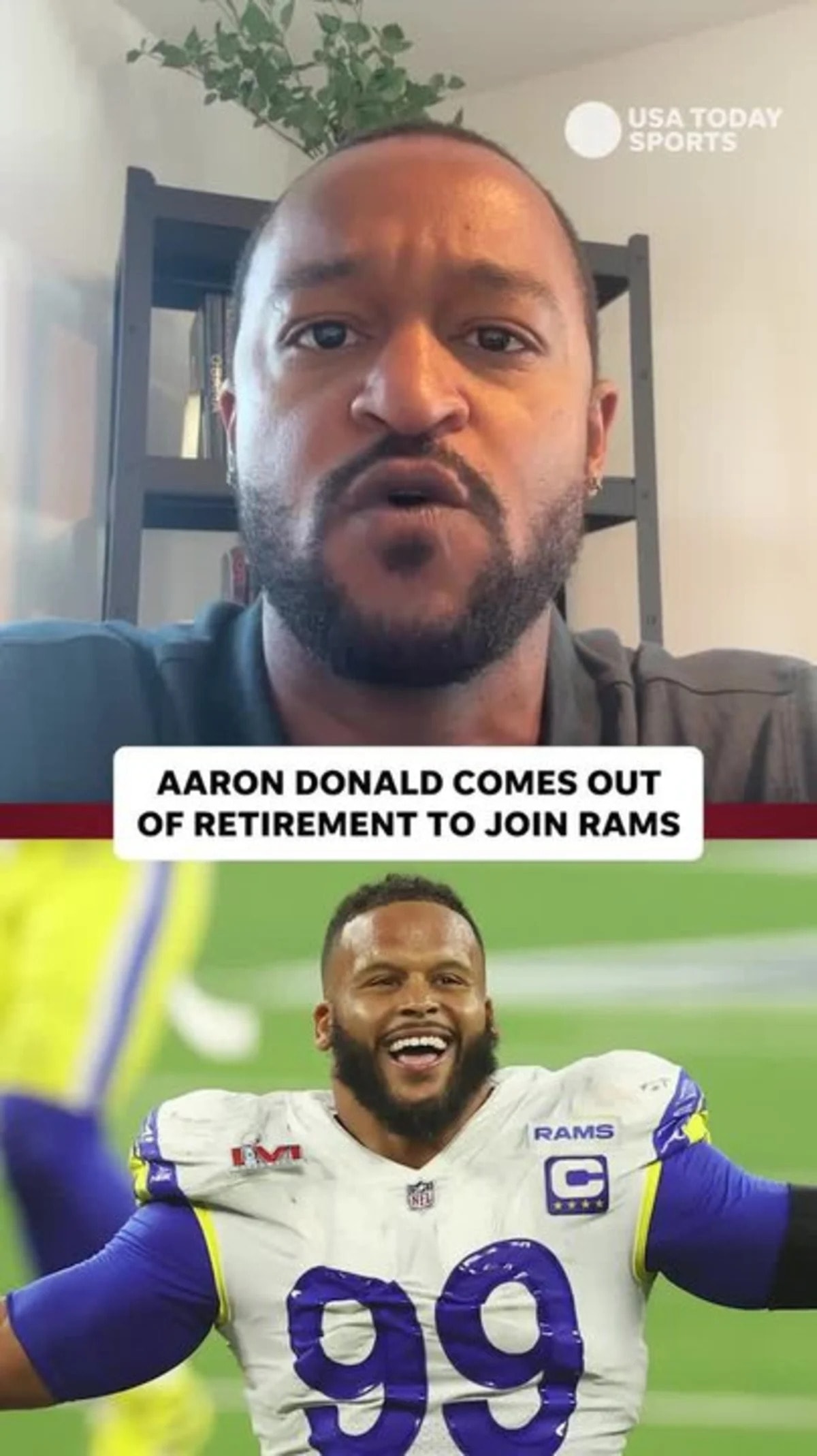
Speaking to the media on Sunday, Aug. 30 for the first time since ending his retirement, Los Angeles defensive tackle Aaron Donald described the decision timeline that led to his comeback.
Aaron Donald is back with the Los Angeles Rams, and in his first public remarks since reversing his retirement, he said the pull to return began well before the team announced it. Donald told reporters that he knew he wanted to come back roughly two weeks earlier, a window that suggests a short, focused decision period rather than a late, improvised change of mind.
Donald’s return, which the Rams made official with his presence around the team, immediately reshapes expectations around the interior of Los Angeles’ defense. The defensive tackle position sits at the center of most defensive game plans, because it influences whether offenses can consistently sustain blocks and whether the rush can reach the quarterback through the middle. Donald’s presence typically alters how opponents must scheme, including how they account for double-teams and how they protect against interior penetration.
In the context of an NFL offseason and the start of the regular-season grind, Donald’s comeback also underscores the unique weight of his reputation. He has been one of the league’s most dominant interior disruptors over multiple seasons, and his retirement exit had created an offseason storyline that his return would immediately address. The comments on Aug. 30 frame this not as a sudden re-entry, but as a deliberate choice made while Donald weighed whether he could still contribute at a high level.
The timing matters, too, because a return from retirement is more than a sentimental milestone. Integrating an elite player into team communication, tempo, and scheme protections takes time for everyone involved. Donald’s public acknowledgment of the timeline helps explain why the Rams’ process to get him back could include both football preparation and logistical alignment, even as he returned when the season outlook was already taking shape.
Rams fans and the franchise’s defensive staff now have a clearer picture of the decision timeline. For the team, it means planning can shift from “without” to “with” Donald in mind when designing run fits, pass-rush responsibilities, and coverage support. For opponents, it creates a more difficult baseline because opposing offensive lines must adjust to a player who can consistently win in confined spaces.
What to watch next is how the Rams deploy Donald in practice and early-season reps, particularly how frequently they ask him to work in gap assignments versus pass-rush stunts and how that affects the roles of the rest of the defensive front. Donald’s return will likely influence both the defensive play-calling and the distribution of opportunities across the line, not just his own impact.
This story is based on Donald’s remarks reported after he spoke to the media on Sunday, Aug. 30. Until the Rams provide additional detail on how his role is being managed day-to-day, the full football implications will become clearer through on-field usage rather than statements alone.
Why It Matters
- Donald’s comeback adds a high-impact interior presence, which can change how offenses protect and how the Rams build defensive fronts.
- A late-season roster mindset typically affects early-season planning, and Donald’s timeline suggests the Rams had to compress coordination steps to fit him back in.
- For the rest of the defensive line, Donald’s role can influence snap distribution, stunt design, and who becomes the next most reliable pass-rush option.
- Opponent game-planning will likely account for Donald’s disruptive ability immediately, impacting blocking schemes and protection calls early in the season.
Key Facts
- Aaron Donald returned to the Los Angeles Rams and spoke to the media on Sunday, Aug. 30 for the first time since coming out of retirement.
- Donald said he knew he wanted to return to the Rams about two weeks before he made it official.
- The reported return describes a comeback after a retirement period in which Donald had been mulling the decision.
- The remarks position Donald’s return as a considered choice rather than a last-minute switch.
- Donald’s return centers on his role as an interior defensive tackle, a spot that affects run defense and pass-rush schemes.