
THE APEX TIMES
Aidan Chiles lauds Chip Kelly as Northwestern seeks an offensive identity
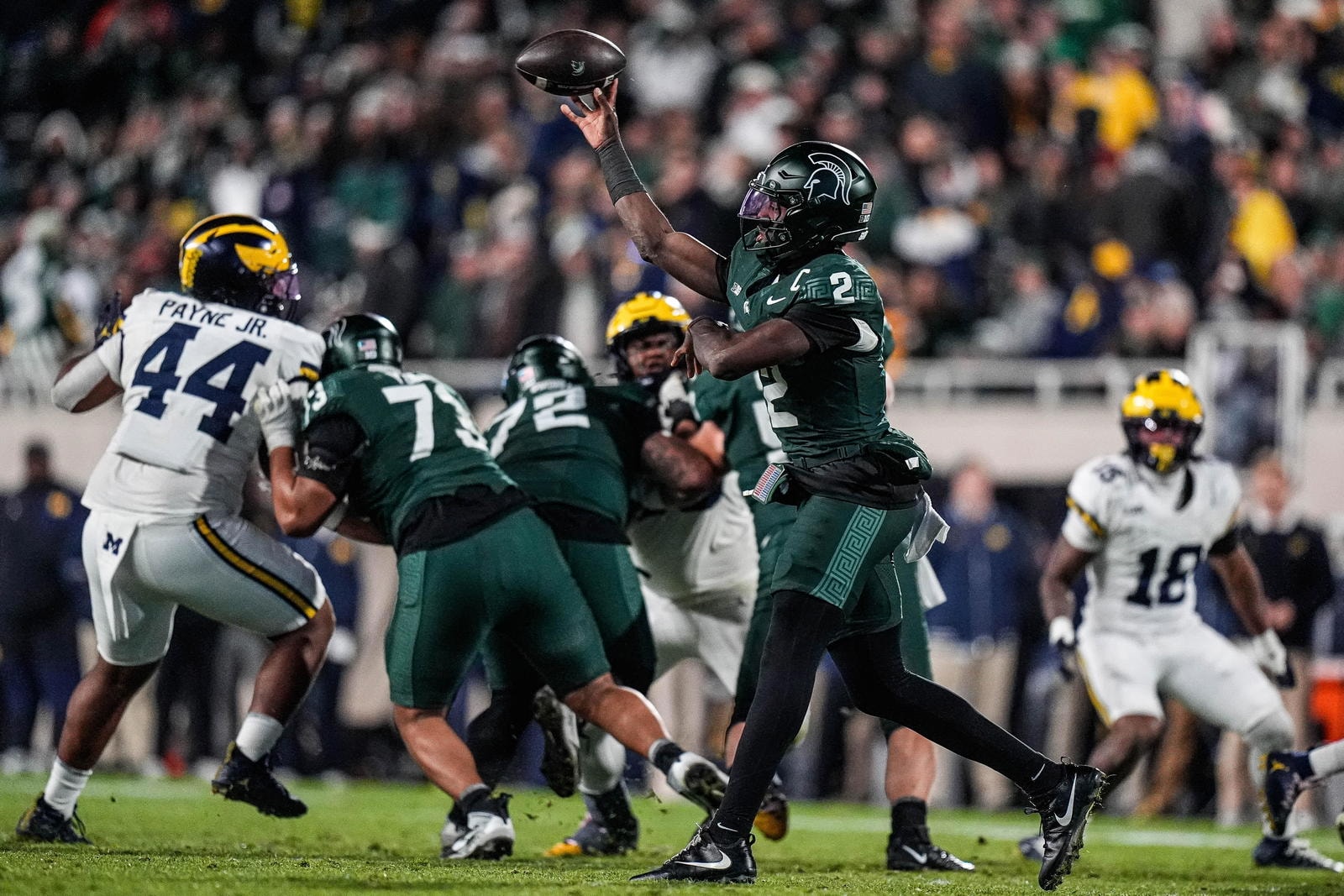
Ahead of the 2026 season, Michigan State quarterback Aidan Chiles offered glowing praise for Northwestern’s new offensive coordinator, Chip Kelly, framing their working relationship as central to the Wildcats’ offensive turnaround.
Northwestern’s offense is entering a new coaching chapter, and quarterback Aidan Chiles is indicating that he expects it to be more than just a philosophical change. In comments ahead of the Wildcats’ season, Chiles described Chip Kelly as a “genius,” adding that the way Kelly approaches the game could be crucial to how Northwestern’s offense develops and performs in 2026.
Chip Kelly’s hiring brings a familiar promise to college football programs: an emphasis on schematic clarity, fast decision-making, and an ability to build creative looks from the run and pass rather than treating them as separate entities. For a quarterback group, that usually translates into a short runway to learn the terminology and a longer runway to execute the reads and protections the way the coordinator expects.
Chiles’ praise focused on the interpersonal and communication side of the transition, not just the X’s and O’s. His framing suggested that the quarterback-coordinator connection matters as much as the play design, because the system’s effectiveness depends on consistent timing, accurate throws, and coordinated personnel usage. In that sense, Kelly’s role is not only to install an offense, but also to shape how the quarterback processes the game during live action.
For Northwestern, the stakes are practical. The Wildcats need an offense that can sustain drives, create efficient third-down opportunities, and protect the quarterback’s decision-making with structure. A coordinator with Kelly’s résumé typically aims to put his players in positions to win matchups, and the quarterback is often the bridge between the scheme on paper and the execution on the field.
Chiles also offered a reminder that offensive turnarounds are rarely instant. Even when a coaching staff’s plan is coherent, timing windows, route spacing, and run-pass sequencing have to become repeatable. The earliest indicators usually show up in practice efficiency and drive consistency, then carry over into the preseason evaluation of who can execute without hesitation.
What to watch next for Northwestern is how the offensive identity forms as the season approaches. Pay attention to whether the play-calling can stay flexible while still looking purposeful, and whether the quarterback’s reads appear faster and more decisive in drive sequences. If the unit’s tempo and structure settle quickly, it will suggest Kelly’s installation is landing as the staff intends.
This report is based on Chiles’ public comments and provides context on the relationship and expectations, not detailed performance projections. Without additional official materials, recruiting/transfer context, or staff-wide statements, the broader impact should be viewed as an early-season storyline to monitor rather than a confirmed outcome.
Why It Matters
- A coordinator change can reshape offensive identity quickly, but execution depends on quarterback processing and timing.
- The quarterback-coordinator relationship often determines whether an installation translates into effective game planning.
- Northwestern’s offense needs a repeatable structure to sustain drives and improve third-down efficiency.
- If Kelly’s system is understood early, it can affect how quickly the Wildcats build continuity through the season.
Sources
Key Facts
- Aidan Chiles publicly praised Chip Kelly in anticipation of Northwestern’s 2026 season.
- Chiles described Kelly as a “genius.”
- The comments tied the quarterback-coordinator relationship to Northwestern’s offensive turnaround.
- The storyline centers on how Kelly’s approach could influence the implementation and execution of Northwestern’s offense.
- The report is commentary-based and does not provide quantified performance outcomes.