
THE APEX TIMES
Alabama’s Linebacker Room Looks Set for a Different Identity After Veteran Leadership Departures
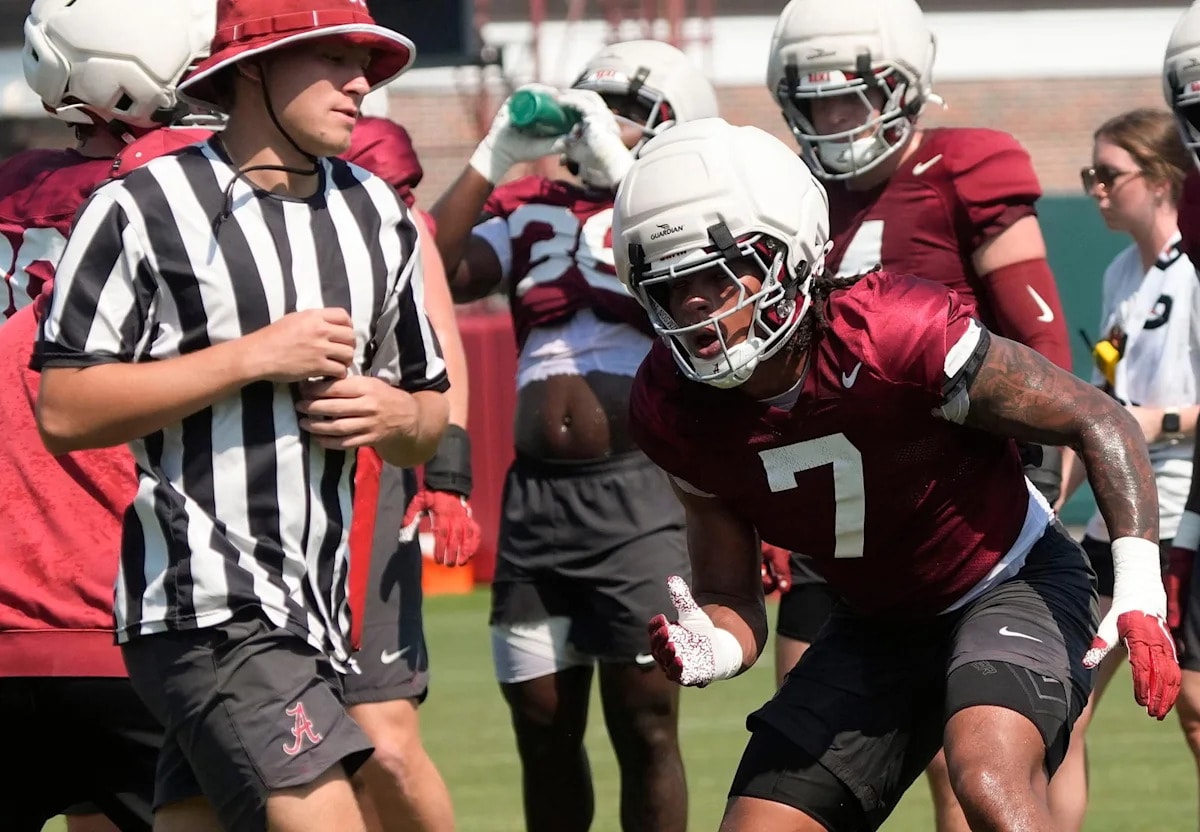
With experience moving out of Tuscaloosa, a high-motor linebacker is emerging as a potential stabilizing force, as Alabama’s defense prepares to reshape its identity at the position where it typically sets the tone.
Alabama enters the new college football season with a linebacker core expected to look notably different than it has in recent years. Veteran leaders who helped define the standard on defense are no longer in the picture, and that kind of turnover always changes how a unit functions on Saturday. Even when the talent stays in place, the communication, assignment discipline, and physicality that come with seasoned playmakers can be hard to replace quickly.
What the Crimson Tide do have, at least according to recent analysis, is an emerging linebacker profile that could help close some of that gap. The focus is on a high-motor, high-effort style of play that can carry a defense through the early stages of a rebuild at linebacker. In an Alabama context, where the program’s defensive identity has often been anchored by urgency and structure, that “anchor” role does not necessarily have to be filled by the same type of player as before. It can be filled by someone who brings energy to every snap and communicates consistently enough to make the back line’s job easier.
Linebacker depth matters more in Alabama’s defensive planning than many casual fans realize. The position is asked to do multiple jobs depending on the down-and-distance, whether it’s scanning and scraping to the perimeter, fitting into the box against the run, or getting into position to disrupt passing lanes behind the line of scrimmage. When leaders leave, coaches typically look to players who can understand coverage concepts while also delivering consistent gap responsibility.
The recent discussion around Alabama’s defense frames this as a potential positive, not just a subtraction. The argument is straightforward: a defense that loses veterans may still function effectively if it can identify a younger cornerstone who plays with the same relentless urgency those older players brought. In that view, the “secret weapon” is not a flashy, single-skill gimmick. It is the day-to-day insistence on doing the work correctly, the willingness to be first to your fit, and the ability to set the tempo for teammates who are still learning their role in the system.
That does not mean the transition is automatic. When a linebacker group changes, there is usually a period where misreads and hesitation show up, especially early in games when offenses test communication. Alabama fans will be watching whether the new internal leaders can keep assignments clean, particularly in run fits and in the first step of coverage responsibilities. If Alabama’s younger pieces can play fast without playing careless, the defense will have a chance to absorb the turnover better than many rebuilds do.
The other watch item is what Alabama does with the rest of the defensive structure around this position. Linebackers can’t compensate for everything, so the unit’s development at safety and along the front matters. If the defensive line controls the line of scrimmage, linebackers can play more freely and reduce the pressure to win every rep alone. Conversely, if opponents consistently reach the second level with leverage, the linebacker core becomes the primary line of defense and the learning curve can show more quickly.
Still, if the high-motor linebacker described in the recent reporting develops into that stabilizing presence, Alabama’s defense could retain many of the habits that have made it difficult to move the ball. The key question for the season is whether the Crimson Tide’s new identity at linebacker is built on consistent execution, not just individual effort. If it is, Alabama’s defensive tone may remain recognizable even as personnel changes force the unit to evolve.
Why It Matters
- Linebacker turnover can change how quickly a defense reaches full chemistry, especially in run fits and coverage responsibilities.
- If the emerging linebacker can anchor the unit, Alabama may preserve the urgency and discipline that typically shape its defensive performance.
- A successful transition at linebacker could reduce pressure on the secondary by improving communication and decision-making in the middle of the field.
- The defensive front and the defensive backs will be tested in how they support the new linebacker identity.
Key Facts
- Recent commentary highlights that Alabama’s linebacker core is expected to look significantly different this season due to veteran leadership departures.
- The analysis points to a specific emerging linebacker profile as a potential stabilizing force for the Crimson Tide’s defense.
- The described quality is a high-motor, high-effort style that could help anchor Alabama’s defensive play at linebacker.
- The linebacker position is depicted as central to Alabama’s defensive identity and overall communication and assignment structure.