
THE APEX TIMES
Amar’e Stoudemire looks back on adjusting to life in Phoenix on the eve of Hall of Fame induction
With a Suns run that included multiple All-NBA selections and a long partnership under Mike D’Antoni, Stoudemire framed his basketball path as a continual search for what to change next.
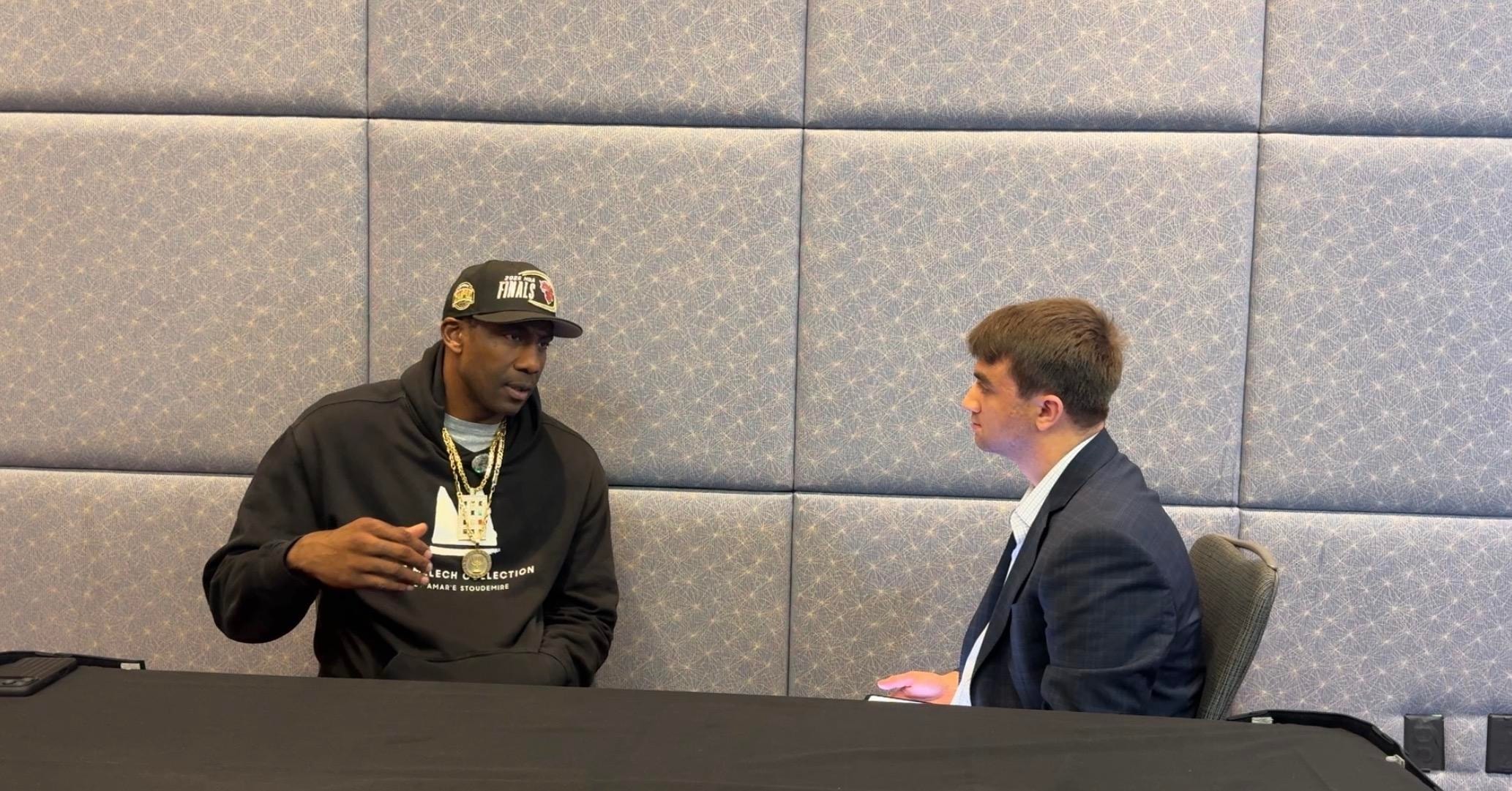
Amar’e Stoudemire’s Hall of Fame weekend began with a simple message: readiness to adapt. The day before his induction into the Naismith Basketball Hall of Fame, Stoudemire sat down for a reflective conversation about his time with the Phoenix Suns, including how his game and mindset fit the environment he walked into in Arizona. The themes were consistent with his reputation as both a high-impact scorer and a player willing to refine his approach as circumstances changed.
Stoudemire’s career résumé is anchored by excellence at the NBA level. He enters Springfield as a five-time All-NBA selection and a six-time All-Star, milestones that reflect how long his production stayed among the league’s best. In the conversation, he looked back on the Suns era in terms that emphasized evolution rather than single moments, suggesting that the next challenge, not the past highlight, kept him moving forward.
A key part of Stoudemire’s Phoenix story, as outlined in the discussion, was his time working with head coach Mike D’Antoni. D’Antoni’s teams were known for playing fast and leaning into decision-making built around spacing and movement, and the conversation positioned Stoudemire’s adjustment to that style as central to his success. Rather than treating the fit as automatic, Stoudemire talked about being prepared for the adjustments required when both the pace and responsibilities of the position demand constant recalibration.
Stoudemire’s “adapt” framing also spoke to the practical reality of elite basketball careers. Even for stars with rare physical tools, remaining effective requires constant corrections: where you place your body in traffic, when you step into contact, how you respond to defensive positioning, and how you manage energy over the course of a long season. The tone of the pre-induction interview leaned on that kind of daily problem-solving, presented as something he carried with him through the Suns years and into the later stages of his career.
The Hall of Fame itself is a referendum on what a player changed and sustained over time, not only what he flashed. In Stoudemire’s case, his multiple All-NBA and All-Star honors support the argument that his impact did not depend on one schematic moment or one season arc. Instead, his career profile points to an ability to be a reliable centerpiece while also absorbing the demands of different on-court contexts.
For Phoenix, the induction also functions as a marker of what the Suns built during Stoudemire’s peak years: a model that asked stars to operate within an organized, fast-moving offensive identity. That matters because it speaks to how franchises remember their best runs, not just through results, but through basketball style and player development. A player like Stoudemire, described in this conversation as always reaching for the right way to adjust, becomes a bridge between eras of Suns basketball.
As Springfield induction day approaches, what to watch is how the narrative of adaptation translates from the interview setting to the broader Hall of Fame conversation. Stoudemire’s framing suggests a career defined by continual refinement, not static dominance. The next chapter is less about whether he was great, and more about how his path to greatness can help explain what the Suns valued and how that value connected to his best basketball.
Why It Matters
- The Hall of Fame weekend highlights not only Stoudemire’s peak production, but the longer skill of adjusting to team identity and coaching demands.
- Phoenix fans get a clear reminder of how the Suns during the D’Antoni era created roles for stars that required continuous refinement.
- Stoudemire’s retrospective offers a lens for how elite players maintain effectiveness as offensive expectations evolve across seasons.
Sources
Key Facts
- Amar’e Stoudemire was inducted into the Naismith Basketball Hall of Fame with an interview held the day before the ceremony.
- Stoudemire is a five-time All-NBA selection and a six-time All-Star.
- The conversation focused on Stoudemire’s time with the Phoenix Suns.
- The interview specifically discussed playing under head coach Mike D’Antoni as part of his Phoenix experience.
- The central idea presented was that Stoudemire reached Springfield by consistently being ready to adapt.