
THE APEX TIMES
Andres Chaparro’s second-half surge gives the Nationals a clearer path at first base heading into 2027
After a slow first half, Andres Chaparro turned his season around after the All-Star Break, giving Washington a stronger internal case for who should man first base in the next phase of the rebuild.
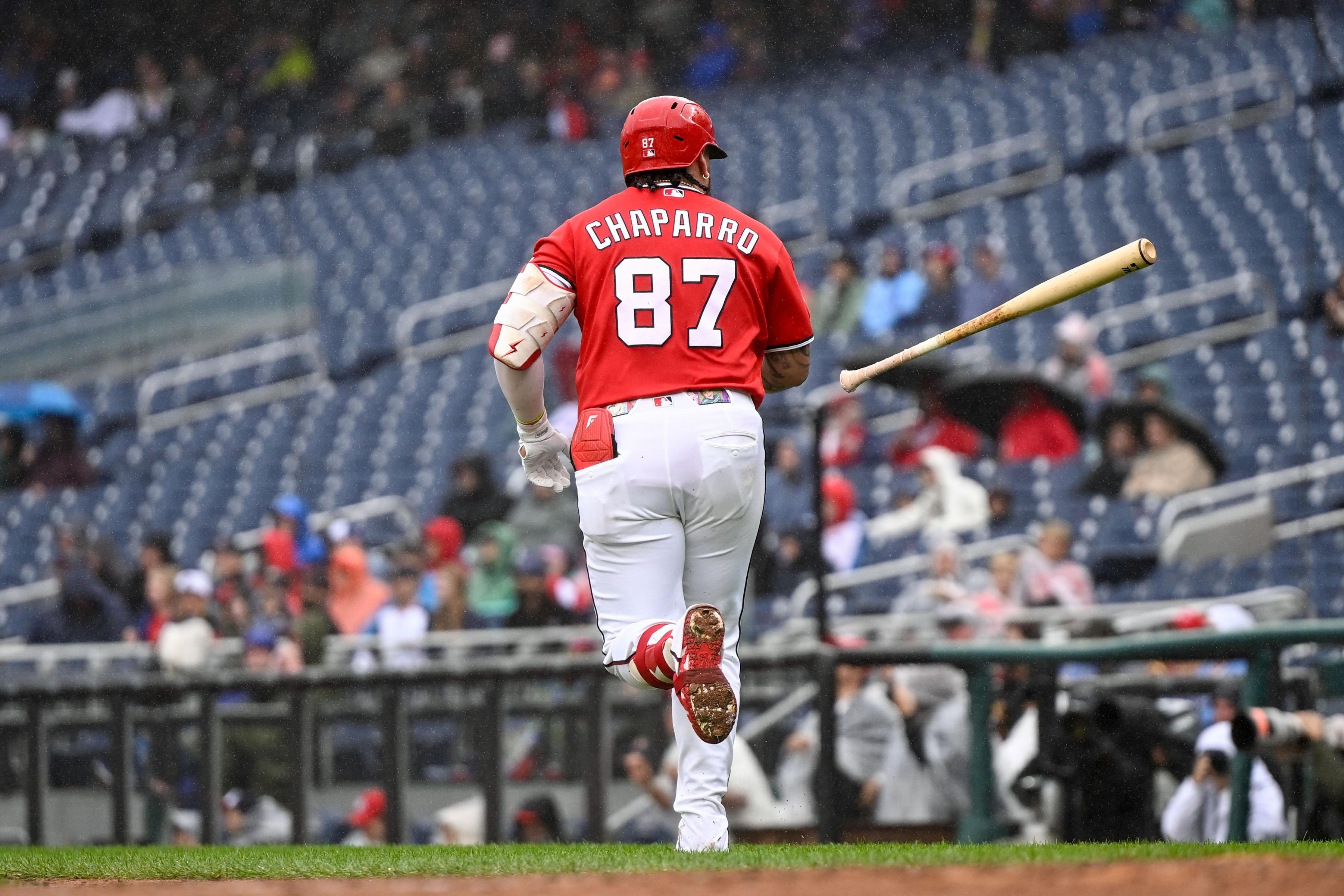
Andres Chaparro’s season for the Washington Nationals took a decisive turn after the All-Star Break, and the shift matters because it came from the one place the organization has been trying to stabilize: first base. In a year where multiple Washington hitters emerged, a Yahoo Sports analysis argues that Chaparro was the most convincing version of that group in the second half, especially after an uneven first half in a part-time role.
The core of the argument is straightforward. Chaparro struggled to find consistent traction earlier in the season, when he did not have the everyday rhythm that often separates production from promise. But as the year moved toward its final stretch, he “burst on to the scene,” according to the report, and did so strongly enough to put him in position to be considered the leading candidate for the starting first baseman job in 2027.
For the Nationals, that kind of progression is more than a personal milestone. A team can tolerate a lack of certainty at the plate if it can create an internal baseline of reliable roles as quickly as possible, particularly in the infield. If Chaparro’s second-half performance becomes the reference point the organization builds from, Washington can plan around a known quantity rather than repeatedly re-evaluating who should be anchored at first base.
The report also frames Chaparro’s trajectory within the broader picture of a roster that saw “a lot of hitters emerge” during the season. That context helps explain why one player’s late-season turn can carry extra weight. When several bats are developing at once, the ability to separate “emergence” from “emergence that looks sustainable” becomes critical, and the Yahoo piece makes that case for Chaparro after the break.
Still, the leap from second-half effectiveness to a guaranteed starting role is never automatic. Baseball rosters are built from multiple inputs, including defensive fit, overall offensive profile, and how a player’s skills hold up across preparation cycles. What can be said from the reporting is that Chaparro’s late run gave the Nationals a clearer internal answer at a key position, and that the conversation in 2027’s lineup planning now has him near the top.
Heading into the offseason and beyond, the most important question for Chaparro and the organization is whether the pattern continues: can the productivity that surfaced after the All-Star Break become the baseline, not the peak? For fans, the next chapter is about consistency across full seasons. For the Nationals, it is about whether the player who seized late at-bats can be the player Washington chooses to build a first-base spot around.
Why It Matters
- First base is a roster anchor point, and a clear internal candidate reduces the need for constant experimentation.
- Late-season separation helps teams decide which developing hitters can be counted on as core pieces.
- If Chaparro is the front-runner for 2027, Washington can plan its infield and lineup construction with less uncertainty.
- The Nationals’ larger goal is roster stability, and a second-half jump is often a step toward repeatable production.
Sources
Key Facts
- Andres Chaparro’s season for the Washington Nationals featured a slower first half followed by a strong second half after the All-Star Break.
- A Yahoo Sports analysis says Chaparro emerged as the best of the Nationals’ second-half group of hitters.
- The report characterizes Chaparro’s earlier usage as part-time, before he produced more consistently down the stretch.
- The second-half performance is presented as putting him in strong position to be the starting first baseman for the Nationals in 2027.