
THE APEX TIMES
Andrew Painter follows an opener again, but the Phillies’ late-starting problems linger in Milwaukee
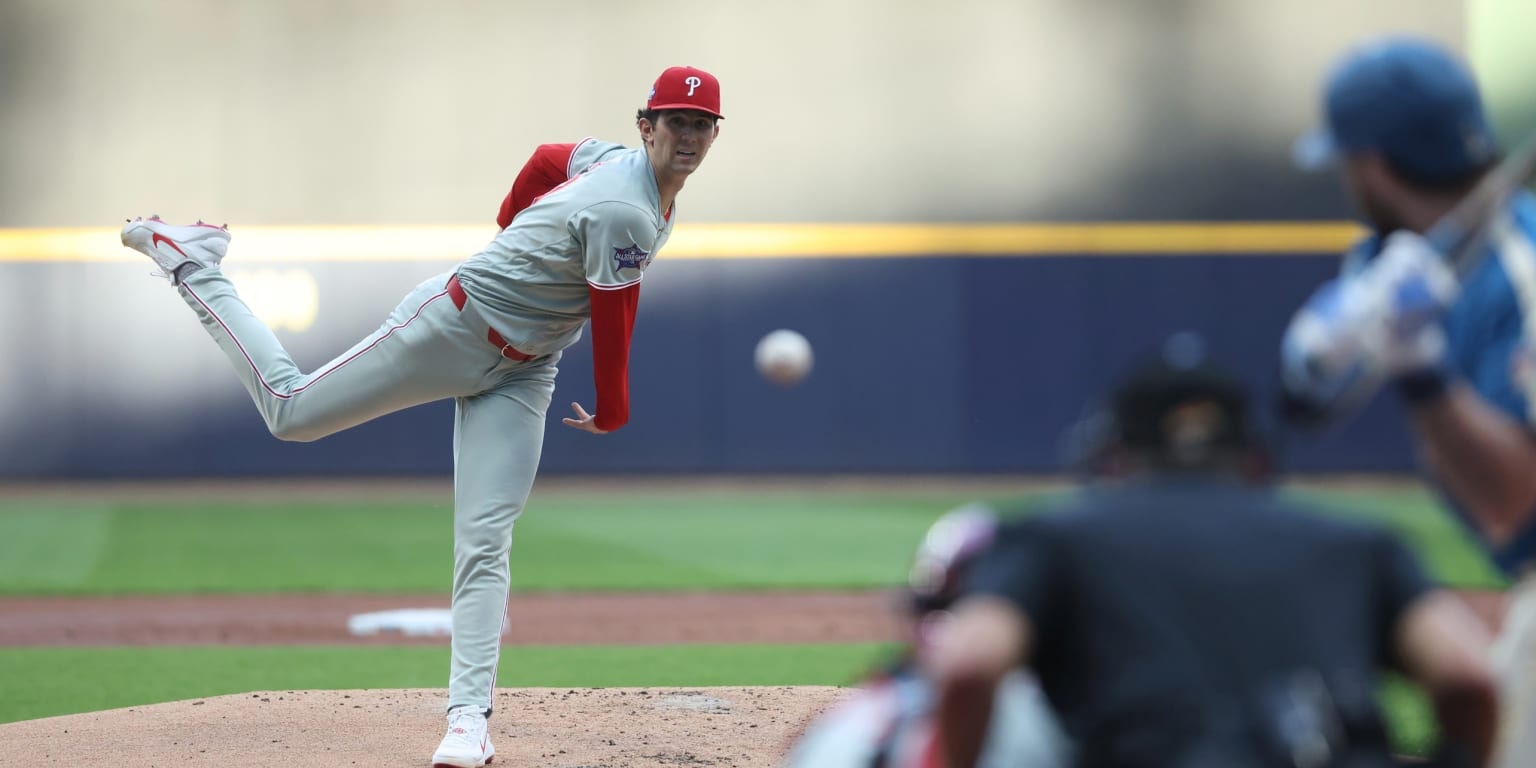
Philadelphia used a fresh-look sequencing plan for Andrew Painter, sending him into the start after an opener. The results for the pitcher, and the Phillies’ offense, remained difficult against the Brewers.
The Phillies tried a different path to maximize Andrew Painter on Friday night in Milwaukee. Rather than opening straight with Painter, Philadelphia used an opener and then had Painter take over afterward. The intent was straightforward: give Painter a cleaner runway and potentially help him settle into a more controllable, game-shape role. What followed was familiar, even if the setup was not.
Painter’s outing, which came after the opener, did not provide the breakthrough the Phillies have been seeking. According to the club’s account of the game, the right-hander’s command and overall effectiveness continued to be a work in progress. It was not presented as a total collapse, but it was also not the kind of forward step that would change the day-to-day conversation around his development.
The bigger problem for Philadelphia was what happened on the other side of the ball. Milwaukee held the Phillies to extremely limited production, with the official report describing the team’s offensive output as “almost nothing” against the Brewers. That matters because even when a starting pitcher faces a tough stretch, run support can soften the impact and change how long a pitcher stays in the game.
In this matchup, the Phillies’ lack of offense narrowed the margin for Painter. When a lineup cannot generate sustained pressure, every marginal inning becomes heavier. An opener can create early leverage, but it cannot solve a broader scoring issue once the starter takes over. In that sense, Painter following the opener was a logistical tweak, not a complete strategic reset.
For the Phillies, the willingness to pair an opener approach with Painter reflects a broader trend across baseball: organizations are increasingly searching for ways to protect younger starters while still extracting as many innings as possible. The opener can shorten exposure, change the timing of pitch counts, and sometimes help a pitcher avoid facing the same hitters for extended stretches. But the plan depends on the starter actually taking advantage of his specific window.
Friday’s night did not show that shift clearly enough to alter the underlying storyline. Painter still struggled through the game’s middle and working phases, and Philadelphia’s offense did not deliver the kind of momentum that can help a team absorb a difficult start. The official account framed it as the “same struggle,” suggesting the changes were not enough to move the needle in that specific environment.
What to watch next is whether the Phillies stick with opener usage when Painter pitches, and whether they can pair any improvements from Painter with a more consistent offensive floor. With the Brewers already demonstrating the ability to quiet the Phillies, Philadelphia will likely face another test of whether its development experiments can produce results when the opposing lineup is prepared.
Why It Matters
- The opener strategy indicates Philadelphia is still searching for a workable game-plan to support Painter’s development.
- Limited run production increases the pressure on any starter, especially one returning to a pitcher-specific sequencing role.
- If the Phillies cannot combine pitching adjustments with offensive output, development moves may not translate into better results.
- The next Painter outing will be an early indicator of whether the Phillies view this as a controllable process issue or a larger, performance gap.
Sources
Key Facts
- The Phillies used an opener strategy before bringing Andrew Painter into the start on Friday night in Milwaukee.
- Painter’s performance after the opener did not bring the breakthrough Philadelphia was seeking.
- The Phillies generated almost no offense against the Brewers in the game described in the official recap.
- The official report characterized the outing as more of the same despite the altered approach.