
THE APEX TIMES
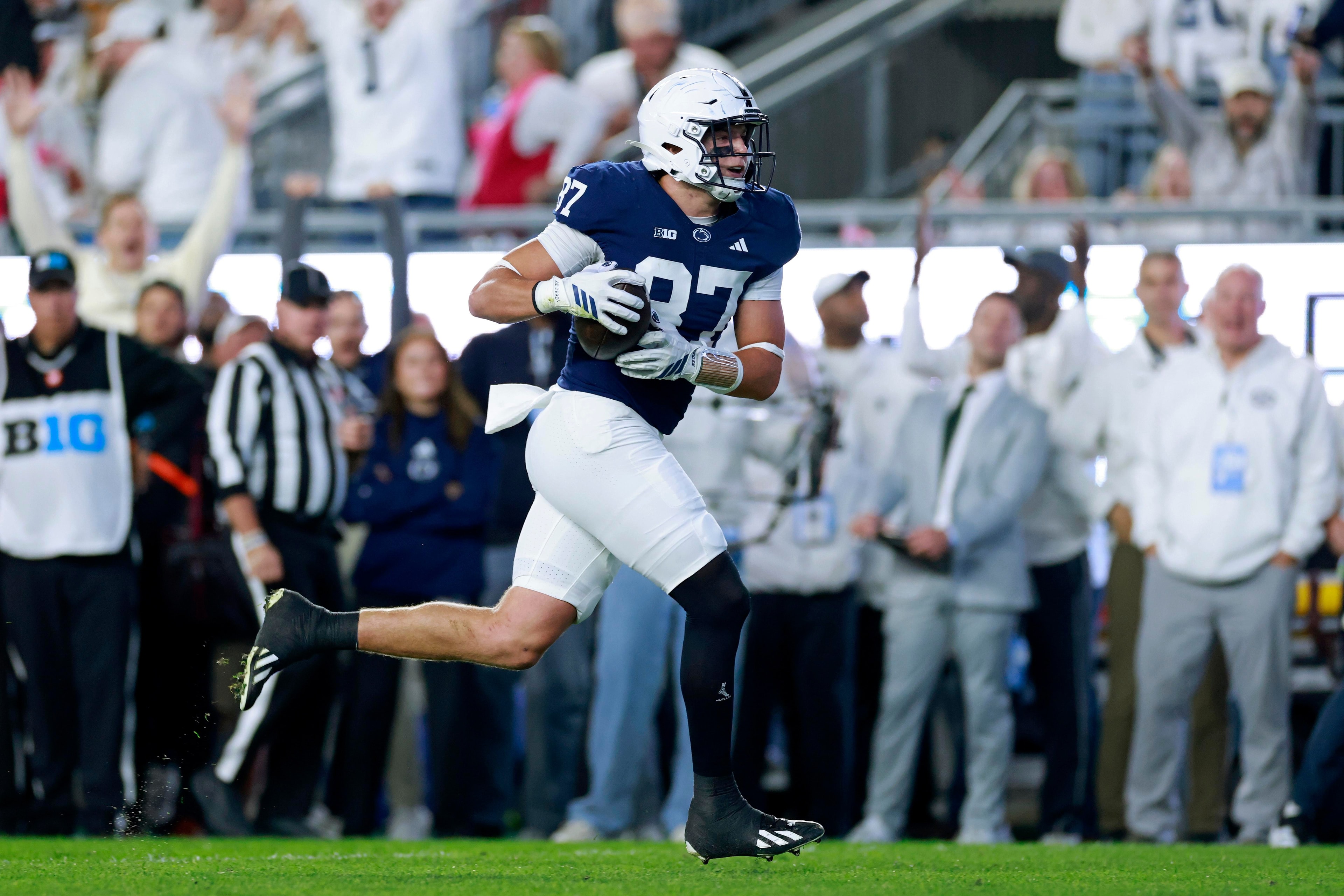
Andrew Rappleyea turns in an injury-tested breakout on a national stage for Penn State
After battling injuries across his career and returning from an earlier-season issue, Penn State tight end Andrew Rappleyea delivered a standout performance Saturday night, drawing MVP-level praise as the Nittany Lions put a spotlight on their tight end group.
Penn State tight end Andrew Rappleyea stepped into the kind of national, high-visibility game that tends to define late-season narratives, and he did it in the middle of a career that has repeatedly been shaped by availability questions. Heading into the season, there was widespread talk that the Big Ten still had some of its most productive tight ends, and on Saturday night Rappleyea played like one of them.
The throughline for this performance was durability and timing. Yahoo Sports’ account of the outing emphasized that Rappleyea has battled injuries throughout his Penn State career, and that he also suffered an injury earlier this season. In that context, Saturday’s impact carried more weight than it would for a player without a recent health interruption.
The tight end position was also the story’s wider team angle. The national discussion leading into the season centered on the strength of Penn State’s tight end group, and Rappleyea’s performance suggested the unit could be more than a supporting cast. When a school’s tight end becomes a focal point in a national spotlight, it often changes defensive attention week to week, especially in conference play.
Rappleyea’s role matters beyond one game because Penn State’s offensive planning typically treats tight ends as multipurpose pieces, capable of creating matchups in the passing game and adding structural value in the run game. When a player who has dealt with injuries can still separate in live-game moments, it reassures coaches that the scheme can stay consistent even when the depth chart has been challenged.
Still, the injury component means there is an inevitable caveat. With Rappleyea having been injured earlier this season, the next measure is not whether he can have another headline moment, but how quickly he can sustain production while managing whatever limits remain from his earlier ailment.
For Penn State, the immediate watch item is whether Rappleyea’s performance indicates a stable return to form or a one-game spike shaped by matchups. If he continues to be used heavily, his impact could ripple through the offense, affecting how often Penn State can lean on tight end personnel as a connective tissue between the passing and running phases.
What happens next will also affect perceptions of Penn State’s tight end ceiling as the year moves deeper. With injuries already part of the arc, each subsequent week becomes a referendum on whether Rappleyea can keep playing at the same level and whether Penn State’s offensive identity can keep leaning on his presence.
Why It Matters
- A tight end who can deliver high-visibility production can shift defensive game planning, which affects not just a single drive but the broader rhythm of an offense.
- If Rappleyea sustains involvement after an earlier-season injury, it strengthens Penn State’s ability to keep its passing targets and route combinations consistent.
- Injury-tested performances tend to raise stakes for subsequent weeks, because continuity becomes the real measure of a team’s offensive stability.
- A national-stage breakout can reshape how opponents and analysts project Penn State’s tight end role entering late-season matchups.
Key Facts
- Yahoo Sports described Andrew Rappleyea as a standout, MVP-caliber performer on a national stage for Penn State.
- Rappleyea has battled injuries throughout his Penn State career, according to Yahoo Sports.
- Yahoo Sports also reported that Rappleyea was injured earlier this season and returned to deliver the featured performance.
- The pre-season conversation described Penn State as having one of the Big Ten’s top tight end groups, and Rappleyea matched that billing during the televised spotlight.