
THE APEX TIMES
Angels manager Kurt Suzuki ejected after catcher’s interference call in loss-prep moment vs. Athletics
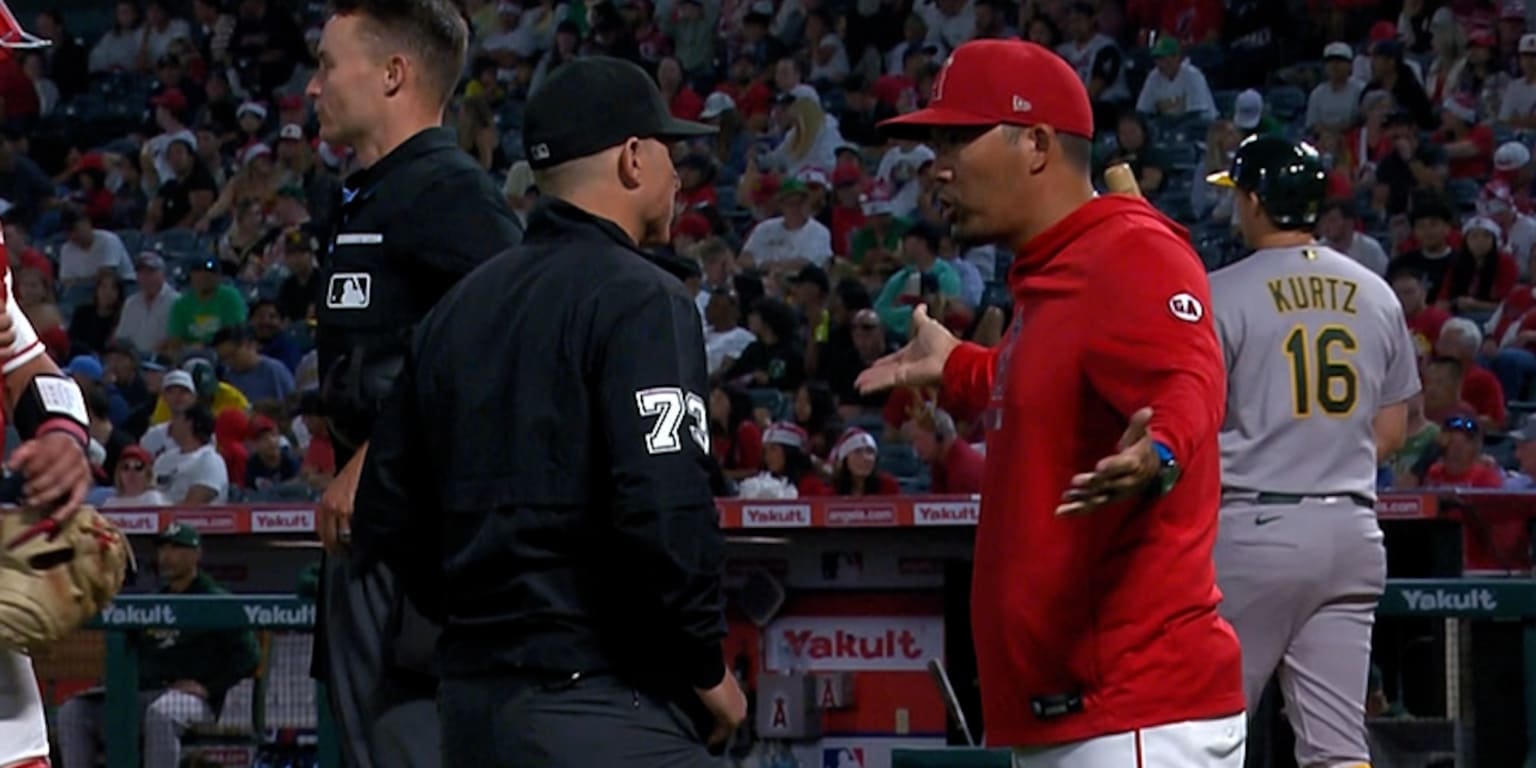
Suzuki argued with third-base umpire Tripp Gibson following a catcher’s interference ruling involving Logan O’Hoppe, a decision the Angels said did not reflect what happened during Henry Bolte’s at-bat.
The Angels’ series opener against the Athletics took a sharp turn in the middle innings, when manager Kurt Suzuki was ejected for arguing a catcher’s interference call at home plate. The decision came after catcher Logan O’Hoppe was ruled to have impeded the play, and Suzuki’s disagreement with the call escalated enough that plate umpire Tripp Gibson was forced to end the discussion in real time.
According to the MLB report, the dispute began with what Anaheim believed was an ordinary strikeout sequence. The Angels viewed the at-bat as Henry Bolte striking out on a pitch thrown by Athletics left-hander Brent Suter, but after the swing and contact (and the follow-through that officials reviewed), home plate ruled catcher’s interference, placing the responsibility on O’Hoppe’s actions rather than the hitter’s timing.
Suzuki’s ejection was directed at the officiating at third base, where Gibson had indicated or presided over the ruling under game procedures, according to the league write-up. While catcher’s interference can be one of baseball’s most judgment-driven calls, the Angels’ reaction suggested they believed the interference did not meet the threshold for negating the result of the at-bat.
The ruling itself carried immediate baseball consequences because catcher’s interference is not merely a “review item,” it changes the batter outcome and can also alter baserunners’ status depending on the exact circumstances. Even without disputing the broader standard, manager ejections for timing disputes typically reflect the practical reality that these rulings can swing momentum, force pitchers and defenders to reset, and affect how the inning develops.
For the Athletics, the decision reinforced their ability to draw self-contained consequences from a single at-bat, preserving the leverage that pitchers seek by producing swings and then relying on the rulebook to finalize the inning’s outcome. For the Angels, it underscored how quickly a routine plate appearance can become a stoppage point, especially early in a series when clubs want consistent plate execution without added controversy.
Beyond the immediate argument, an ejection also has a management component. Even when a manager’s challenge is aimed at getting an explanation, the practical cost is losing a coach’s voice on the field and having to adjust dugout communication for the rest of the frame. In close, low-scoring games, that kind of disruption can matter, because the timing of pitching changes, defensive looks, and bullpen usage often depends on in-game read-and-react decisions.
The next question for both teams is how they handle similar situations going forward. If catcher’s interference decisions become a theme, catchers may tighten positioning habits and hitters may adjust their swing timing, while managers may be more cautious about indicating disagreement after the first instance. For Anaheim, the priority afterward is simple: refocus on controlling the next pitch and ensuring the next inning does not get defined by arguments rather than at-bats.
For Oakland, the takeaway is to keep feeding innings with pitches that create play-shaping contact and to trust that the rulebook will finalize results when interference is alleged. For the Angels, it is a reminder that even when the batted-ball outcome appears clear, the contact between bat, runner, and catcher can turn into a ruling that changes what happened in the eyes of the game clock. Either way, Suzuki’s ejection will remain the headline turning point from the opener, tied directly to the catcher’s interference call involving O’Hoppe.
Why It Matters
- Manager ejections can disrupt in-game strategy, particularly during decision-heavy stretches like inning transitions and pitching changes.
- Catcher’s interference rulings can change the outcome of an at-bat and affect inning momentum in ways that are difficult to reverse with later play.
- The incident highlights the thin margin in plate positioning and timing, where contact can lead to officiating outcomes that override the expected result.
- For teams early in a series, controversy can define tone and intensity, influencing how both dugouts respond to subsequent close calls.
Key Facts
- Angels manager Kurt Suzuki was ejected during the Angels’ series opener against the Athletics.
- The ejection followed Suzuki’s argument with third-base umpire Tripp Gibson over a catcher’s interference call.
- MLB’s report said catcher Logan O’Hoppe was involved in the catcher’s interference ruling.
- The Angels believed Henry Bolte struck out on a pitch from Athletics left-hander Brent Suter.
- The ruling came as part of play during the game, prompting the dispute and subsequent ejection.