
THE APEX TIMES
Anonymous scouting notes suggest Ohio State must find answers to how defenses plan to challenge Julian Sayin
Across the college football landscape, anonymous coaches described the recurring themes they believe will drive game planning against Ohio State’s quarterback, Julian Sayin, emphasizing pressure, coverage discipline, and execution under stress.
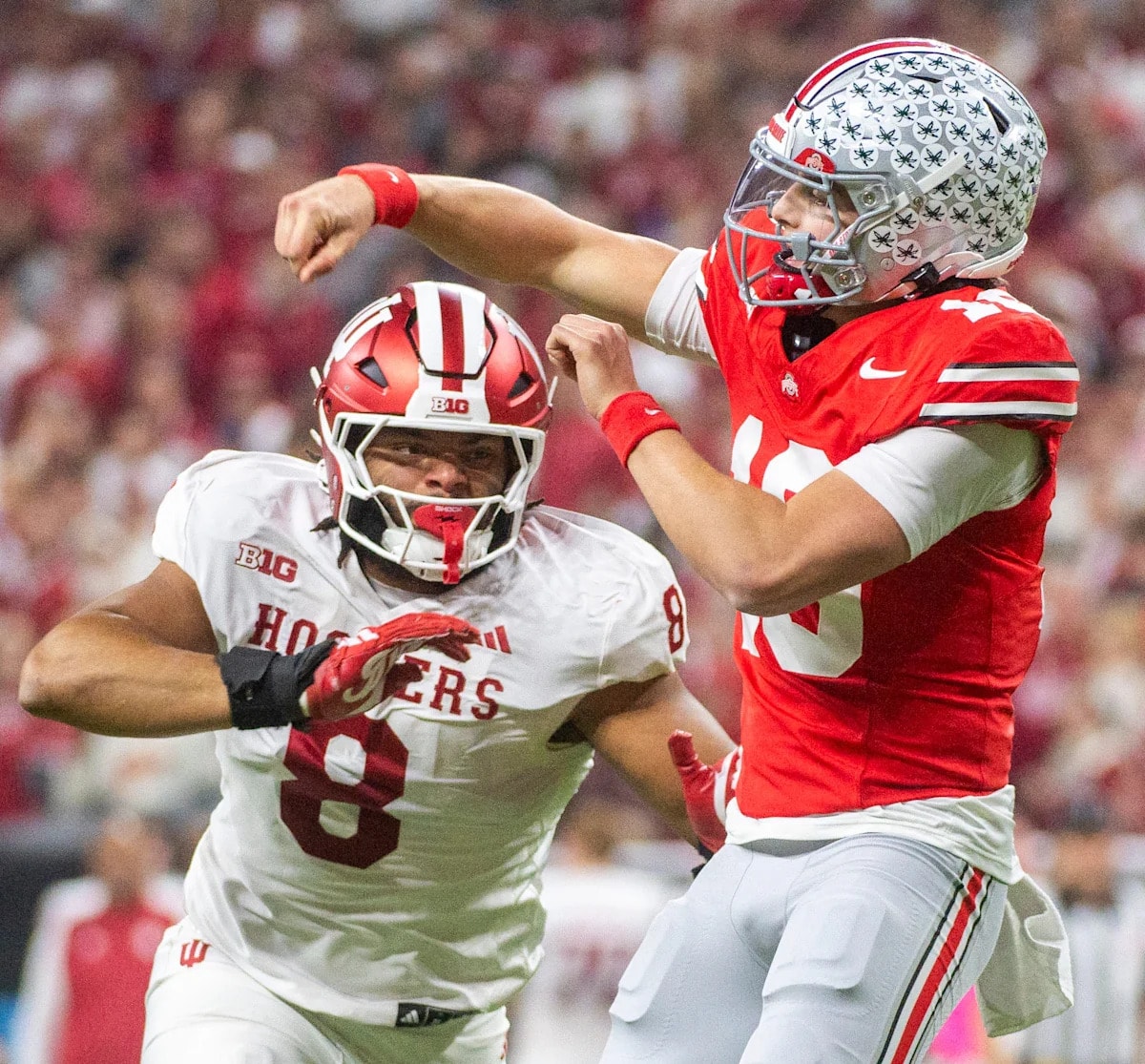
Ohio State quarterback Julian Sayin is entering a season where opponents will not be guessing about his talent, they will be building specific game plans around how to slow it down. In interviews published by Yahoo Sports, anonymous coaches around the league explained how they expect defenses to approach Sayin, focusing on the idea that Ohio State’s overall talent does not eliminate the need to target the quarterback’s habits and decision-making.
The most consistent theme in the anonymous feedback is that defenses will try to affect Sayin early and often, not necessarily by blitzing every snap, but by forcing uncomfortable throws through pressure and disguise. Coaches suggested that opponents want to compress the decision window, so a quarterback like Sayin has less time to confirm protections, scan the field, and deliver the ball to his preferred matchups.
A second emphasis is coverage structure, with the expectation that teams will try to avoid “free” completions in space. Rather than allowing a comfortable rhythm, the anonymous coaches described game planning aimed at keeping receivers boxed in and forcing the offense to earn yards through tighter windows and longer-yardage sequences, where quarterback accuracy becomes more difficult when timing and leverage are disrupted.
Coaches also indicated that, when opponents choose to rush fewer players, they still intend to create chaos for the back end of the Ohio State passing game. That means maintaining tight spacing in zone or man looks, communicating quickly to receivers’ routes, and rallying efficiently after the catch. The underlying message is that the quarterback’s impact is inseparable from the offensive system, so the defense has to respect the whole package.
This matters for Ohio State because quarterback play typically becomes the center of gravity in an offense that also expects to run and attack the middle of defenses in multiple ways. When opponents can control the tempo and force longer drives, the pressure shifts from the skill positions to sustained execution, including third-down conversion rate and the ability to recover after negative plays.
It also affects how coaches construct their own answers. If the league’s defensive thinking is built around creating stress on Sayin, Ohio State’s counter is likely to involve simplifying decisions at key moments, using timing-based concepts to help the quarterback get the ball out on time, and designing plays that punish predictable reactions in coverage. In other words, the scouting focus around Sayin becomes a test of whether the offense can protect the quarterback’s strengths while neutralizing opponents’ first-order tactics.
One important caveat is that the comments are from anonymous coaches rather than from Ohio State’s own staff, and they are not tied to a specific opponent’s confirmed plan. Still, when multiple coaches describe similar priorities, it becomes a useful snapshot of the environment Sayin will face, especially early in the season before teams have full game-film clarity on how Ohio State will respond.
What to watch next is whether Ohio State’s play-calling and offensive execution are built to mitigate pressure looks and coverage constraints. If Sayin’s offense can keep drives alive despite early disruptions, it will report that Ohio State has more than talent at quarterback, it has a repeatable way to solve the problems opponents are already preparing to attack.
Why It Matters
- How defenses approach Sayin can shape Ohio State’s ability to sustain drives, not just individual plays.
- If opponents can consistently shorten the quarterback’s decision window, Ohio State’s offensive answers will be tested on third downs and after negative plays.
- Defensive priorities around Sayin can influence the flow of each game, including run-pass balance and when the offense chooses to take shots.
- The league’s expectations for Sayin provide a barometer for how quickly Ohio State’s staff adjusts to the most common defensive attack patterns.
- The quarterback-centric scouting attention increases the scrutiny on execution, timing, and decision-making throughout the season.
Key Facts
- Yahoo Sports published interviews with anonymous coaches describing how opponents plan to challenge Ohio State quarterback Julian Sayin.
- The coaches emphasized recurring game-planning priorities rather than one-off schemes.
- A central focus was creating uncomfortable conditions for the quarterback through pressure and disguise.
- The feedback also pointed to defensive coverage discipline intended to limit clean passing opportunities.
- The comments frame Sayin’s challenge as part of a broader defensive attempt to affect Ohio State’s overall offensive timing.