
THE APEX TIMES
Atlanta Hawks’ Onyeka Okongwu heads into a pivotal checkpoint season focused on a growing perimeter game
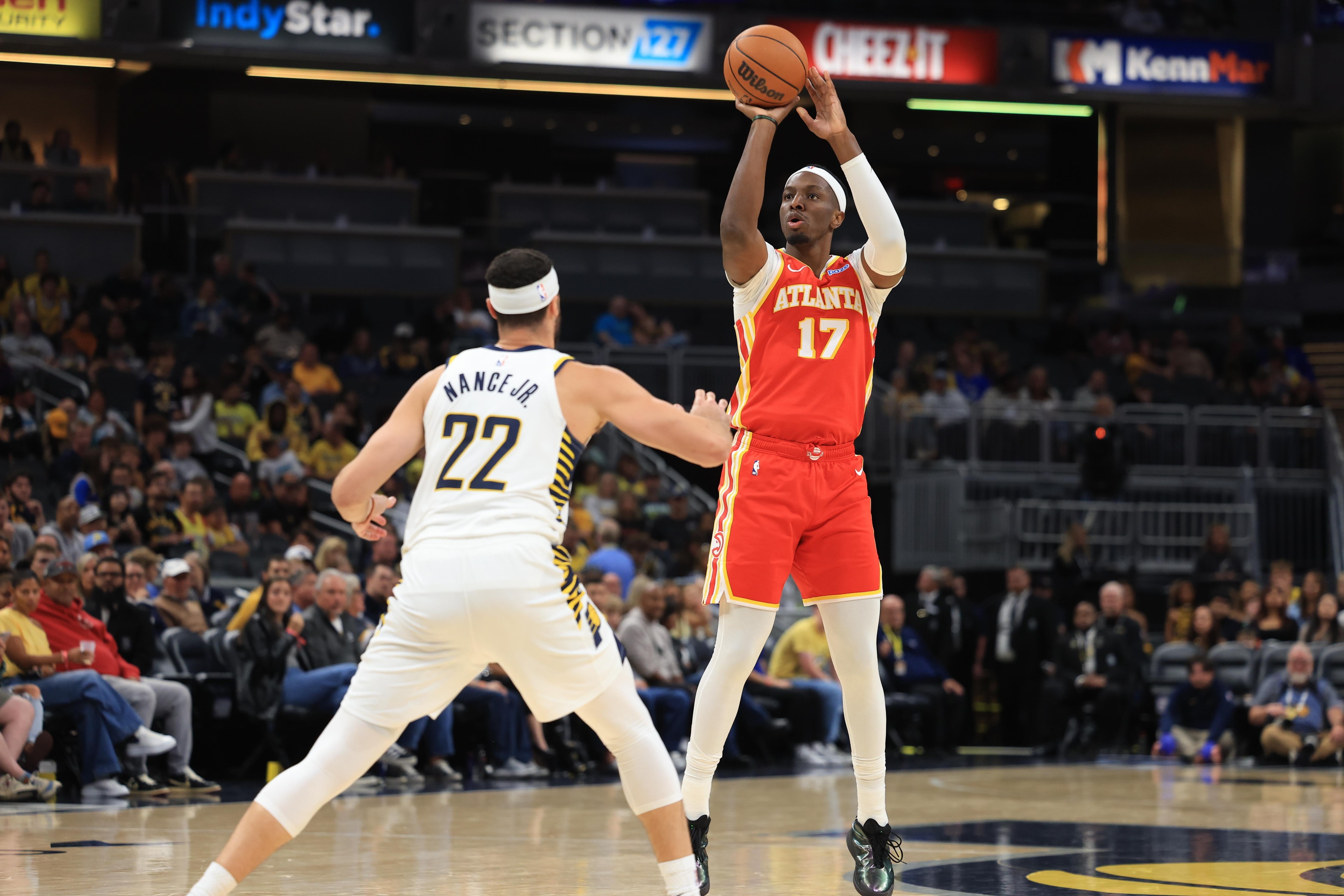
As Onyeka Okongwu enters his seventh NBA season, Atlanta is looking for a longer, more reliable stretch of impact from a player whose development increasingly hinges on spacing, ball skills, and fit alongside the Hawks’ frontcourt direction.
Onyeka Okongwu is entering the 2026-27 season with the kind of emphasis that tends to come around only after several NBA years: refinement instead of introduction. In an Atlanta Hawks player preview published for the new campaign, Okongwu is framed as “Double OO” approaching a long-term checkpoint, with attention shifting to whether his perimeter game can continue to take shape and translate into consistent, repeatable value for the Hawks.
For a center, the path Okongwu is on represents more than a stylistic update. The modern NBA asks bigs to create advantages farther from the rim, whether that means making defenses respect mid-range or short-range jump looks, improving footwork in pick-and-pop situations, or altering how opponents defend the paint when a center can also operate outside of it. Atlanta’s interest, as the preview suggests, is not simply in one improved skill, but in how that skill changes his role across an entire season.
The framing of Okongwu’s “long-term future in Atlanta” matters because it positions the coming year as a decision point for both the player and the roster around him. By year seven, the questions tend to sharpen: Can a player’s strengths stay on the floor, can his development survive game-to-game adjustments, and does his offensive profile keep making sense as teammates’ roles evolve? The preview’s emphasis on an approaching checkpoint indicates that the Hawks want to see tangible progress that moves beyond flashes.
Okongwu’s perimeter development is also an “offense logistics” issue. When a center can create pressure outside the lane, it affects spacing for guards and wings, changes the timing of rotations, and can reduce the degree to which a team must funnel possessions only through drives or rim attacks. That is especially relevant for Atlanta because it increases the range of actions the Hawks can run without forcing the offense into predictable patterns.
There is, of course, a reality check that comes with projections like any season preview. The existence of a perimeter game does not guarantee it will appear at the same rate in every matchup, and defense can dictate whether a player gets the same opportunities game after game. The preview’s focus on “taking shape” and “approaching” a milestone suggests the story is still in motion, not finished, and that the season’s outcomes will likely depend on how quickly Okongwu’s expanded skill set becomes part of Atlanta’s normal reads and rotations.
What to watch next is less about any single moment and more about consistency. If Okongwu’s perimeter work becomes a trusted part of the Hawks’ offensive pacing, you would expect it to show up repeatedly in how Atlanta sets screens, initiates actions, and spaces the floor when opponents play the paint aggressively. In other words, the checkpoint that the preview points to will be measured by whether “Double OO” can deliver that expanded offensive presence in a way that holds up across different opponents, not just in isolated stretches.
Why It Matters
- A center with credible perimeter tools can change an entire team’s offensive structure by widening spacing and altering defensive rotations.
- By year seven, the Hawks’ interest in a long-term checkpoint implies that Okongwu’s growth will directly influence how the frontcourt is planned around him.
- If Okongwu’s development becomes consistent, Atlanta’s offense gains more scalable options, especially in pick-and-pop and spacing-driven sets.
- Conversely, if the perimeter progress does not hold up across matchups, Atlanta may need to adjust how it uses the frontcourt to keep possessions from becoming one-dimensional.
Sources
Key Facts
- The preview describes Onyeka Okongwu as entering his seventh NBA season with a perimeter game that is still developing.
- The piece frames the 2026-27 season as an “important checkpoint” for Okongwu’s long-term future with the Atlanta Hawks.
- The story is positioned as an Atlanta Hawks player outlook, centered on how Okongwu’s evolving skill set could shape his role.
- The player is commonly nicknamed “Double OO,” a reference used in the preview.