
THE APEX TIMES
Bare Knuckle Ice Wars brings hockey fights to ESPN, testing whether violence needs the rink
A hockey-fight-themed combat brand is set to debut with an ESPN arrangement, aiming to prove that the spectacle can travel without live NHL-style context. The experiment lands at a moment when sports media is being restructured around highlightable, fight-forward programming.
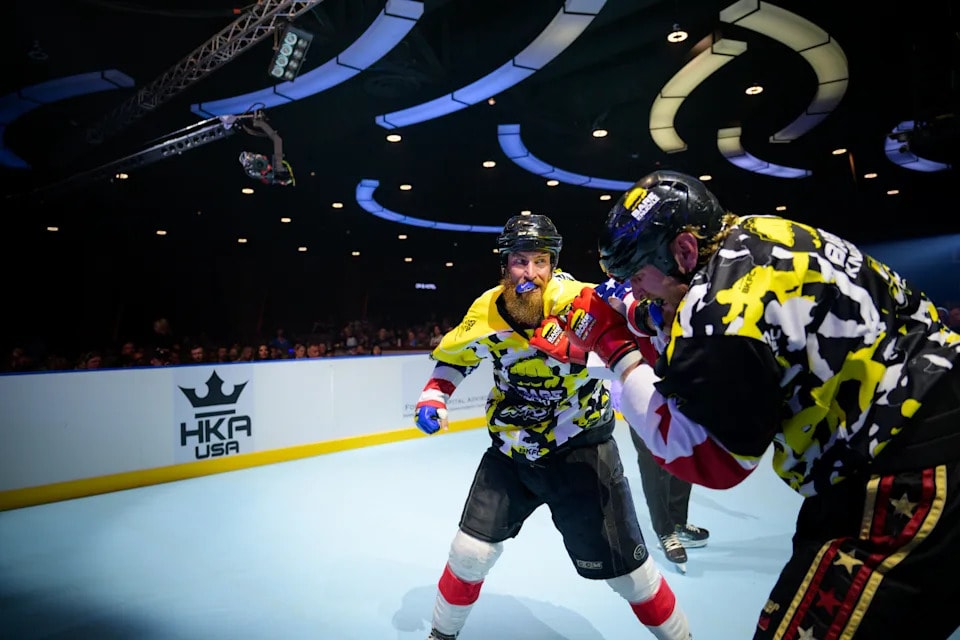
Bare Knuckle Ice Wars, a combat event built around the premise of hockey fights happening in the middle of a game, is moving into the mainstream sports-media spotlight with an ESPN deal, according to Yahoo Sports. The pitch is simple: if audiences can pause their viewing to watch a scuffle break out on a wall of screens in a sports bar, the same attention can be captured even when the fight is not tied to a traditional hockey broadcast.
The concept leans into a specific piece of sports culture. In hockey, fights can be a regular part of the entertainment rhythm, and viewers are trained to recognize when a conflict is starting, who is involved, and what to expect next. Bare Knuckle Ice Wars tries to commercialize that pattern, packaging it as an event that can exist as its own product rather than an incidental moment inside another sport’s presentation.
That matters because the current sports-media environment rewards immediacy and clarity. ESPN’s audience reach gives combat programming an advantage that niche platforms often cannot match, and it places Bare Knuckle Ice Wars in a broader lineup of mainstream studio shows, documentaries, and live-event coverage. The question the deal poses is whether the “hockey fight” format is inherently compelling on its own, or whether it only works when it rides alongside the steady pull of a full hockey game.
Bare Knuckle Ice Wars’ ESPN arrangement also highlights the ongoing overlap between fight sports and sports entertainment. Promotions across MMA and boxing have increasingly treated their events as media products, not just competitions, building storylines, packaging personalities, and designing moments meant to circulate. If ESPN devotes substantial programming real estate to the event brand, it would report that fight culture is being treated as a regular pillar in mainstream sports schedules rather than a sidebar for combat fans.
At the same time, the test is not just about reach, it is about viewing behavior. Hockey fights tend to arrive with built-in stakes and context, including crowd reaction and an expectation of how the fight fits the flow of play. Without that framework, the event has to provide its own momentum: clear matchups, fast pacing, and enough narrative to keep casual viewers engaged long enough to convert attention into repeat interest.
What to watch next is how ESPN presents the fights and whether the event is positioned as standalone spectacle or as part of a larger combat ecosystem. Also worth monitoring is audience feedback, because the core premise of Bare Knuckle Ice Wars is that people will stop scrolling for the fight even when the hockey clock is not running on the screen.
For now, the ESPN deal is the headline, but the real story will be whether the experiment holds up under mainstream distribution. If it does, Bare Knuckle Ice Wars could become a template for other “embedded sport moment” concepts, showing that a fight does not need the rink to command a captive audience.
Why It Matters
- If the ESPN deal succeeds, it would indicate mainstream networks are willing to bet on combat brands built from sports-culture moments, not just traditional rule sets and tournament structures.
- The move tests whether viewers’ attention to fights is transferable from live hockey settings to a dedicated fight product.
- It could influence how other promotions package violence and momentum for broader audiences, especially as media distribution continues to fragment.
Sources
Key Facts
- Bare Knuckle Ice Wars is set to debut with an ESPN deal, according to Yahoo Sports.
- The event is marketed around hockey-fight style spectacle, built on the idea of fights capturing attention during hockey viewing.
- The ESPN arrangement positions the concept in mainstream sports-media coverage rather than only on niche combat channels.
- The underlying question raised by the coverage is whether hockey fights can succeed as standalone entertainment without the surrounding hockey broadcast context.