
THE APEX TIMES
Bears and Browns lean on different starters in preseason look, Jamree Kromah highlights Chicago’s depth
Chicago wrapped its first action with many second-team pieces on the field early, while Cleveland began with most of its top group and kept Deshaun Watson in for the opening half, setting up contrasting evaluations across the two sidelines.
The Chicago Bears and Cleveland Browns took sharply different approaches in their meeting, a split that became visible early in personnel deployment and then played out in the way each roster was asked to execute. According to the game notes reported from the broadcast, Chicago sat many starters, including quarterback Caleb Williams, while Cleveland used most of its first group to start and kept quarterback Deshaun Watson on the field for the entire first half.
That distinction matters because preseason football often functions less like a head-to-head talent test and more like a structured evaluation. For the Bears, holding out prominent starters is a way to preserve snap counts for key contributors while turning the early reps over to players competing for roster spots or roles. For the Browns, showing a more complete early offensive and defensive look is a chance to establish timing and execution with the first wave before later depth gets its turn.
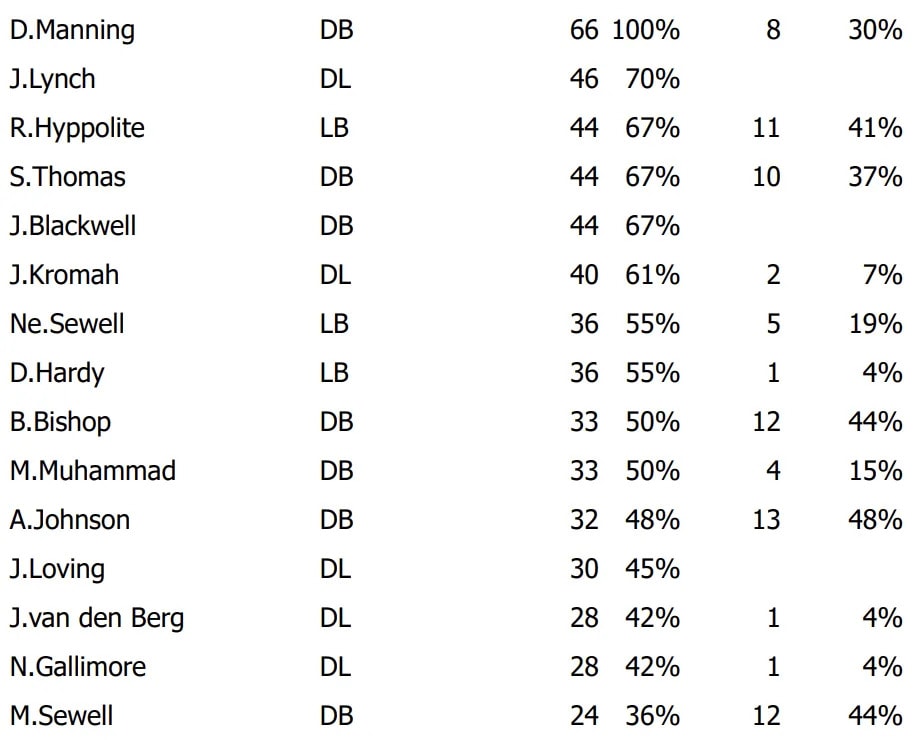
The reported breakdown also spotlighted Jamree Kromah’s impact for Chicago, with the story describing a “big day” for the Bears linebacker. While the report’s details focus on Kromah within the snap-count and statistics framework, the broader point is that his production came during the period when Chicago’s younger and rotational players were being used more extensively.
The NFL’s preseason structure tends to magnify these moments. With fewer regular-season stakes, coaches and evaluators look for repeatable process: how quickly a player diagnoses, how cleanly they execute assignment responsibilities, and whether they can translate practice behaviors into game reads. Kromah’s emphasis in the reported recap suggests the coaching staff saw something tangible from a player stepping into a larger in-game role.
On the Browns side, the early decision to play Watson the full first half reflects an emphasis on establishing rhythm with starters. When a team keeps its top quarterback in early, it also increases the value of what happens around him, including pass protection cohesion, the timing of route combinations, and how well the run game and play-action concepts hold up against the opponent’s first and second tiers.
The Bears, meanwhile, were operating with a lineup that required multiple players to manage the tempo and responsibilities that usually rest with the starting group. This often includes linebackers and defensive front players handling a larger share of the pre-snap and post-snap decision-making when the roster is less standardized. Kromah’s named presence in the recap aligns with that theme, as inside linebackers are frequently central to defensive communication and coverage checks.
Without the full statistical table in front of us, the most reliable takeaway from the reported account is the contrast in usage: Cleveland leaned on its starting core early with Watson extended through the first half, while Chicago leaned into depth evaluation by sitting many starters, including Williams. The snap-count framing and the spotlight on Kromah indicate that both teams were using the same game to answer different questions.
What to watch next is how each team follows through on what these preseason reps were meant to reveal. For Chicago, the next set of practices and games will show whether Kromah’s early production was an outlier or a steady indicator of readiness. For Cleveland, the next phase typically clarifies how the offense can sustain its execution when the second wave takes over, and whether the early timing with starters translates cleanly into later drives.
For readers looking for an exact snap and stat breakdown, the report’s focus is on those specific numbers and player comparisons. This write-up sticks to what is explicitly framed in that account: starters sat more for the Bears, Watson played the first half for the Browns, and Kromah stood out for Chicago during the snap-counted portion of the evaluation.
Why It Matters
- Preseason snap-count management often foreshadows how coaches plan to use players once the regular season roles get more defined.
- Cleveland’s decision to keep Watson in for the first half emphasizes timing and execution with the starting unit before rotating depth later.
- Chicago’s early sit decisions shift more responsibility onto players competing for roles, making standout performances like Kromah’s particularly relevant.
- How these depth reps translate in subsequent games can influence final training-camp roster decisions and depth chart pecking order.
Key Facts
- Chicago sat many starters in the matchup, including quarterback Caleb Williams, as part of its early-game approach.
- Cleveland opened with most of its ones and kept quarterback Deshaun Watson on the field for the entire first half, per the reported recap framing.
- The game coverage highlighted a standout performance by Bears linebacker Jamree Kromah, described as a “big day.”
- The published write-up organizes the takeaways around snap counts, player statistics, and how the teams’ starter usage differed early.
- The contrast in personnel deployment was central to the evaluation goals for both clubs.