
THE APEX TIMES
Ben Kindel’s Quiet Two-Way Development Is Fueling Fresh Talk Around the Penguins’ Next Center
As the NHL’s offseason drifts into August, discussion has returned to Pittsburgh’s young center Ben Kindel, a player some evaluators believe is being overlooked for the consistency he brings.
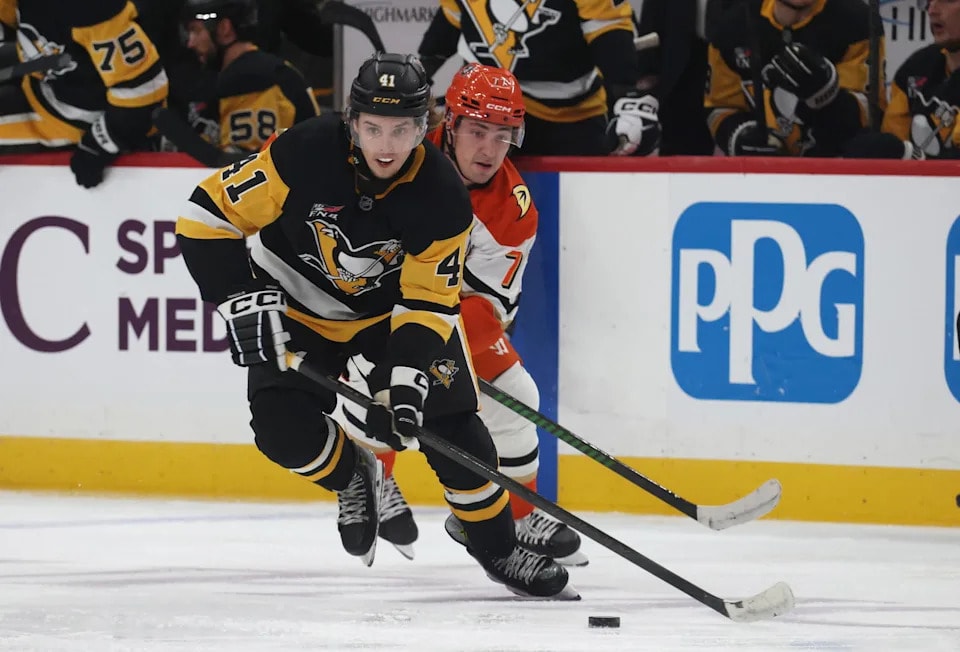
In the dog days of August, when games are off the calendar and roster movement is quieter than usual, hockey attention often turns to the kind of player who does not always show up in the loudest prospect conversations. For the Pittsburgh Penguins, one name drawing that kind of talk is center Ben Kindel, framed in a recent discussion as one of the more consistently overlooked young players in the NHL.
The core of the case for Kindel is how he handled his first pro season. According to the discussion, he played the vast majority of his rookie year at center, doing it at age 18. That matters because early NHL time at center is not just a vote of confidence in skating and competitiveness, it also reflects a level of trust in reading the game, supporting the defensive structure, and managing matchups more than a typical rookie role might require.
The “underrated” label tends to attach to players whose value is harder to capture in highlight reels. Centers are often judged on measurable outcomes like faceoff results, scoring production, and offensive-zone impact, but development staffs also watch for the less glamorous indicates. The premise around Kindel is that his game translates in ways that can be missed by casual fans who focus primarily on points.
Pittsburgh’s broader identity has long included an emphasis on two-way discipline, especially among forward groups expected to contribute beyond goal scoring. In that context, a young center who can be used frequently and trusted as the role expands becomes more than a prospect. He becomes a piece around which coaching plans can be built, particularly as teams look for stable top-nine options who can handle center responsibilities without forcing constant line matching pivots.
Still, the offseason discussion should be treated as evaluation, not confirmation. Without a detailed public record in this prompt beyond the characterization of his rookie-season deployment at center and age, it would be premature to conclude what his ceiling immediately looks like or how much he will factor into the Penguins’ regular-season plan. In August, the emphasis is often on potential, fit, and the “watch him closely” category rather than definitive projection.
What to watch next for the Penguins, and specifically for any center vying to establish a lasting role, is how consistently the skill set shows up when preparation tightens. If Kindel’s development continues to support center responsibilities, the market perception can change quickly once actual game situations return, because usage is the clearest feedback loop for how teams value a player’s decision-making, defensive awareness, and ability to handle pressure plays.
Why It Matters
- Center depth has a direct effect on matchups and line flexibility during the season, especially against top competition.
- If a young player can hold center duties early, it reduces the need for constant role juggling across the forward group.
- “Underrated” prospect narratives often indicate that a player’s value may appear more in structure and reliability than in highlight scoring.
Sources
Key Facts
- A recent discussion framed Penguins center Ben Kindel as one of the most consistently overlooked young players in the NHL.
- He played the vast majority of his rookie season as a center.
- That rookie-season center role occurred when he was 18 years old.
- The conversation is happening in the NHL offseason, during August, when prospect evaluation and player talk increase.