
THE APEX TIMES
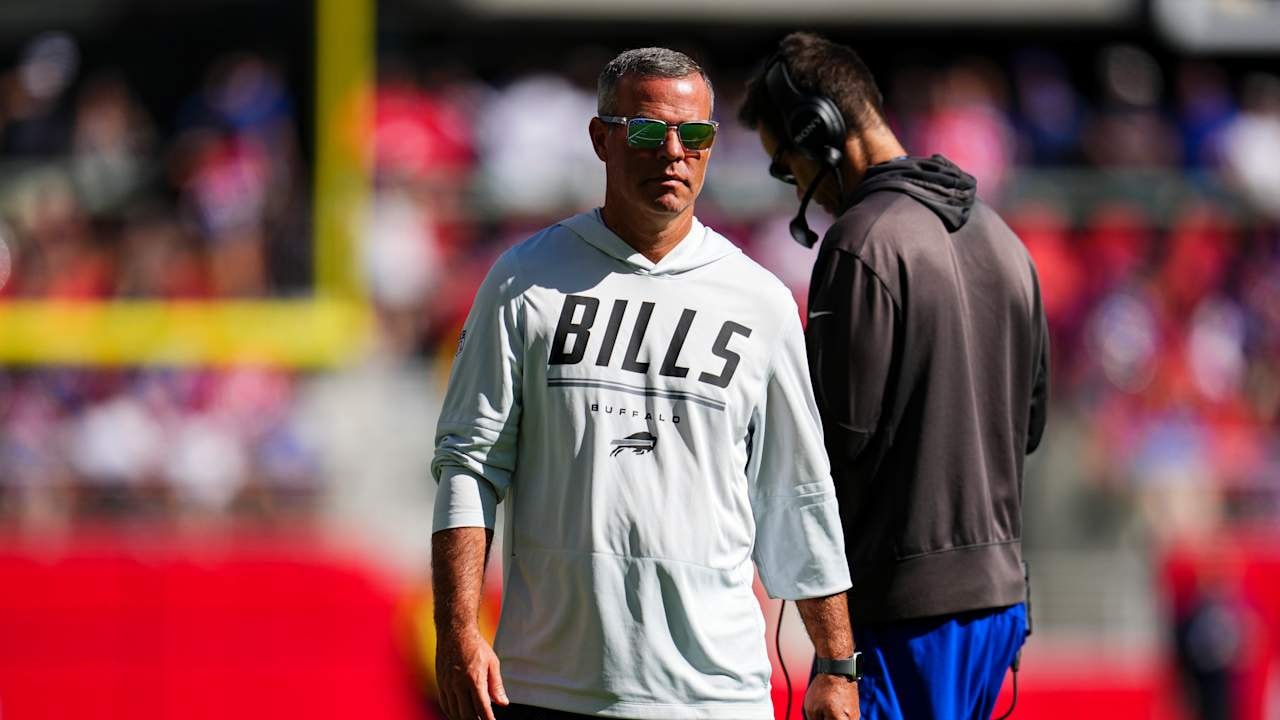
Bills GM Brandon Beane and Coach Joe Brady map out Buffalo’s 2026 roster before Tuesday’s practice
At team media availability, Buffalo leadership emphasized adaptability at cornerback, a tight-end group built for multiple roles, and ongoing evaluation of punt return options as the 2026 season approaches.
Buffalo’s roster construction entering the 2026 regular season is being framed as a blend of flexibility and skill-group definition, according to comments from Bills general manager Brandon Beane and head coach Joe Brady ahead of Tuesday’s practice. The public message from the front office and the coaching staff was not about one position alone, but about how Buffalo wants its depth to function across game-day situations, especially where matchups shift quickly.
Beane and Brady highlighted cornerback as a key area of roster versatility. In practical terms, that means the Bills are looking for options that can adjust to different receiver alignments and route tendencies without forcing rigid play-calling. Brady’s comments, as reported by the team, treated this as an attribute of the overall defensive package, not simply a single-player evaluation.
On offense, the organization’s focus moved to tight end. Buffalo’s leadership described the group as a strength, emphasizing that the position can influence both the passing game and the run game depending on who is on the field. That kind of positioning matters in 2026 because tight end usage has to align with protection needs, coverage shells, and red-zone matchups, where the margin for mismatches is smallest.
Special teams evaluation also stood out in the team’s media availability. Beane and Brady discussed the process of assessing punt return options, describing it as something the staff is working through while looking for reliability and decision-making that fits their broader game plan. Punt return is often treated as a small roster detail, but Buffalo’s leadership indicated it is part of the larger conversation about who gives the team the best chance to flip field position consistently.
The timing of the sessions also matters. With practice beginning, roster plans tend to sharpen quickly, and leadership’s emphasis on multiple position groups suggests Buffalo is still finalizing how it wants its weekly rotation to look. The Bills appear to be aiming for depth that can handle both scheme expectations and in-game adjustments, reducing the need for last-minute reactivity if a game develops differently than planned.
While the team’s reported themes are clear, specific player-level outcomes were not the centerpiece of the announcement. The comments, as published by the Bills, were designed more as a window into the staff’s current priorities than a final roster verdict. That approach leaves room for continued evaluation as Buffalo moves deeper into training-camp-like preparation and begins to tighten roles for the first stretch of the season.
For Bills fans, the next thing to watch is how the staff translates these broad priorities into visible rotation decisions: which defensive backs earn the most versatile reps, how frequently the tight end group functions as a matchup lever, and who gets trusted opportunities in punt-return situations. Those three areas, emphasized by Beane and Brady, should offer the clearest read on what Buffalo believes its 2026 identity will look like on the field.
Why It Matters
- Cornerback versatility can reduce coverage compromises when offenses change formations quickly, affecting defensive efficiency across an entire game.
- A strength at tight end can shape both passing concepts and run-game identity, influencing third-down plans and red-zone matchup creation.
- Punt return decisions impact field position and momentum, especially in games where drives are longer and special teams plays carry more value.
- Leadership framing suggests Buffalo is optimizing for depth and adaptability, which can be decisive early in the 2026 regular season.
Sources
Key Facts
- Bills general manager Brandon Beane and head coach Joe Brady spoke to media ahead of Tuesday’s practice about the team’s 2026 roster.
- Buffalo emphasized flexibility at cornerback as a roster trait that will matter to how the defense matches up.
- Beane and Brady described the tight end group as a strength for the 2026 team.
- The team is still assessing punt return options as part of roster and game-planning preparations.