
THE APEX TIMES
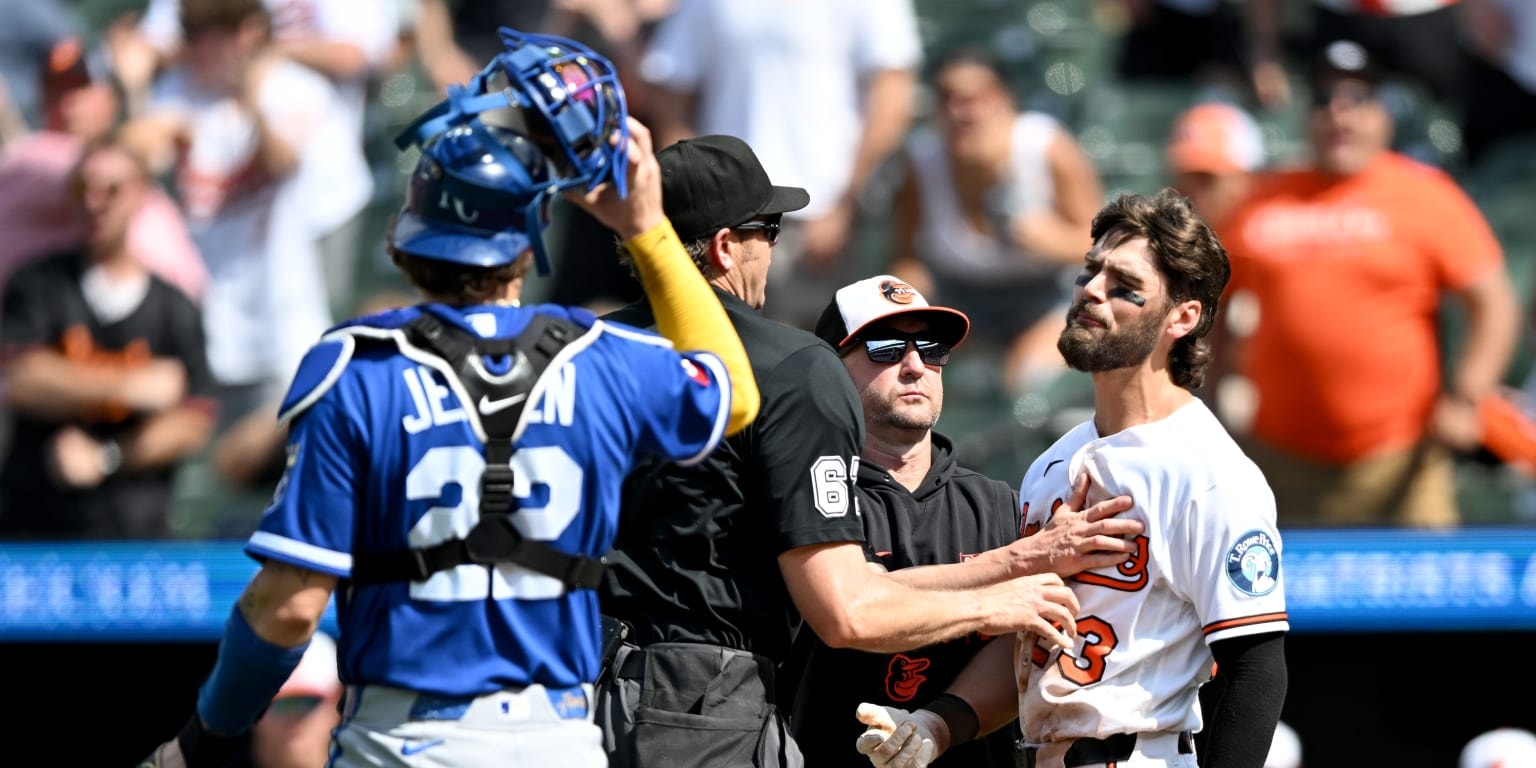
Blaze Alexander confronts the moment after being hit, responds to Royals’ Pasquantino
Alexander said he understood the emotional temperature after his left hand was struck by Lucas Erceg in the seventh inning, but he pushed back on how the situation was framed by Vinnie Pasquantino as benches cleared at Camden Yards.
BALTIMORE, July 13, 2026. The Orioles’ 8-2 win over the Royals on Sunday afternoon at Camden Yards included a physical flashpoint that carried into the clubhouse. In the seventh inning, Baltimore third baseman Blaze Alexander was hit by a fastball from Royals right-hander Lucas Erceg, a 95.5 mph pitch that broke Alexander’s left hand. What followed was the kind of game interruption that turns a single at-bat into a matchup storyline, with benches clearing and the bullpens emptying after the incident.
Alexander’s frustration was visible in the moment, and his comments after the game focused on what he felt was an unnecessary element of the exchange. MLB’s rules treat being hit as a normal risk of baseball, but the tone changes quickly when contact comes at a speed that rattles the batter and when the hit lands in a way that escalates the temperature of the dugouts. Alexander’s response framed his reaction as tied to the impact of the pitch and the lack of resolution during the stoppage.
Royals first baseman Vinnie Pasquantino also addressed the incident, offering his own perspective on what happened and why it unfolded the way it did. Alexander, in turn, responded directly to that framing, pushing back on the idea that the situation was being interpreted fairly. In postgame interviews, Alexander made it clear that he was not interested in having the narrative move on without acknowledging the seriousness of the hit and the emotions it created in real time.
Lucas Erceg, for Baltimore fans, became the central figure of the day not only because of velocity, but because the pitch had consequences. The Orioles acknowledged the harm through the reported outcome of the hit, and the game’s emotional equilibrium shifted after it. Erceg’s fastball speed, 95.5 mph, underscored how quickly the at-bat turned, leaving little time for recovery before the incident was met by immediate reaction from both teams.
For the Orioles, the key baseball fact was that they still carried the game to a comfortable decision despite the disruption. An 8-2 final at Camden Yards means Baltimore remained in control on the scoreboard, which matters when a team experiences a prolonged interruption. The more troubling part for any club is how quickly injuries can become a season factor, and the reported nature of the hand injury made the moment about more than just the standings for the short term.
As the Royals and Orioles move forward, the next chapter will likely be less about the rulebook and more about what both sides decide to say in public. Alexander’s willingness to respond to Pasquantino suggests the confrontation will remain part of how this series is remembered. For Baltimore, what to watch is how the club manages at-bats and infield roles after an event like this, and how it keeps games from turning into repeat altercations when pitches cross the line for the people involved.
For Kansas City, what to watch is whether their public message after the incident stays focused on the competitiveness of baseball or shifts toward de-escalation. The matchup already has a defining marker, and when benches clear over contact, it can shape how future pitches are received and how pitchers manage the edges of a strike zone. Either way, Sunday at Camden Yards provided a reminder that even a routine late-season game can turn into a lasting story when a single pitch lands with impact.
Why It Matters
- A pitch that results in a broken hand shifts both teams’ approach, because the cost is immediate and the emotional residue can last.
- Bench-clearing incidents tend to affect future interactions between teams, especially when public comments escalate the narrative.
- Baltimore’s ability to still win 8-2 matters for how it absorbs disruption while managing in-game momentum.
- The Royals’ public framing of the incident, and Alexander’s rebuttal, could influence how both organizations communicate in future series.
- If the injury outcome affects Alexander’s availability, it raises a practical question for the Orioles’ lineup construction after a key offensive role was disrupted.
Sources
Key Facts
- The incident occurred in the seventh inning of the Orioles’ 8-2 win over the Royals at Camden Yards.
- Orioles third baseman Blaze Alexander was hit by a Lucas Erceg fastball at 95.5 mph.
- The fastball was reported to have broken Alexander’s left hand.
- Benches cleared and bullpens emptied after the hit.
- Alexander later addressed his frustration and responded to comments made by Royals first baseman Vinnie Pasquantino.