
THE APEX TIMES
Blue Jays’ Vladimir Guerrero Jr. evaluated for concussion after collision with Yankees’ George Lombard Jr.
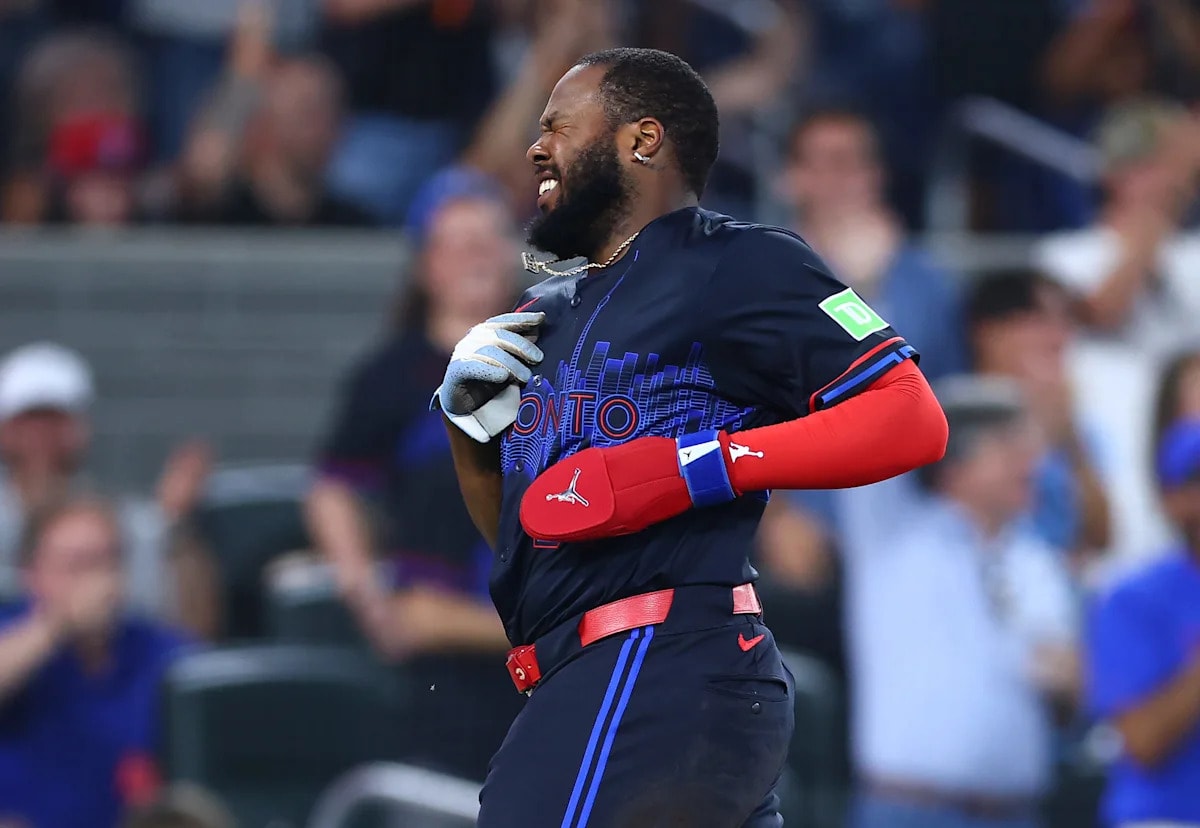
Toronto said Vladimir Guerrero Jr. was assessed under concussion protocol after a knee-to-the-head collision with New York shortstop George Lombard Jr. on Aug. 14, an incident that temporarily removed the Blue Jays’ star from a game Toronto ultimately won, 3-1.
Toronto’s injury report turned to concussion protocol on Aug. 14 after Vladimir Guerrero Jr. was involved in a collision with the Yankees. The Blue Jays’ first baseman was evaluated for a concussion following a knee-to-the-head contact with New York shortstop George Lombard Jr. during the game.
The incident was significant not only because of the type of contact, but also because it interrupted Guerrero’s availability in real time. According to the report, Guerrero left the game early under the league’s concussion evaluation procedures, a step that typically follows head-impact incidents across Major League Baseball.
The timing also mattered for the competitive picture. The Blue Jays were playing the Yankees, and Toronto still carried forward in the absence of their cleanup bat. The same report noted that Toronto went on to defeat New York 3-1, meaning the immediate roster adjustment did not prevent the team from taking the result from the Bronx.
For Toronto, the stakes are clearer when you consider Guerrero’s central role in the lineup. As the Blue Jays’ marquee first baseman, his on-field presence affects more than run production, it also influences how pitchers and defenses plan at-bats against the heart of the order. Even when a team’s offense produces early, losing a star for any meaningful stretch can change at-bat quality and lineup stability.
Whether Guerrero returns quickly depends on the outcome of follow-up steps in the concussion process. Reports of a concussion evaluation often come with uncertainty about the next game or next day availability, because return-to-play decisions can require symptom-free rest, medical clearance, and progressively increasing activity. Until clearance is confirmed by the team and the league’s daily protocols are satisfied, the safest assumption is that his status remains day-to-day.
It also adds context for New York, where the collision points to the kind of split-second hazards that can occur even in routine baserunning and infield movement. While the report describes the contact and evaluation, it does not provide further disciplinary or medical conclusions beyond the protocol step.
For fans and the teams, the next watch item is the Blue Jays’ day-of-game status report for Guerrero. If the club lists him as active, Toronto can stabilize its middle-of-the-order production. If not, the Blue Jays would need to lean on their bench and lineup flexibility to bridge the gap, especially during late-season matchups that can tighten playoff scenarios.
Why It Matters
- A concussion evaluation for a core lineup player can change Toronto’s offensive consistency and lineup structure in the short term.
- Guerrero’s availability affects how opposing teams game-plan the heart of the Blue Jays’ order.
- A head-impact incident shifts immediate roster usage, requiring in-game and potentially next-start adjustments.
- Late-season timing makes any extended absence more costly for playoff positioning and matchup planning.
Sources
Key Facts
- Vladimir Guerrero Jr. was evaluated for a concussion after a collision with the Yankees on Aug. 14.
- The collision involved a knee-to-the-head contact with New York shortstop George Lombard Jr.
- Guerrero left the game early under concussion protocol during the Blue Jays-Yankees matchup.
- Toronto won the game 3-1 despite Guerrero exiting early.