
THE APEX TIMES
Book to Boykin: How Notre Dame’s one-play payoff in the 2018 Citrus Bowl became a lasting program image
A single throw, a single catch, and a long sprint transformed a decisive moment into one of the defining memories of Notre Dame bowl history.
In the 2018 Citrus Bowl, Notre Dame’s late-game identity did not come from volume or repetition. It came from precision under pressure: a pass from Ian Book to Miles Boykin that both finished the drive and, in the retelling over the years, became the whole story.
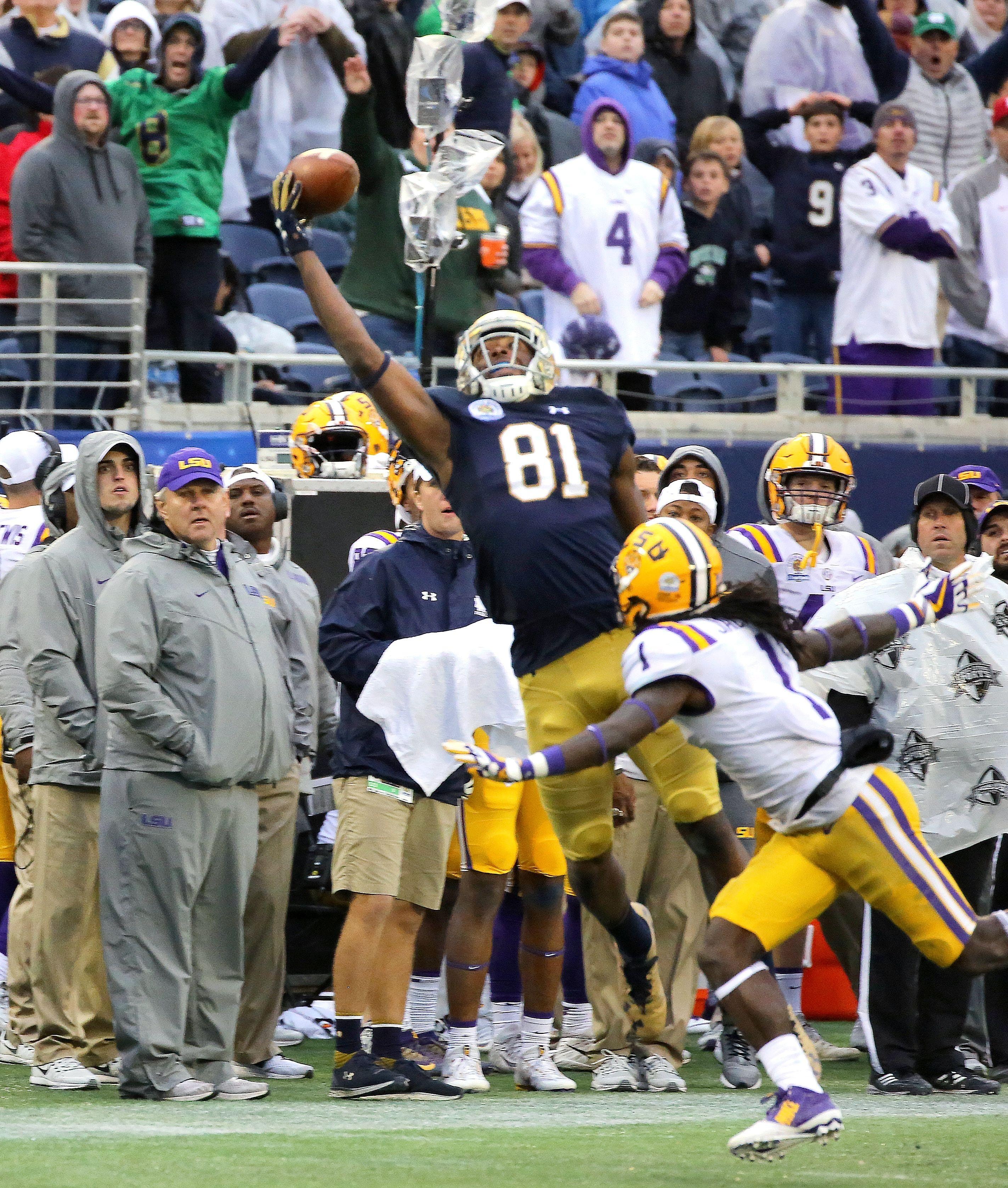
The play has stuck because of its clarity in motion. Book delivered the throw, Boykin extended for the catch, and the receiver secured it one-handed before turning upfield and sprinting 55 yards down the sideline for what the account describes as the game-winning touchdown. Notre Dame fans, as the piece notes, often remember that image first, even when asked about the broader contest.
That kind of memory is rarely accidental. The recounting of the catch frames it as the visible result of preparation that preceded it, emphasizing trust among teammates and belief that the right players would be ready when the moment arrived. In college football, where game plans can be disrupted quickly by coverage rotation and time-and-space limits, plays that look improvised still tend to reflect practiced timing, recognized leverage, and rehearsed confidence.
For Book and Boykin, the moment also worked like a statement about roles. Book’s job was to deliver on a timely throw in a high-leverage setting, and Boykin’s job was to turn a contested opportunity into separation after the catch. The description of Boykin stretching out to complete the catch, then accelerating into open field, highlights why the play reads as more than athletic flair. It also functions as a snapshot of how Notre Dame tried to manufacture offense in a bowl game situation where each decision carries amplified consequences.
The Citrus Bowl setting matters because bowl weeks are their own compressed ecosystem. It is the one stretch where schemes are refined, but the game still reveals what players can actually execute when the lights are brightest. When a single highlight becomes the dominant recollection, it also tells you something about the pressure of that particular contest, and about how quickly a team can seize control when timing aligns.
Still, the story is more useful than nostalgic if it is treated as a case study in trust. The play’s afterlife, in the form of repeated mention and replay, underlines a common team-building idea in college football: players remember what they can depend on, and coaches measure whether communication and technique hold at the moment that separates a drive from a finish. In that sense, the catch symbolizes a chain, not just a burst of highlight-reel athleticism.
What to watch next, for anyone following Notre Dame as seasons turn, is how the program’s present-day versions of similar skills are recruited and developed: quarterbacks and receivers who can combine timing with composure, and receivers who can finish contested targets and convert them into field position or points. The 2018 play remains a reference point because it shows what happens when preparation, confidence, and execution all line up at once.
Why It Matters
- A bowl game can define recruiting stories and program memory, and this play has become the primary image tied to the 2018 result.
- The play illustrates how execution under pressure can override all other parts of a game when timing and trust align.
- It highlights the quarterback-receiver relationship, emphasizing that a highlight catch still depends on planning and readiness.
Key Facts
- The iconic play referenced came during the 2018 Citrus Bowl, Notre Dame vs. LSU.
- The decisive sequence featured Ian Book throwing to Miles Boykin.
- Boykin made a one-handed catch after stretching out to secure the pass.
- After the catch, Boykin raced 55 yards down the sideline for what the piece describes as the game-winning touchdown.
- The account describes the catch as one of the most spectacular in Notre Dame bowl history.