
THE APEX TIMES
A night that began with flashes of a perfect game for Milwaukee’s rookie right-hander ended early after a rough fourth inning and a hamstring cramp.
Milwaukee’s Brandon Sproat looked like he might be on track for something special at American Family Field, but his outing turned in a hurry on Wednesday night against the Cleveland Guardians. The Brewers rookie right-hander built early command and carried the ball with a chance deep into the game before his start was derailed in the fourth inning, when a jam of baserunners and a difficult sequence forced him to leave with cramping in his leg.
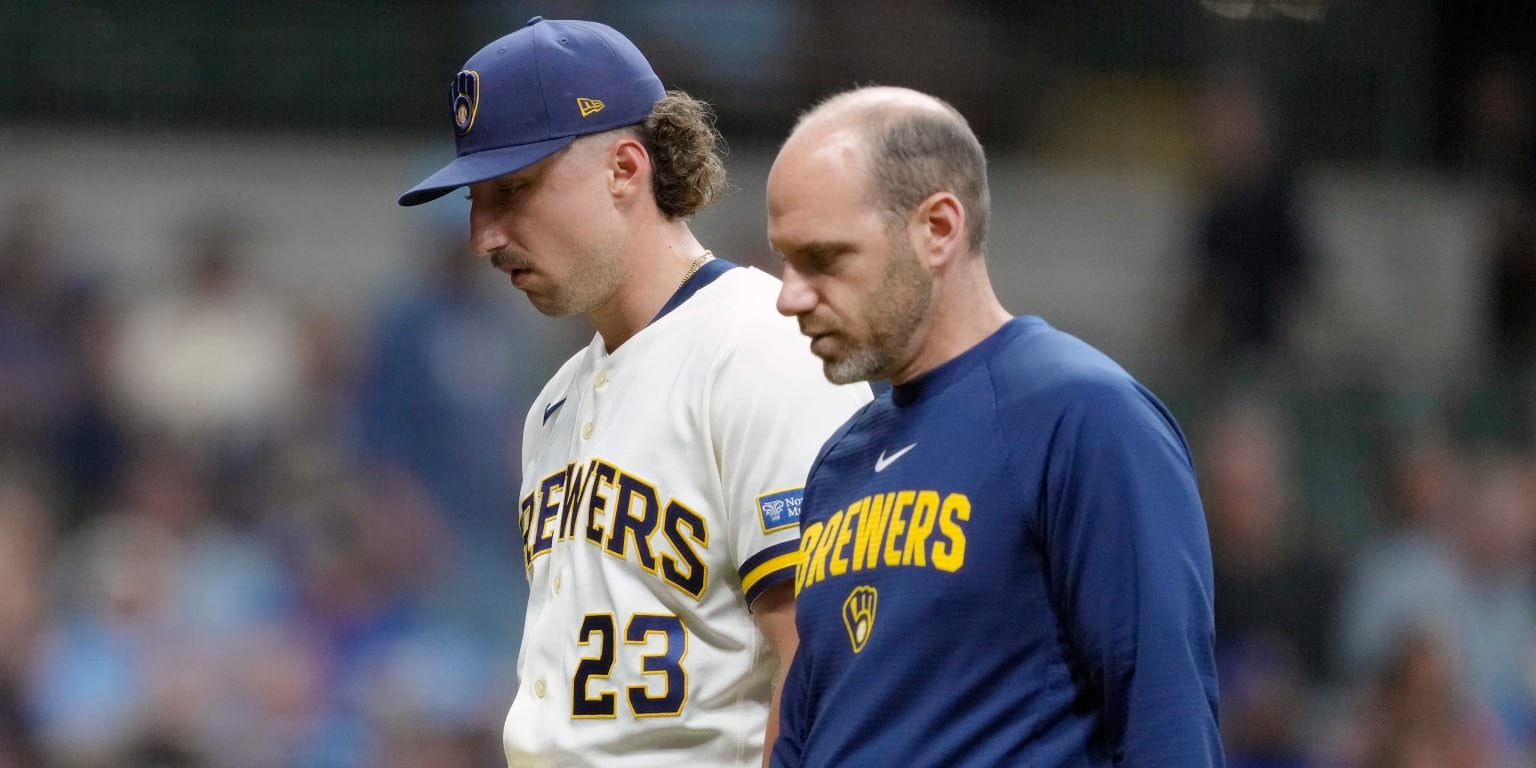
According to MLB’s report from the game, Sproat exited while there were two outs in the inning, walking off with the help of an athletic trainer. The description of the departure was tied to what the team staff and medical staff identified as a hamstring cramp, a type of injury concern that can end an appearance even when a pitcher still has live stuff.
The fourth inning itself did not resemble the control-heavy early frames. MLB’s account describes a tough sequence that included a hard hit ball, described as a slam, which quickly shifted the tone of the at-bats around him. In practical terms, that kind of inning can also compress a pitcher’s margin, because even one mistake can become a multi-run event while base runners create additional stress on timing and mechanics.
For the Brewers, the moment carried extra weight because Sproat had been able to give them a long look at a pitcher who is still establishing himself at the major league level. The early stages of his performance, framed by MLB as being close to something like a perfect game, set a high bar for what the bullpen would not have to absorb later. When a start ends with cramping, the immediate operational impact is twofold: you lose innings now, and you also have to manage fatigue and readiness for the relievers who come behind him.
While MLB’s report focuses on the immediate exit, it also points to the uncertainty teams face with lower-body tightness. Hamstring issues can be tricky, since they range from transient cramps to strains depending on severity and response to treatment. The Brewers will have to evaluate how Sproat progresses over the next day or two, because a quick return to throwing typically depends on pain response and the ability to repeat normal stride mechanics without discomfort.
The Guardians factor into the context as well. Cleveland is the kind of lineup that can punish pitchers once a critical at-bat breaks open, particularly when pitchers are working through a sequence that forces them to chase fastball location or adjust their pitch mix on the fly. Wednesday’s fourth inning served as a reminder that even a promising start can evaporate once an inning swings, especially for a younger starter trying to manage innings and hitter tempo.
Looking ahead, the Brewers’ next steps hinge on their assessment of Sproat’s hamstring. With the rest of the rotation and bullpen usage tied to who can pitch on short notice, Milwaukee’s health update will matter for both day-to-day lineup planning and longer-term pitching stability. For Sproat personally, this is a critical moment in his development curve: how he responds to a cramp, how quickly he can ramp back to game intensity, and whether this becomes a single missed start or a lingering issue. If the timetable is short, Milwaukee can treat Wednesday as a bump. If it lingers, it will force the organization to rethink workload and depth options immediately.