
THE APEX TIMES
Breiden Fehoko draws backlash after claiming credit for Brian Kelly’s LSU exit
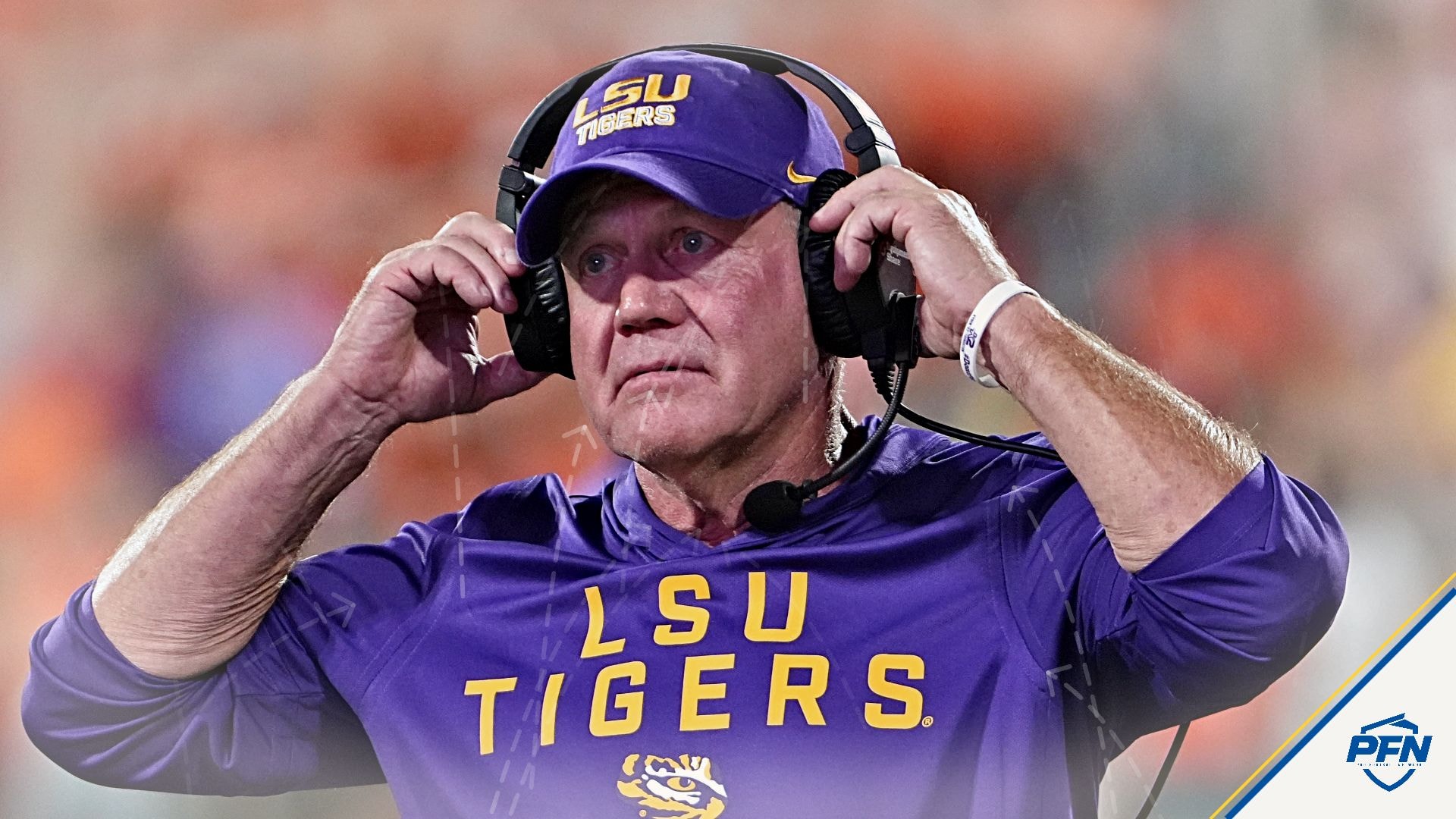
Former LSU defensive tackle Breiden Fehoko says he played a major role in the decision to move on from Brian Kelly, a claim that sparked wide criticism after Kelly’s tenure ended following a decisive loss to Texas A&M.
Brian Kelly’s departure from LSU has generated plenty of conversation, but the latest comments from former Tiger defensive tackle Breiden Fehoko have turned that debate into something more personal. In an appearance that quickly circulated online, Fehoko said he had a significant hand in the outcome that led LSU to part ways with Kelly. The comments were met with sharp backlash from college football fans, many of whom questioned why an ex-player would publicly frame himself as the driving force behind a head-coaching change.
Fehoko’s remarks landed in the context of a rough season ending stretch that ultimately pushed LSU past its breaking point with Kelly’s leadership. The Yahoo Sports report ties the decision timeline to LSU’s blowout loss to Texas A&M, describing it as the final breaking point in Baton Rouge. According to the same account, that loss helped turn internal frustration into an institutional decision, and Kelly’s exit followed soon after.
What Fehoko said, and how fans reacted, became the story itself. The Yahoo report characterizes Fehoko’s claim as mock-worthy and widely criticized, with the public reaction centering on the idea that credit for a coaching dismissal should not be framed as coming from a player. The headline’s wording reflects the tone of that backlash, including the notion that the comments were overly self-assured rather than grounded in how coaching changes typically happen.
It is important to separate what LSU’s process would generally involve from what Fehoko is claiming. Head-coach firing decisions at the college level are usually driven by a combination of results, recruiting trajectory, program fit, and internal evaluation by athletics leadership. Fehoko, by contrast, is discussing his own role as an individual and specifically crediting himself for influencing a decision tied to a head coach’s job security. The clash here is not about whether the decision occurred, but about who should be credited for it.
The timing also matters in college football’s public ecosystem, where players, former players, and fans all compete to shape narratives about program identity. LSU has been defined recently by high expectations that turn every late-season result into a referendum. In that setting, an ex-player’s claim about forcing or accelerating an exit can be interpreted as either accountability from within the building or, as critics argue, unnecessary self-promotion.
For LSU, the practical takeaway is reputational and recruiting related even when there is no direct “transaction” connected to the comments. Alumni visibility, fan sentiment, and the message sent to current players all influence how a program recruits and retains commitment from talent. If a former player’s public statements draw hostility, that can create extra noise for the brand New Tiger staff is trying to establish, particularly in an offseason when recruiting and roster building require calm messaging.
For Fehoko personally, the long-term impact will likely depend on how he follows up and whether LSU, Texas A&M, or league insiders offer any clarifying context. As of now, the story rests on Fehoko’s own assertions as reported by Yahoo Sports and on fan reactions to those assertions. Without an official LSU statement confirming or disputing the nature or extent of his alleged influence, the safest conclusion is that the claim is exactly that, a claim.
Looking ahead, the narrative will likely resurface around any future LSU defensive performance and any additional former-player commentary. If LSU’s new coaching staff emphasizes a unified culture and resists public faction narratives, the program may work to redirect the conversation from past blame to current execution. In the meantime, the comments have become yet another reminder that in modern college football, coaching changes can take on an afterlife in social media, where credit, blame, and credibility are litigated long after the sideline decision is made.
Why It Matters
- Program decisions are judged not only by results but also by the stories attached to them, and Fehoko’s comments add a new angle to LSU’s coaching transition narrative.
- Fan sentiment can affect how quickly recruits and returning players perceive the new staff’s culture-building message.
- Public credit-taking claims can create reputational friction for organizations during offseason recruiting and team-building periods.
- The episode highlights how a single late-season game, like LSU’s loss to Texas A&M, can trigger both immediate staffing changes and prolonged public debate.
Sources
Key Facts
- Yahoo Sports reports that former LSU defensive tackle Breiden Fehoko claimed he played a major role in the decision that ended Brian Kelly’s tenure at LSU.
- The same report frames LSU’s blowout loss to Texas A&M as the final breaking point leading to Kelly’s exit.
- The Yahoo piece describes widespread backlash from college football fans in response to Fehoko’s credit-taking claim.
- The story focuses on who should be credited for a head-coaching dismissal, not on a verified internal process statement from LSU.
- No official LSU confirmation or denial of Fehoko’s claimed influence is included in the Yahoo report.