
THE APEX TIMES
Brewers’ Matt Arnold and the transaction record: a four-year test against the Royals’ front office
A new comparison looks at how Milwaukee president of baseball operations Matt Arnold has built talent over four years, using Kansas City’s J.J. Picollo as a reference point as the Royals face renewed questions about contender-building.
A fresh baseball front-office comparison asks a simple question: how reliably have teams turned decisions into on-field value? In a piece published by Yahoo Sports, the lens is Milwaukee Brewers president of baseball operations Matt Arnold, evaluated through the franchise’s transaction history over a four-year span. The comparison is framed against Kansas City Royals president of baseball operations J.J. Picollo, whose organization has, according to the report’s premise, produced fewer recent playoff appearances and has drawn added scrutiny after recent disappointing seasons.
The core idea behind the evaluation is not results alone, but the process a club uses to acquire talent. In that sense, transactions become a proxy for decision-making, since front offices are constantly trading for players, signing free agents, and choosing when prospects and player depth are ready for major-league roles. The Yahoo Sports approach, as described in its introduction, treats the Royals and Brewers as parallel case studies, aiming to compare the effectiveness of two leadership groups rather than just the outcomes of a single roster.
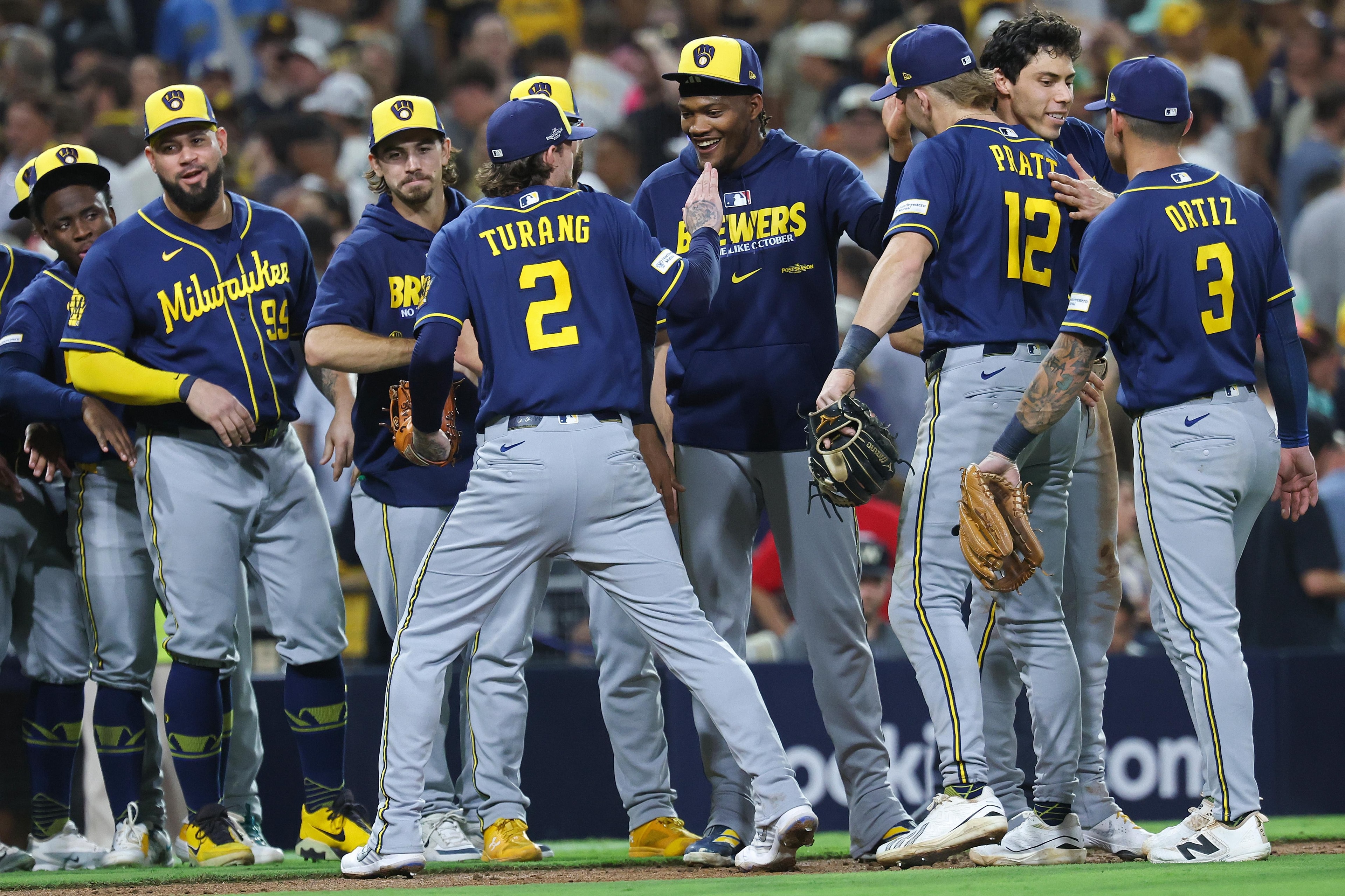
For Milwaukee, the emphasis falls on Arnold’s tenure and what it has produced through roster construction. The report sets up the idea that “best” front-office execution is measured by identifying and developing talent, then turning those acquisitions into sustainable major-league performance. That framing matters because transaction quality is often only fully understood with time. Players can require development, injuries can redirect careers, and roster needs shift quickly as the competitive environment changes.
Kansas City provides the benchmark because the piece highlights the Royals’ limited postseason frequency in the last decade and the added pressure brought on by recent non-contending stretches. The introduction points to 2025 and 2026 as seasons that have raised questions about whether the organization has built the kind of roster that can compete consistently. In practical terms, that makes the Royals a useful comparison partner, since their evaluation is tied directly to whether past decisions have translated into playoff-ready depth, pitching, and offensive continuity.
Still, transaction-based comparisons come with caveats. Baseball operations decisions are made under uncertainty, and a transaction that looks sound at the time can be overturned by factors outside a front office’s control, including player performance variance and health. Likewise, a team’s broader spending posture and farm system depth affect what kinds of options exist at any moment, which can influence the “range” of outcomes even if leadership is strong.
What to watch next is how clubs use these internal and external assessments to guide longer-term roster strategy. If the Brewers’ four-year record is interpreted as strong, it can reinforce the argument that Milwaukee’s front office has been effective at turning transactions into major-league contributors. If the Royals’ reference case underscores persistent shortcomings, it raises the stakes for how quickly Kansas City must recalibrate to restore playoff contention. In either direction, the comparison underscores that contender-building is not a single signing or one trade, but the accumulation of decisions that can hold up across multiple roster cycles.
Why It Matters
- Front-office effectiveness is often judged retrospectively, and transaction-based comparisons try to quantify decision-making quality over time.
- For Kansas City, the article’s premise ties organizational scrutiny to whether recent roster-building produced enough postseason-level talent.
- For Milwaukee, a favorable transaction evaluation would support the idea that the Brewers have constructed competitive rosters through repeatable methods.
- The debate also highlights how roster construction is shaped by development timelines, injuries, and market constraints that complicate simple head-to-head comparisons.
Key Facts
- Yahoo Sports published an analysis comparing Brewers president of baseball operations Matt Arnold to Royals president of baseball operations J.J. Picollo.
- The evaluation is framed around a four-year transaction record for Milwaukee.
- The Royals are presented in the piece as having made the playoffs only once in the last decade.
- The introduction says recent seasons in 2025 and 2026 increased questions about whether Kansas City can build a contender.
- The report’s method emphasizes how well a front office acquires talent through transactions rather than focusing on single-game outcomes.