
THE APEX TIMES
Britain Covey’s punt return surge with the Eagles is a reminder of the Rams’ long-running special-teams problem
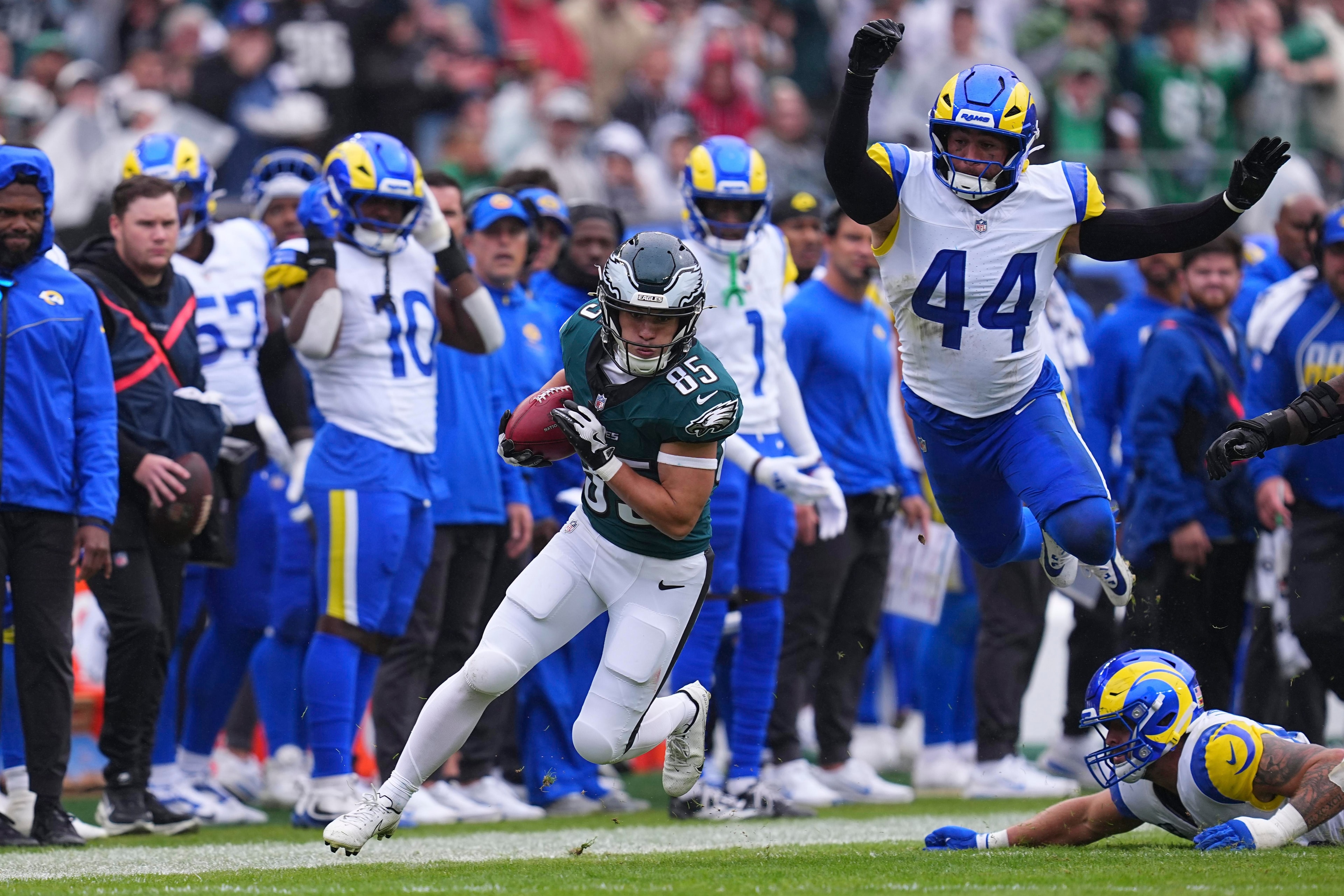
Los Angeles had a front-row seat to one of the NFL’s more effective punt return men while Britain Covey built momentum in Philadelphia, despite having been in the Rams’ orbit as recently as last training camp.
Last weekend, the Los Angeles Rams watched a familiar name turn into a reminder. Britain Covey, playing for the Philadelphia Eagles, impressed as a punt returner, highlighting a role the Rams have struggled to stabilize for more than a year. The core issue is not just whether the ball is fielded cleanly. In the modern NFL, punt return production can swing field position, change tempo, and quietly tilt late-game possessions.
Covey’s impact came in a context the Rams likely did not want to see from the sideline. The Eagles punt return game has been able to trust him in space, and the contrast mattered because Covey spent last training camp with the Rams. That timeline is the reason the comparison landed so sharply. When a team moves on from a player, it is never only about the present week. It is also about the evaluation process that led to the decision, and whether the resulting roster role ended up being any better than what was available internally.
The Yahoo Sports report framing this issue argues the Rams have “botched” the punt returner role for a long time. It is an accusation about repeated planning, staffing, and execution, not about a single play. Even when a punt returner does not make a dramatic highlight every time, teams still measure the position by consistency: secure catches, smart lanes, and the ability to convert a short gain into a meaningful return when the punt coverage allows it.
With Covey in Philadelphia, the immediate story is straightforward. He was playing one of the league’s best punt return roles while the Rams were on the other sideline, effectively watching a different answer to a question they have been trying to answer on their own. The report emphasizes that Covey’s performance for the Eagles continued even though he had spent time with the Rams during the previous training camp cycle.
For Los Angeles, the bigger issue is structural. Punt return jobs often function as a small roster ecosystem involving special-teams coaching, practice reps, and trust built over multiple opportunities. If that trust is repeatedly withheld, the unit tends to stay reactive. Teams can cycle returners due to drops, hesitation, or matchup concerns, but frequent changes rarely produce long-term stability. The Rams, by this account, have been stuck in that pattern longer than a normal “sample size” would justify.
There is also a psychological component. A punt returner’s job is low-margin but high-visibility: one muffed catch changes how everyone in the stadium reacts, and it can alter the coaching staff’s willingness to keep taking risks. When a team does not have a settled identity at the position, it can affect decisions across the special-teams phase, including how aggressiveness is calibrated by the coverage unit and how return-team protection is handled.
What to watch next is whether the Rams treat this as an isolated fix or as the start of a genuine reset. If the Rams are going to solve the punt return problem, they will need the role to become predictable in practice and dependable in game situations. For Philadelphia, the question is simpler: can Covey keep translating his punt return quality into consistent game-to-game production as opponents adjust their coverage?
As for the long-term framing, this story is more about process than punishment. Covey’s presence is the visible proof point, but the underlying subject is roster management. In a league where points start with field position, special teams still has the ability to expose whether a team is building toward cohesion or patching holes as the season moves forward.
Why It Matters
- Field position on punts can swing drive outcomes, especially late when small advantages compound.
- Repeated instability at punt return often indicates deeper special-teams problems that can affect multiple phases, not just returns.
- When a team watches an overlooked role get solved elsewhere, it can change how aggressively it searches for a long-term answer.
Key Facts
- A Yahoo Sports report says the Rams have mismanaged the punt returner role for more than a year.
- Britain Covey, playing for the Eagles, reminded Los Angeles how effective punt return play can look on game day.
- The report notes Covey had spent last training camp with the Rams.
- The Eagles punt return impact is presented as ongoing, not a one-week spike.