
THE APEX TIMES
Brock Bowers turns the Raiders’ tight end into a matchup problem, and coach calls it “Cadillac” football
Klint Kubiak’s praise during Raiders OTAs reflects how Brock Bowers has forced defensive planning around the position, turning a traditional role into a multi-purpose weapon.
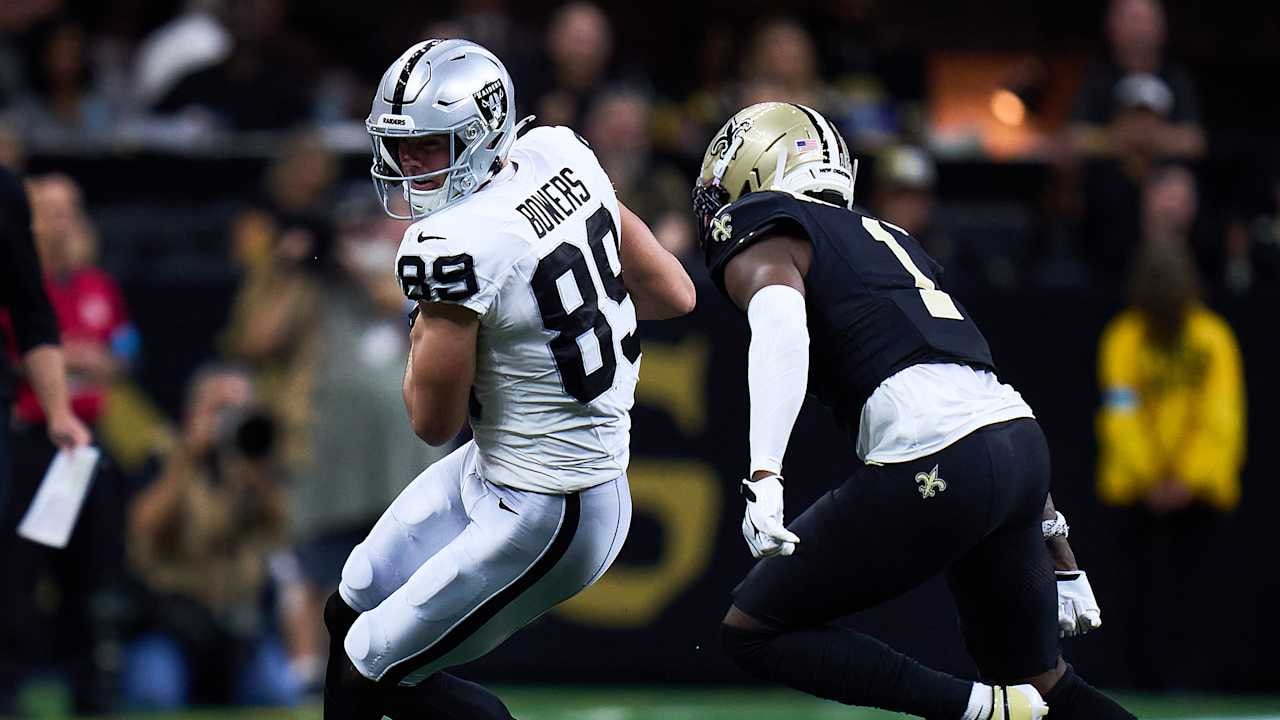
The Raiders are approaching the tight end position with a clear premise this offseason: Brock Bowers is not just another player to be covered, he is a coverage concept that can change how a defense lines up and communicates. In a team release from tied to OTAs, Raiders coach Klint Kubiak described Bowers in unusually broad terms, emphasizing how Bowers’ skill set makes defensive answers harder to hold in place.
Kubiak’s characterization was vivid. He said Bowers is “kind of a football robot. In a good way,” adding that he is “a football robot from heaven” and “a Cadillac out there.” Those remarks were offered as coaching context for what Bowers represents on the field, not as a technical breakdown, but they underline the same underlying theme: the Raiders see Bowers as a frequent determinant of what defenders are asked to do.
The public read on Bowers within the organization is also backed by recognition outside the building. The team release notes that Bowers was a first-team All-Pro selection as a rookie two seasons ago, which frames why the Raiders view him as more than a developing piece. It also helps explain why defensive coordinators do not have the luxury of treating the tight end spot as interchangeable even when personnel packages change.
What makes the Raiders’ mindset important is that modern defenses rarely base their game plans on one receiver or one skill player. Instead, they respond to what a team can do in multiple alignments, formations, and leverage situations. In that environment, a tight end who can win across the seam and also function as a passing-game focal point becomes a problem because it can compress a defense’s decision-making process. The Raiders’ offseason messaging points directly at that issue.
Kubiak’s language suggests the Raiders believe Bowers’ play style is consistent enough to be trusted as a core element, rather than a situational option. That kind of trust typically affects preparation routines for an entire offense, including how routes are timed, how play-action is supported, and how the passing game is structured around getting defenders out of their comfort zone.
There is, of course, a caveat with offseason evaluations. OTAs and similar team periods are not full-game conditions, and coaches often speak in aspirational terms during the early part of a new work cycle. Still, when a franchise labels a position group through the lens of one player, the implication is practical: the Raiders intend to continue building their passing identity so that opponents must plan for Bowers as a constant.
As the Raiders move from OTAs toward the regular season, the clearest thing to watch is whether the team continues to use Bowers as a centerpiece matchup in a wide variety of looks. If the Raiders consistently put him in situations that force adjustments, it will validate what Kubiak was pointing toward, namely that Bowers is changing how the tight end position is defended, not just who is targeted.
For opponents, the challenge will be coordination. A tight end who demands attention can affect coverage shells, safety placement, and the way linebackers fit the middle of the field. For the Raiders, the payoff is that an opponent’s best defenders must be deployed with purpose, which can open space for other routes and other parts of the offense by forcing early, repeatable defensive reactions.
Why It Matters
- In the modern NFL, a tight end who can alter coverage responsibilities can reshape an opponent’s defensive structure beyond just one target each drive.
- When a team builds around a player like Bowers, it can influence route design, formation frequency, and how often defenses must allocate extra attention to one side of the field.
- Defensive game plans often start with matchup problems. If Bowers forces consistent adjustments, opponents must spend more practice time preparing for him specifically.
- For the Raiders, centering their offense on Bowers can help create a stable identity that carries through different personnel groupings and game scripts.
Key Facts
- The Raiders’ official offseason release discusses Brock Bowers and how he impacts defenses’ planning around the tight end position.
- Raiders coach Klint Kubiak praised Bowers during OTAs, describing him as “kind of a football robot” and comparing him to “a Cadillac out there.”
- The release notes Bowers was a first-team All-Pro selection as a rookie two seasons ago.
- The team’s messaging frames Bowers as a consistent, integral element of the Raiders’ passing-game challenge for opponents.