
THE APEX TIMES
Bryan Baker’s Rays chapter raises a bigger question: how do you value an overlooked arm?
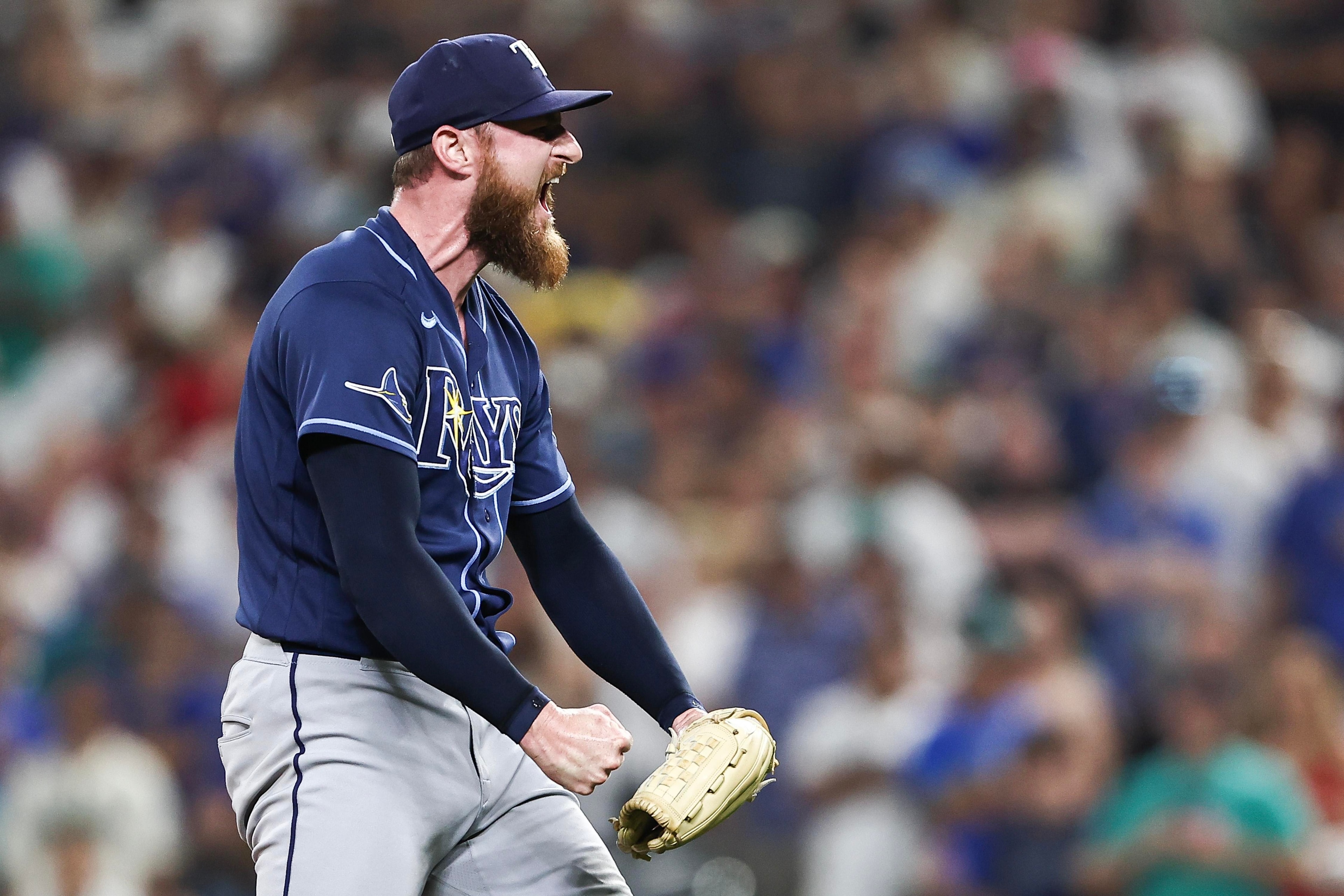
Tampa Bay acquired right-hander Bryan Baker from the Baltimore Orioles in a competitive balance swing that has already looped back into the organization’s broader roster-building story.
The Tampa Bay Rays have never been a club that simply pays for the obvious. Their best seasons have often been built by identifying pitchers before the market fully prices them in, then turning those players into something sturdier, more useful, and, at times, more durable than anyone expected. That makes Bryan Baker’s case a natural subject for Rays history, especially because his path to Tampa Bay is tied to one of the organization’s defining mechanisms: the competitive balance draft.
Baker was acquired from the Baltimore Orioles on July 10, 2025 in exchange for a competitive balance draft pick, No. 37 overall. The trade was not framed as a headline-grabbing haul. Instead, it fit the Rays model, which tends to treat “good arms” as inventory that can be harvested and reallocated, as long as the development and the decision-making hold up. Baker’s presence in that framework is what turns his story into more than a single player narrative.
The larger wrinkle, and the part that gives the question about “place in Rays history” real teeth, is what happened to the draft pick that Tampa Bay sent away. The Rays later re-acquired that same No. 37 overall selection in the Shane Baz trade. In other words, Baker’s arrival was linked to a pick the Rays would later bring back into the organization’s own control, reinforcing a sort of internal continuity in how the franchise planned its talent pipeline.
For a fan reading it as transactions on a spreadsheet, it can look like simple asset management. But in MLB terms, those moves carry different kinds of risk. Competitive balance picks represent a chance at a player who might not otherwise be accessible, yet the timing matters, too: the Rays have to decide whether to use leverage for a major league contributor now, or to hold patience for a prospect who may not arrive for years. Baker’s case, as described in the Rays-linked chain of picks, becomes an illustration of how the organization weighs “now” against “later.”
There is also the question of identity, which is often where “history” lives. The Rays have built a reputation around pitchers who arrive with limited expectations and leave with expanded roles, improved results, and a clearer understanding of how they fit. Whether Baker ends up remembered primarily as a development success, a roster stabilizer, or a reminder of how thin the margin can be is ultimately determined by what happens after the trade, not just the transaction headline.
At the same time, it is worth being cautious about what can be concluded from a transaction alone. The available reporting points to the acquisition details and the connection between draft pick No. 37 and a later Shane Baz deal, but it does not establish a complete ledger of Baker’s performance, innings, or long-term impact within Tampa Bay. That means any definitive “place in history” assessment depends on additional context beyond the trade mechanics.
What to watch next, then, is not only how Tampa Bay deploys pitchers like Baker, but also whether the organization continues to turn competitive balance leverage into tangible roster value. The Rays’ ability to repeatedly convert overlooked arms and draft ammunition into useful major league outcomes is the storyline that makes this question matter across multiple seasons.
Ultimately, Bryan Baker’s story reads like a case study in how the Rays think: acquire value where others may not look, connect transactions so the system stays functional, and keep building even when the moves are quiet. The outcome, as ever, will be judged by results over time. For Rays fans, the hope is that Baker’s arc becomes one more example of Tampa Bay making the unexpected feel inevitable.
Why It Matters
- The Rays’ approach often depends on converting underappreciated arms into reliable major league innings, which makes each pitcher’s path part of a broader organizational philosophy.
- Competitive balance picks are limited opportunities, so how teams trade them and re-access them can shape multiple years of roster planning.
- The connection between Baker’s acquisition and the later Shane Baz deal highlights how Tampa Bay tries to maintain flexibility across different stages of team building.
- Whether Baker becomes a defining Rays success story will depend on how his role evolves and what value he ultimately provides in Tampa Bay’s pitching structure.
Key Facts
- The Tampa Bay Rays acquired right-hander Bryan Baker from the Baltimore Orioles on July 10, 2025.
- The July 10, 2025 trade included a competitive balance draft pick, No. 37 overall.
- The Rays later re-acquired the same No. 37 overall competitive balance selection in the Shane Baz trade.
- Baker’s transaction link to the No. 37 pick creates a direct connection between multiple roster-building decisions tied to competitive balance leverage.