
THE APEX TIMES
Bryce Harper’s renewed standard of excellence turns heads in Philadelphia
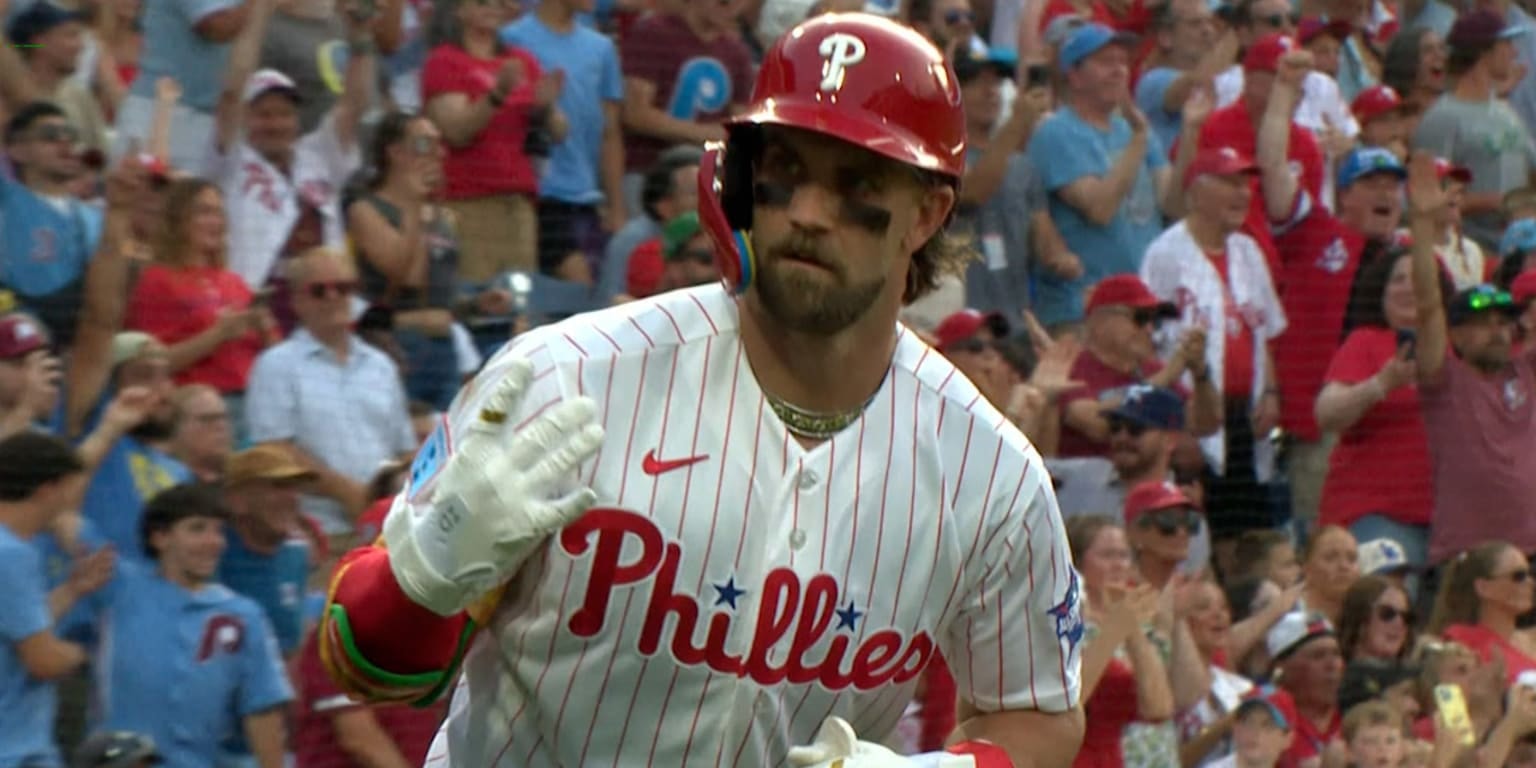
As the Phillies’ season moves through its midyear stretch, Bryce Harper’s bat has been producing at a level that looks recognizable again, not just in headline numbers but in the expected-and-contact quality metrics that tend to separate true impact from variance.
Bryce Harper’s season has developed into a familiar kind of problem for pitchers, and it is showing up in more than one way. Entering play on Thursday, the Phillies star was posting a.908 OPS, a mark that ranked among the very best in baseball among qualified hitters. In a lineup where the ceiling depends heavily on extra-base damage, that kind of output matters because it changes what opponents can safely pitch around.
From a “value the extra bases” standpoint, Harper’s production was also near the top. The MLB story on his performance highlighted a 145 wRC+ (a run-creation measure adjusted for park and league context), placing him in the top 15 among qualified hitters. Taken together with the OPS number, it suggests the power and overall damage are not isolated moments, but a repeatable profile.
What makes the recent stretch more striking is that the underlying, contact-quality indicators point in the same direction. Harper’s xwOBA was listed at.409, which was seventh best in the league in the breakdown. xwOBA is designed to account for both the quality of contact and the plate discipline outcomes, so it attempts to “factor out” some of the randomness that can come with batting average and batted-ball outcomes.
There is also a pitch-location component to the story. The same analysis tied Harper’s improvement to his ability to do damage on pitches in the strike zone, noting that his best in-zone expected slugging and expected wOBA were among the strongest he has produced in Philadelphia since his earlier MVP-winning stretch. The implication is not merely that he has been getting results, but that he has been selecting and attacking the right pitches with the consistency of a hitter at the peak of his craft.
That matters for Philadelphia not just as a feel-good narrative, but as a leadership and roster-building issue. The Phillies endured a difficult opening month that led to a managerial change, and the team has been trying to define its identity under interim leadership. In that environment, when Harper begins hitting like a franchise cornerstone again, it becomes a stabilizing force for the rest of the order, because the lineup’s threats are no longer evenly spaced. They concentrate at the point where pitchers least want to be predictable.
Harper has also framed his approach in straightforward terms. In the clubhouse interview referenced in the coverage, he emphasized “See it, hit it,” and described trying to do damage on pitches in a good zone by hitting the ball hard. For fans, the most important part of that explanation is that it matches what the numbers are indicating: when he is getting in the right swing, the production profile follows, and the Phillies’ offense has a clearer path to sustaining pressure late in games.
The next question is whether Harper can keep this level steady as pitchers adjust over time. Because his strongest indicators in the report are contact-quality and expected metrics, the warning signs are usually not immediate. Instead, the test comes gradually, as opponents refine their game plans and as the season’s grind changes travel, lineup rhythm, and how hitters are asked to handle different bullpen roles.
Why It Matters
- When Harper’s production matches elite expected metrics, it raises the Phillies’ offensive floor, not just their ceiling.
- In-season managerial transitions tend to expose the teams that can still generate consistent run creation, and Harper’s bat is a stabilizer.
- Elite performance from a central slugger affects game plans across the lineup by forcing more pitches to be thrown in harm’s way.
- If the underlying indicators hold, the Phillies can plan more confidently around their late-inning leverage situations, where star hitters often decide games.
Key Facts
- Entering play on Thursday, Bryce Harper’s OPS was.908 and ranked among the best among qualified hitters.
- Harper’s wRC+ was 145, a top-15 mark according to the analysis.
- Harper’s xwOBA was.409, reported as the seventh-best figure in baseball in that breakdown.
- The coverage emphasized Harper’s production on pitches in the strike zone, using expected slugging and expected wOBA to isolate what he can control.
- Harper described his approach as seeing the pitch early, attacking pitches in a good zone, and trying to hit the ball hard.