
THE APEX TIMES
Bryce Harper turns frustration into a run, caught-stealing home highlights Phils’ baserunning correction
In the eighth inning at Anaheim, Harper’s quick decision on the basepaths helped the Phillies navigate a late game that had been slowed by earlier baserunning errors.
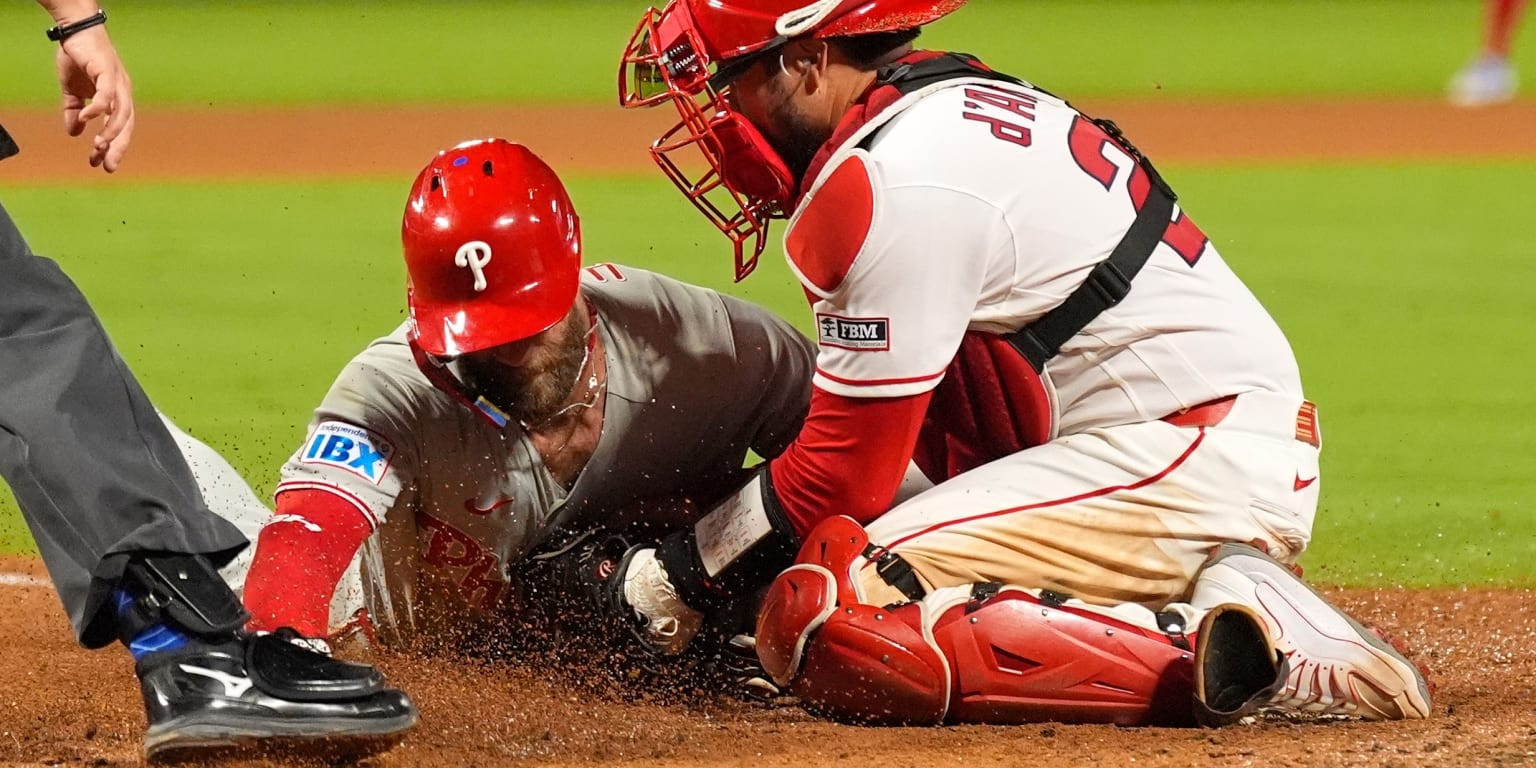
ANAHEIM, Calif. On a night when the Phillies kept handing away chances on the bases, Bryce Harper provided a jolt of resolve in the eighth inning. With the Phillies clinging to a one-run lead, and Harper standing on third with two outs, he went on a play that looked like it could either turn into a momentum swing or an end-of-inning disappointment. Instead, Harper timed the moment well enough to beat the tag at home, prompting the kind of baserunning punctuation the Phillies had needed.
The Phillies were in a fragile state late, and their manager and players had been working through a game narrative that kept circling back to baserunning details. The MLB report framed Harper’s run as a response to what he had “watched” unfold earlier, with the team missing too many chances. That context matters because late-inning baseball often comes down to whether runners take the safe route, hesitate, or commit fully to reads from the dugout and the runner’s instincts.
Harper’s path to home was described as casual, with the emphasis on how the play developed. Standing on third with two outs is a spot that can produce conservative decisions, but it is also a position where a single runner’s commitment can change the math of the inning. By breaking for home and reaching safely, Harper effectively removed a level of doubt from the Phillies’ late-game posture.
That run also did more than add runs to the scoreboard in isolation. The MLB account connected the moment to the theme of baserunning miscues, suggesting the Phillies were trying to find a way to keep pressure on without letting their own execution problems define the final frame. In that sense, Harper’s baserunning decision served as a correction, even if the broader game still featured moments the team would rather not repeat.
For Phillies fans, the takeaway is straightforward: the team found a late solution when the margin got tight. For the clubhouse, the bigger lesson is also clear. Baserunning errors can erase scoring opportunities just as quickly as bold plays can create them. The difference, on nights like this, is usually whether a runner can trust the read early enough to get to the next base with purpose.
Looking ahead, Harper’s late-inning aggressiveness will likely stand out as one of the cleaner paths the Phillies had to advance when the game narrowed. The Phillies will still have to address the execution that led to those earlier missed chances, but if they can combine smarter basepath decisions with the kind of commitment Harper showed, their late-game floor improves.
From an opponent’s perspective, the play also sends a message about the Phillies’ willingness to take responsibility on the basepaths. When Harper is running at the right moment, it forces catchers and pitchers to make sharper decisions with runners at the corners, especially late with two outs. That could shape how visiting teams manage their own lead-protection reads going into future innings.
Why It Matters
- Harper’s run underscores how critical two-out baserunning decisions can be when a team is holding a one-run lead.
- The episode frames the Phillies’ late-game identity as not just about hitting, but about execution and urgency on the basepaths.
- Late-inning aggression can change defensive and pitching reads, forcing opposing catchers to adjust their timing with runners on third.
- For the Phillies, turning earlier miscues into a successful late play helps shift pressure away from “what went wrong” toward “what we can do next.”
Sources
Key Facts
- Bryce Harper stole home in the eighth inning against the Angels while standing on third with two outs.
- The Phillies were leading by one run at the time of Harper’s baserunning play.
- The MLB report describes Harper’s action as a response to earlier Phillies baserunning miscues in the game.
- The play occurred in Anaheim as part of a late-inning sequence where the Phillies were protecting a narrow advantage.