
THE APEX TIMES
Bryse Wilson exercises assignment clause, making him available across MLB
The Phillies minor league right-hander has triggered a contractual mechanism that can move a player to another organization’s MLB roster if there is interest.
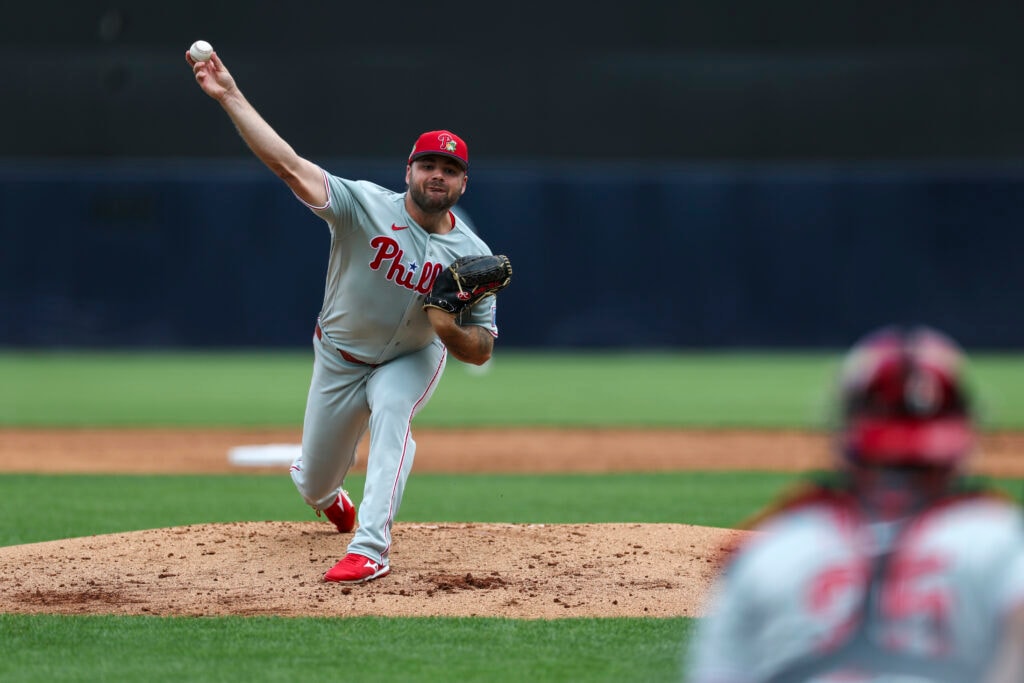
Bryse Wilson, a right-handed pitcher in the Phillies’ minor league system, has exercised an assignment clause in his contract, a move that reportedly makes him available to the other MLB clubs. The change matters because it ties his Phillies pathway to a decision window: if another organization is willing to carry Wilson on its MLB roster, Philadelphia cannot simply keep him in the same internal track without either promoting him or allowing him to depart, according to reporting from MLB Trade Rumors that cited Charlotte Varnes and Matt Gelb of The Athletic.
In MLB roster-management terms, assignment clauses are designed to create movement options for certain minor leaguers under defined conditions. Here, the practical impact is that Wilson is no longer strictly “owned” by Philadelphia within the boundaries of a minor league assignment. Instead, the clause reportedly requires the Phillies to make him available to the 29 other teams, which can convert a club-controlled depth situation into a league-wide opportunity for the rest of baseball.
MLB Trade Rumors’ report characterizes the timing as an “upward mobility” trigger, meaning the clause effectively connects Wilson’s next step to MLB interest rather than leaving the decision entirely at the Phillies’ discretion. That dynamic can also change how other teams evaluate their own pitching depth, especially for organizations that prefer adding a starting or swing option without using their own internal prospects as the primary cost.
The report also frames the decision as two-sided. If another club wants Wilson on its MLB roster, Philadelphia would need to respond by either promoting him itself or letting him leave, the way the clause is described in the reporting. For Phillies fans, the immediate question becomes what Philadelphia’s internal plan looks like once a player is exposed to the broader market, even if he is not yet a regular member of their major league pitching group.
While the clause-driven availability is clear from the reporting, many details that typically accompany moves like this are not confirmed in the published summary. Those include whether Wilson is immediately expected to join the Phillies’ MLB staff, whether another organization has submitted an interest, and what specific timetable applies to any subsequent roster action. As with most contract mechanics, the exact outcomes depend on the league’s defined procedures and the decisions of both Wilson and potential acquiring clubs.
For the Phillies, the broader roster implication is that depth planning cannot treat Wilson as fully insulated from external demand. Exposing a minor league starter can force earlier calls on internal alternatives, bullpen usage, and rotation planning if the Phillies end up needing to replace him at the highest level. It also gives other clubs a chance to take a calculated look at Wilson as a near-term MLB option rather than waiting for a different prospect window.
For other MLB teams, the clause functions as a low-friction scouting and acquisition moment tied to contractual structure, not just on-field performance. If Wilson’s profile aligns with an organization’s current needs, the clause gives that club a route to add a pitcher without waiting for a traditional trade framework.
Key for the coming days is whether any other team will act on the availability and whether Philadelphia chooses promotion versus departure. Until that is resolved, Wilson remains the centerpiece of a roster story that is less about a conventional transaction and more about how contractual mobility clauses reshape pitching options in the middle of the season.
Why It Matters
- The clause can move a minor league starter decision from the Phillies’ internal control to a league-wide MLB roster choice by other clubs.
- For Philadelphia, the outcome can affect rotation and depth planning and may force earlier adjustments in pitching assignments.
- For other teams, the mechanism creates an immediate, structurally supported option to add a pitcher if they prefer a near-term MLB contribution.
Key Facts
- Bryse Wilson exercised an assignment clause in his minor league contract with the Phillies.
- The clause reportedly makes Wilson available to the other 29 MLB teams.
- The Phillies, per reporting, would need to respond by either promoting Wilson or letting him depart if another club wants him on an MLB roster.
- The reporting is attributed to Charlotte Varnes and Matt Gelb of The Athletic, as summarized by MLB Trade Rumors.