
THE APEX TIMES
Busting Brackets lists 10 teams carrying the heaviest expectations heading into 2026-27
The preseason spotlight lands on blue-blood programs and other national contenders, arguing that “pressure” is often a sign the sport believes these teams are capable of something significant.
A new preseason list from Busting Brackets is built around a simple premise, pressure in college basketball is not automatically a negative. It is usually a reflection of belief, that a program’s talent and coaching baseline are strong enough that fans, media, and the national audience expect real postseason outcomes, not just a respectable regular season.
In its assessment of the 2026-27 season, Busting Brackets identifies Kentucky, Kansas, Duke and USC among the programs facing the most pressure. The framing is consistent across the list, each team is placed under the microscope because it occupies a spot in the national conversation, where even small missteps can become a headline during the long march toward March.
The list’s language is explicitly about expectations rather than a specific claim of what will happen. Busting Brackets describes “enormous pressure” and ties it to the idea that “people believe you’re capable of something significant.” That matters in college basketball because roster churn and the unpredictability of single-elimination tournaments make “capable” a moving target, and the programs on a list like this are judged against the highest possible outcomes.
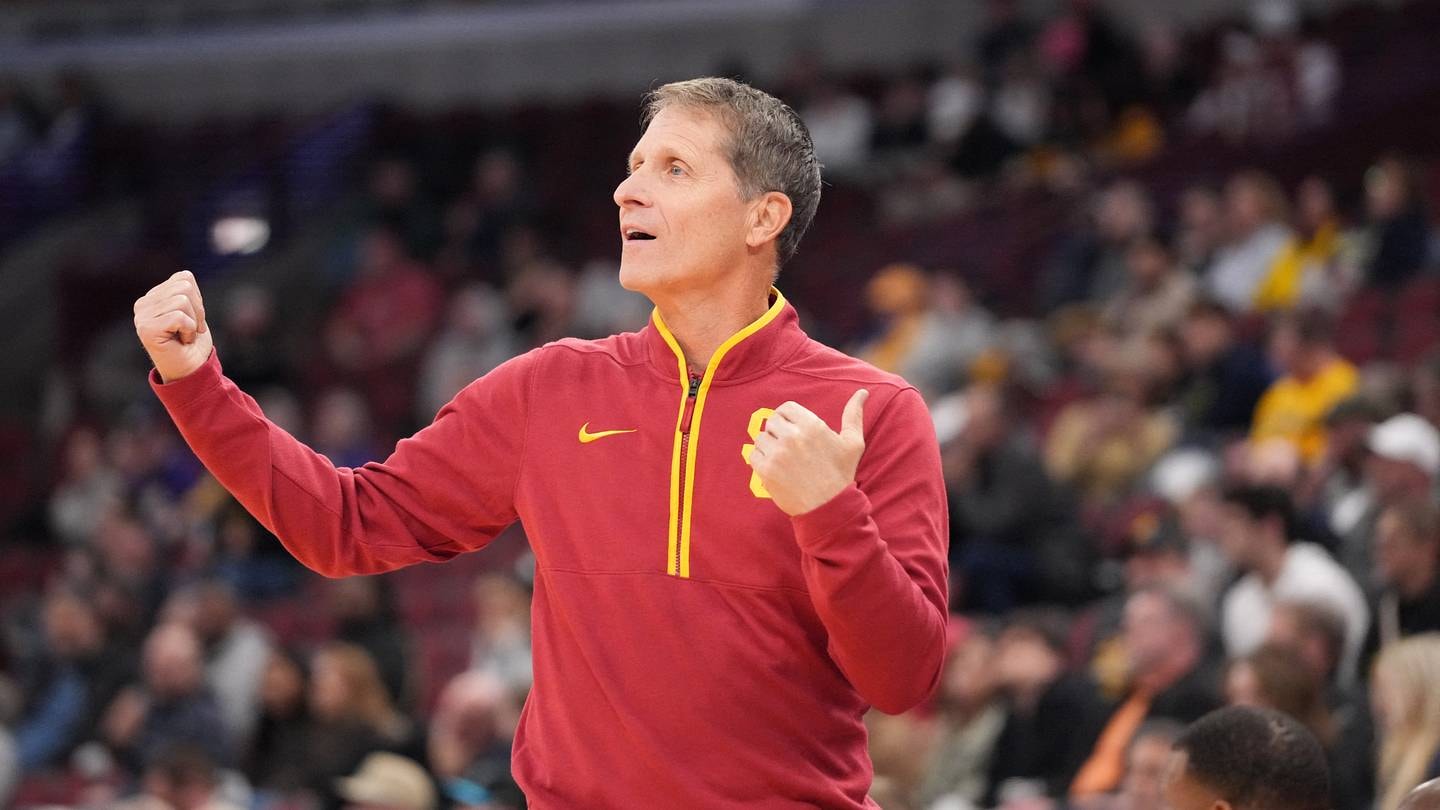
For programs with entrenched recruiting pipelines and decades of NCAA Tournament relevance, pressure tends to compound. Kentucky and Kansas are repeatedly treated as national benchmarks whenever they take the floor, and Duke’s brand remains synonymous with tournament readiness. USC, a newer force in the modern postseason conversation compared to those historic powers, is included in the group because its profile elevates the standard for what “progress” must look like by the end of the season.
What “pressure” typically translates to, in practical terms, is scrutiny of development and consistency. Offensively, teams are expected to look coherent against elite nonconference opponents. Defensively, they are expected to show enough structure to hold up in tournament-style pace and spacing. And athletically, the best teams under expectation tend to sustain execution late in games, when the margin for error shrinks to turnovers, free throws, and shot selection.
Still, a preseason expectations list should not be treated as a forecast. College basketball’s variables, player development, health, rotation stability, and the quality of the conference schedule, can all reshape a team’s reality before the bracket is even produced. A program can carry pressure for good reasons and still face a season that does not match the hype, just as a team criticized early can exceed expectations later if the pieces click.
As 2026-27 approaches, the teams named by Busting Brackets will be worth watching through a simple lens: whether they play like a contender against strong opposition, and whether their late-game identity holds up. If pressure is truly a byproduct of belief, then the season’s opening months should reveal whether these programs convert that belief into results when it counts.
Why It Matters
- Programs associated with national titles or longstanding tournament relevance face higher standards, which can influence how audiences and analysts judge every phase of a season.
- Because college basketball postseason outcomes are highly consequential, early-season performance against quality opponents can quickly become the measuring stick for “pressure” teams.
- The list highlights how newer contenders like USC can be pulled into the same expectation cycle as traditional powers when their trajectory rises.
Key Facts
- Busting Brackets published a preseason ranking focused on which college basketball teams face the most pressure in 2026-27.
- The list includes Kentucky, Kansas, Duke and USC among the programs discussed.
- The article’s central idea is that pressure is often a sign that people believe a program is capable of significant success.
- The ranking frames the topic as expectations and scrutiny heading into the season rather than a specific prediction of outcomes.