
THE APEX TIMES
Busting Brackets revisits Duke’s modern blueprint: 47 five-star commitments since 2010
A new recruiting-based look quantifies how often Duke has landed the highest-rated prospects over the past 15-plus years, and what that has meant for the program under both coaching eras.
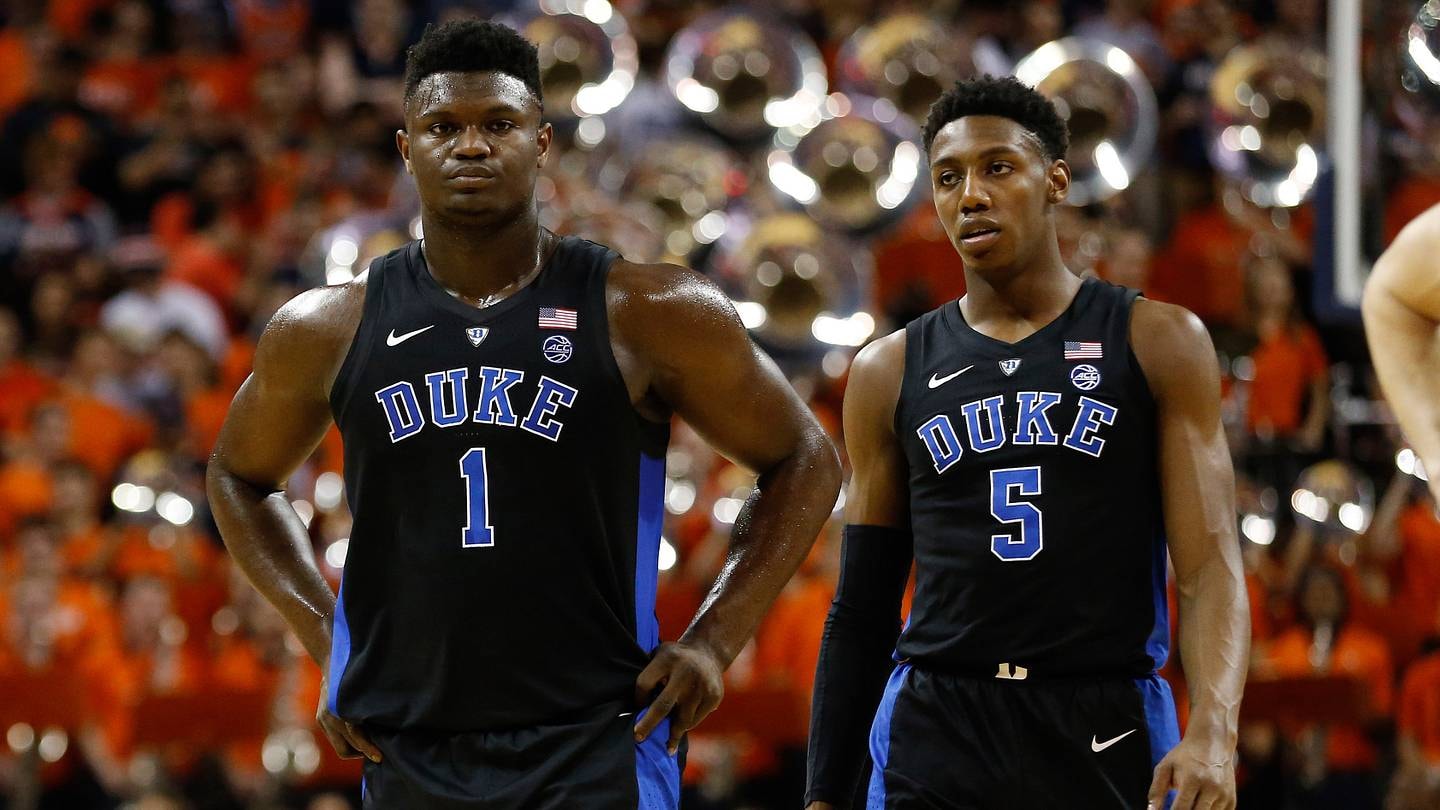
Duke Basketball has been a recurring destination for top-tier high school talent, and a new piece from Busting Brackets tries to measure that impact in one specific way: by compiling a ranking of all 47 five-star commitments to Duke since 2010. The premise is straightforward, even if the conclusion is not. Across the modern recruiting-services era, Duke has consistently attracted players rated as the highest tier by major evaluation systems, allowing it to reload rather than merely maintain.
The article frames Duke as arguably the most prolific “five-star” landing program of the period, making the case that the program’s pipeline has been unusually deep. In this view, it is not just that Duke has recruited elite players occasionally. It is that it has done so often enough to create competitive advantages in both roster construction and development, keeping the Blue Devils in a position to contend for championships year after year.
A key part of the discussion is the transition from the Mike Krzyzewski era to the Jon Scheyer era. Busting Brackets points to the shift in leadership after Krzyzewski’s retirement and then argues that, even without the long-tenured head coach at the center of the recruiting machine, Duke has continued to land top prospects. The article uses that continuity as a reminder that recruiting outcomes are not only dependent on a single personality. Program reputation, staff structure, player-development track records, and the brand strength of Duke as a destination also matter.
Because the piece is built around recruiting “commitments” and ratings rather than on-court results from a single season, the takeaway is best read as context for roster-building, not as a direct measure of how every recruiting class translated into wins. Five-star status indicates high expectations and perceived ceiling, but it does not guarantee fit, progression, or durability in the college game. Still, frequent recruiting success can reduce the probability that a team will have thin depth at critical moments, especially when college basketball seasons demand a blend of athleticism, skill, and rotation reliability.
The “47 since 2010” number is also a way of thinking about sustainability. Over 15-plus recruiting cycles, even minor differences in how often a program lands five-star caliber talent can accumulate into a noticeable gap. More high-end players increases competition for minutes and practice reps, and it can provide the coaching staff more options for lineup construction. For Duke specifically, the article’s focus on five-star commitments suggests an emphasis on building starting-caliber talent early enough that it can carry the program through multiple personnel phases.
In the weeks leading up to the next college basketball window, Duke’s recruiting identity will continue to be a major lens for fans and observers. A list like this can also influence how people interpret subsequent recruiting news, because it sets a baseline for what Duke’s “normal” ceiling has looked like in the modern era. The next test will be how well each incoming cohort develops into consistent contributors, because recruiting ratings are only the opening chapter of a team’s season.
Why It Matters
- Duke’s ability to repeatedly attract five-star talent is a major driver of how the program refreshes rosters across coaching eras.
- Frequent high-end recruiting tends to increase depth and internal competition, which can stabilize rotation planning over time.
- A recruitment-focused retrospective shapes how fans evaluate future classes, because it provides a benchmark for program momentum.
- In college basketball, roster depth and development matter as much as recruiting rankings, making this kind of list useful as context rather than a conclusion.
Sources
Key Facts
- Busting Brackets published a ranking of all 47 five-star commitments to Duke Basketball since 2010.
- The article argues Duke has been especially prolific in landing high-end recruits in the modern recruiting-services era.
- The piece discusses the coaching transition following Mike Krzyzewski’s retirement and ties it to recruiting continuity under Jon Scheyer.
- The focus is on recruiting commitments and five-star ratings rather than a season-by-season statistical summary.