
THE APEX TIMES
Buxton, Lewis and Keaschall homer, but Twins fall again to Cardinals in home run battle
Minnesota sent three balls out of Target Field, yet St. Louis’ power surge proved the difference, handing the Twins another loss in a game defined by long balls.
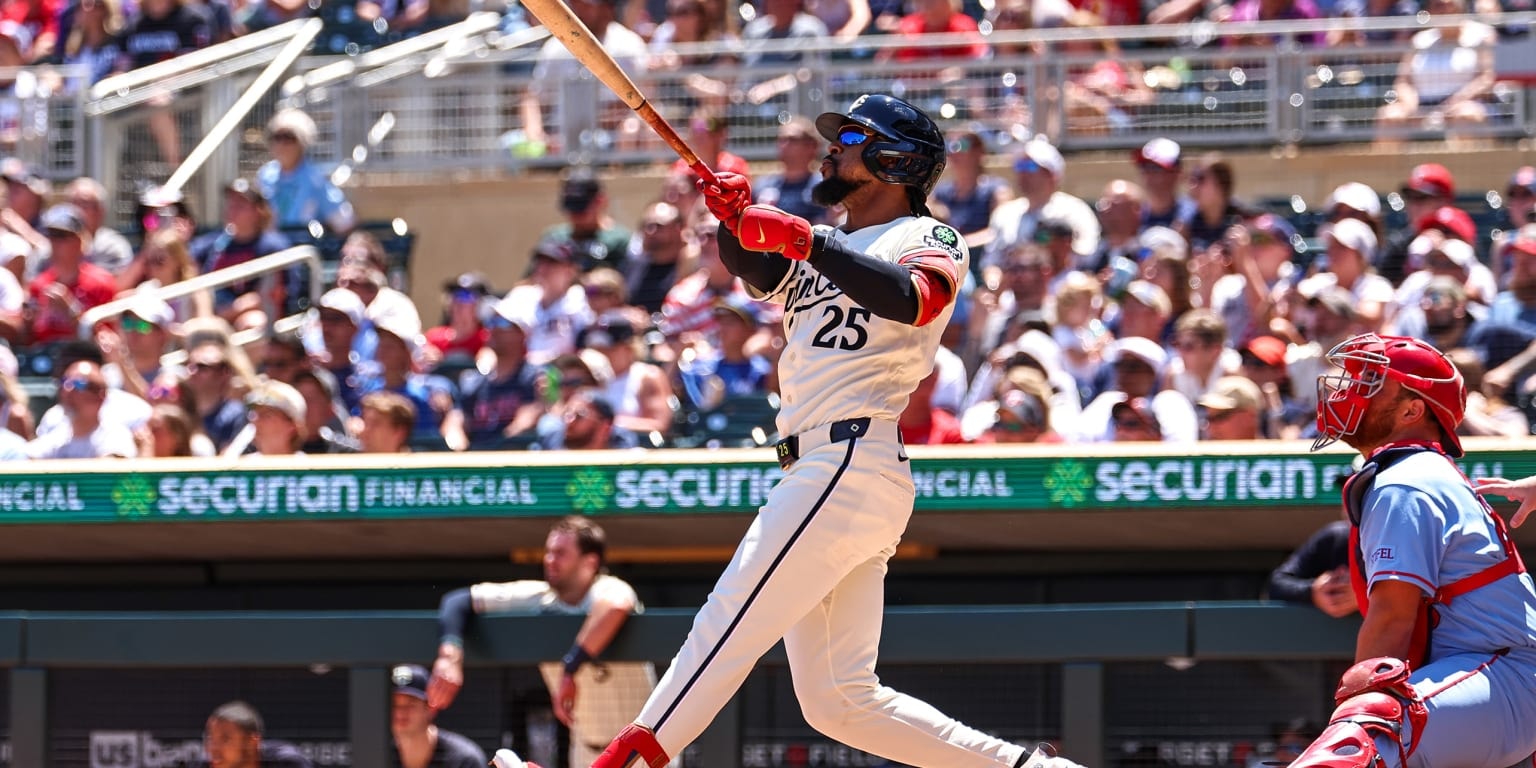
The Twins hit the ball out of Target Field again, but the Cardinals left Minnesota with the better end of another slugfest. Byron Buxton, Royce Lewis and Luke Keaschall each connected for home runs, giving Minnesota three long balls in the game. St. Louis answered with four homers of its own, allowing the Cardinals’ heavier power output to outpace the Twins’ effort even in a high-trajectory, homer-friendly setting.
It was the second straight game the ball carried at the park. In that environment, even modest late-game swings can turn into extra-base damage, and both teams leaned into the matchup by delivering pitches that were hit hard enough to clear the fences. For Minnesota, the homers were bright spots, but they were also an indication of how difficult it was to consistently generate runs beyond those high-impact moments.
Buxton’s home run added to Minnesota’s early and mid-game momentum, keeping the Twins close enough to stay within striking distance every time St. Louis put another homer on the board. Lewis followed with his own blast, and Keaschall capped the Twins’ long-ball surge, a trio that showed the Twins could impact the game with power when they got the right looks.
The Cardinals’ response mattered most. With four home runs, St. Louis didn’t need many additional extra-base hits to manufacture separation, because the game’s swing state was built into each drive. When opponents can turn multiple at-bats into immediate runs, the margin for error shrinks for the team that is also hitting homers but producing fewer total long balls.
Minnesota’s broader challenge is the same one that tends to surface in games like this: homers can keep the lineup engaged, but they do not automatically solve problems like getting on base consistently, stringing rallies together without relying on the fence, and limiting damage once the opponent finds its power rhythm. In this game, the Twins’ offense produced three home runs, yet the Cardinals’ fourth homer and its timing shifted the leverage in St. Louis’ favor.
For the Twins, the immediate focus after a loss like this is turning the homer output into repeatable scoring. The next test is whether Minnesota can reduce the number of pitches that become home-run opportunities, even if Target Field remains a place where the ball carries. If the Twins can combine power with steadier at-bats, they will be better positioned to translate big individual moments into full-game leads.
For the Cardinals, the encouraging takeaway is simple: they were able to create multiple instant-run swings on the road. Power that travels, especially in a place where homers can come in bunches, makes it easier to control the tempo of series play. The next time these teams meet, the key question will be which lineup adjusts better, not just who swings hardest.
Overall, this game fits a classic pattern in MLB, where a team can look competitive through the home run cycle but still lose when the opponent lands more of them. Minnesota will want its next stretch to feature not only long-ball power, but also the kind of run production that does not require every big inning to begin with the fence.
Why It Matters
- Games decided by multiple home runs often come down to how well each lineup turns high-quality swings into runs at scale.
- St. Louis’ four-homer output suggests its power can translate effectively on the road, a potential series-defining advantage.
- For Minnesota, the loss highlights that even strong homer totals may not be enough if the opponent produces more total long balls.
- The Twins will look to pair power with more consistent run creation in the next matchup to avoid repeating the same scoring pattern.
Key Facts
- The Twins hit three home runs in the game.
- Byron Buxton, Royce Lewis and Luke Keaschall each homered for Minnesota.
- The Cardinals hit four home runs in the game.
- Minnesota lost despite its three-homer total.
- The contest marked the second straight game the ball was hit out of Target Field.