
THE APEX TIMES
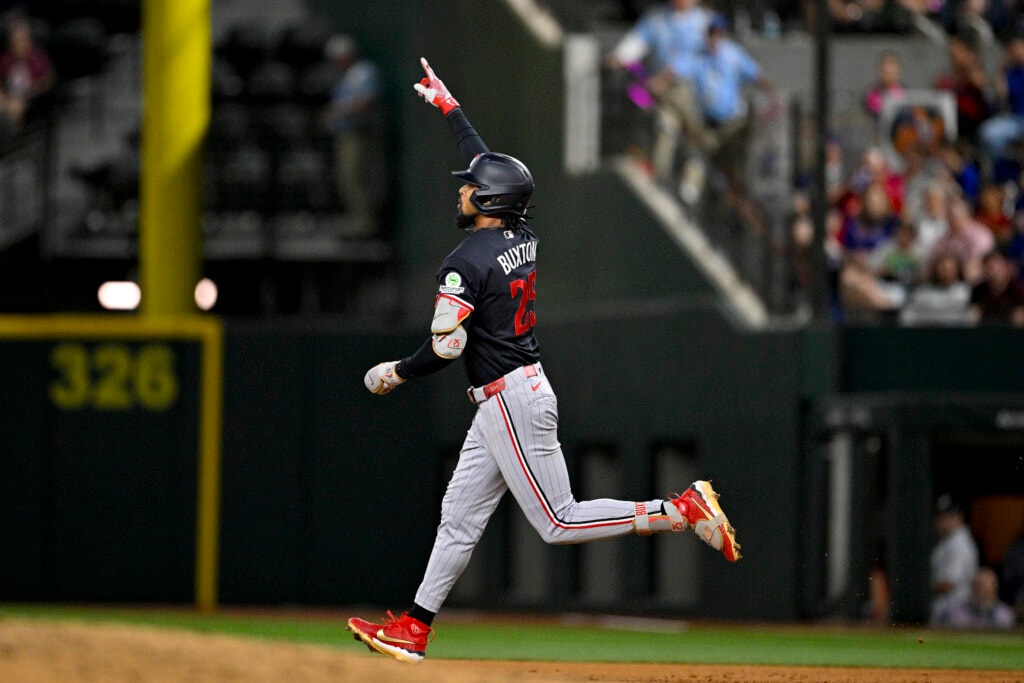
Facing the usual late-June noise around MLB trade availability, Twins center fielder Byron Buxton used a fresh interview to reaffirm that his no-trade status is not up for discussion and that he considers himself a Twin.
Late-June always brings a familiar rhythm in Major League Baseball. Trade-deadline talk swells, reporters revisit earlier headlines, and teams and players become magnets for rumors. On Thursday evening, Minnesota Twins star Byron Buxton stepped into that conversation directly, pressing back against fresh speculation that he could be moved as the July 31 deadline approaches.
Buxton’s response is notable because it is not just a general “I’m focused on my job” message. He has full no-trade rights, which means he would have to agree to any trade for it to happen. In an interview with Dan Hayes of, Buxton reiterated that he is not interested in leaving Minnesota, framing his status as settled and rejecting the idea that his camp has any appetite for waiver or trade discussion.
According to MLB Trade Rumors, Buxton’s comments came as early speculation resurfaced about his availability. The outlet reports that Buxton again tied his stance to identity and belonging, saying in essence that he’s a Twin and that the topic does not belong to the kind of speculation that usually flares up for star players this time of year.
This matters for Minnesota because Buxton, as a franchise-caliber center fielder, is one of the Twins’ most consequential on-field pieces. While trade rumors can be prompted by team needs, performance windows, or perceived market value, a player with no-trade rights limits what other clubs can realistically pursue. Even when other stars are discussed, the Twins’ ability to control the roster narrative becomes more rigid when a key player publicly and repeatedly rules out movement.
Buxton’s comments also function as a boundary-setting move. Trade talks often drift from “could he be acquired?” to “what would it cost?” before fully accounting for no-trade clauses, player preferences, and front-office realities. By revisiting the same message in the middle of the deadline season, Buxton is telling both the Twins’ clubhouse and the broader league market that any renewed rumors are likely to be aspirational at best and unrealistic at worst.
The practical question now shifts from “could Buxton be traded?” to what his stance means for the Twins’ broader deadline posture. When a team knows it cannot rely on a particular trade path for a cornerstone player, its front office can focus more narrowly on alternative areas of need, such as pitching depth, bullpen leverage, or other roster gaps. It also gives fans a clearer picture of how the organization might plan for July and, by extension, the late-season playoff chase if it becomes one.
For Buxton, the next watch item is straightforward: whether the Twins keep their focus on the season’s actual on-field demands rather than the media’s trading-cycle chatter. If Buxton continues to perform as the center of Minnesota’s lineup and defense, his public stance is likely to become an afterthought, absorbed into the background noise of deadline week. If the Twins’ circumstances change, the rumor mill will adjust, but the no-trade reality will keep the core question from ever fully opening up.