
THE APEX TIMES
Byrum Brown’s Auburn quarterback payday: where the 2026 compensation estimate ranks among top college passers
A new look at Byrum Brown’s 2026 pay compares his Auburn quarterback compensation to other prominent college quarterbacks, underscoring how NIL money is shaping expectations at the position.
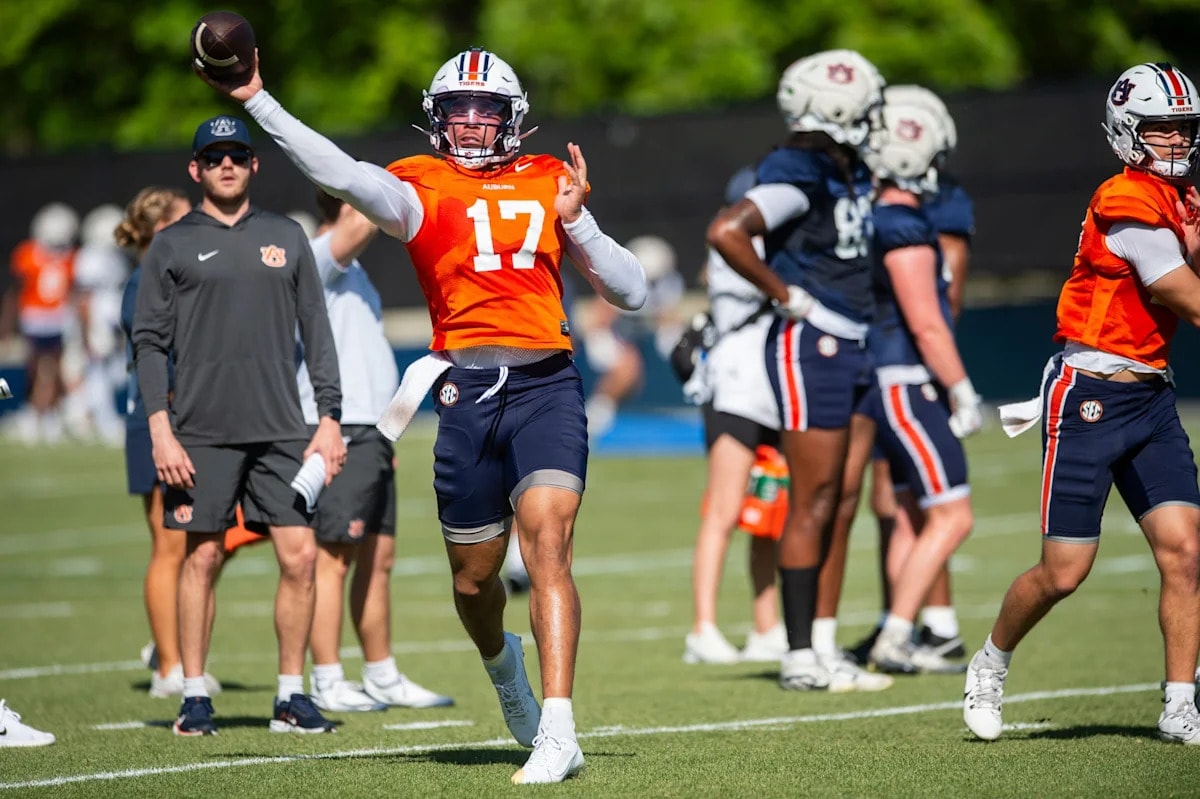
Auburn’s starting quarterback is being treated like one of the sport’s marquee stars, at least based on how his 2026 compensation is being discussed publicly. Yahoo Sports examined “how much Byrum Brown is being paid” to lead Auburn’s offense, framing the answer as a measure of how the program has matched on-field expectations with NIL-style spending.
Byrum Brown has been the type of quarterback Auburn can build around, and the comparison piece focuses on the broader reality of college football’s new labor market for elite players. In that market, the quarterback position increasingly carries a price tag tied to visibility, production, and recruiting gravity. Yahoo’s review suggests Brown’s 2026 compensation places him in the conversation with the nation’s highest-profile passers, even though NIL figures are often reported as estimates rather than centrally published contract terms.
The central point of the story is not just that Brown is paid, but that Auburn appears to be paying in a way that resembles the financial treatment reserved for top-tier quarterbacks elsewhere. That matters because quarterback compensation tends to correlate with how coaches and boosters view the role’s leverage: it affects how a roster is constructed, how aggressive a program can be in retaining offensive talent, and how quickly it can attract the next wave of skill players around the starter.
It also matters that these comparisons are being made at a time when fans expect elite quarterback play every week, and when quarterback NIL valuations can become a shorthand for how much an offense is expected to deliver. Auburn, in this framing, is positioning Brown as a centerpiece rather than a developmental option, and the dollar amount becomes a proxy for the program’s commitment to winning now.
Still, readers should treat NIL-related “salary” comparisons carefully. Unlike traditional athletics pay structures, NIL arrangements can include endorsements, appearances, social media deals, and incentive-based components, and reported totals may vary depending on the source and the timing of announcements. Without an official, program-published earnings breakdown, the “paid like one” label should be understood as a public estimate and a market comparison, not as an audited payroll ledger.
For Auburn supporters and opponents alike, the practical question is what this kind of compensation means on Saturdays. If Brown’s compensation reflects Auburn’s quarterback priority, then his performance becomes the easiest way to evaluate whether the spending matches the football investment. The next on-field benchmark is how quickly the offense translates that status into consistent drives, efficient passing windows, and decisive execution in high-pressure situations.
Why It Matters
- Quarterback NIL valuations can shape how a program allocates resources and supports an offense built around one player.
- Public compensation rankings influence recruiting and retention, because quarterbacks are magnets for attention and playmaking talent.
- If Auburn has made Brown a financial centerpiece, fans and the program will be judged on production, not potential.
- The comparisons also highlight the uncertainty of NIL “salary” reporting, which can affect how people interpret market value.
Key Facts
- Yahoo Sports published a comparison-focused report on how much Auburn quarterback Byrum Brown is being paid for 2026.
- The story frames Brown’s compensation as aligning with the treatment commonly given to the most notable quarterbacks in college football.
- The report discusses quarterback “pay” in the NIL-era sense, where reported figures are often estimates rather than officially itemized contracts.
- The piece uses Brown’s Auburn status to illustrate how NIL money can affect expectations at the quarterback position.