
THE APEX TIMES
BYU puts veteran offense on notice, claims slight edge over defense in first fall-camp scrimmage
Coach Kalani Sitake’s first 102-play look of the 2026 camp produced an early win for the unit trying to carry momentum through the grind.
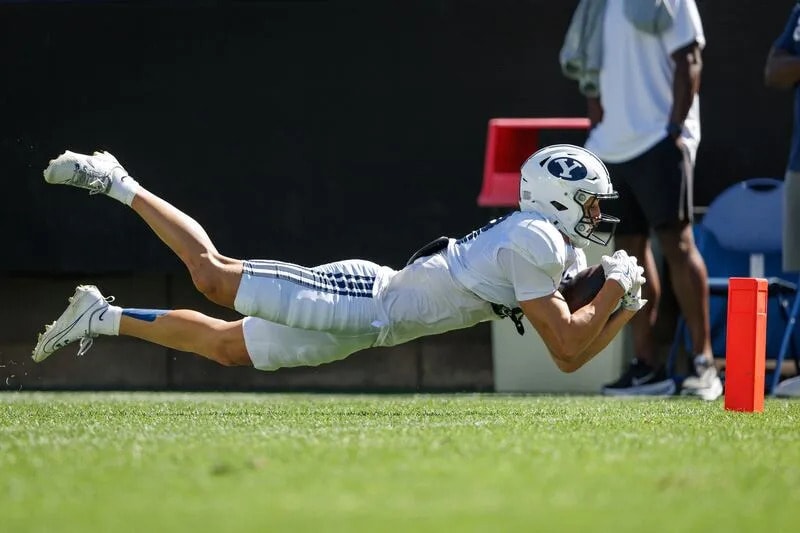
BYU opened its first full test of fall camp with a 102-play scrimmage Saturday morning at LaVell Edwards Stadium, and the message from the sideline was straightforward: the offense found the upper hand. Head coach Kalani Sitake, speaking after the session, described the day as one in which BYU’s offensive group had a slight advantage, setting a tone for a camp that will be measured as much by progress between units as by any single day’s production.
The most notable feature of the scrimmage, at least in terms of who earned attention from the head coach, was the quarterback play led by Bear Bachmeier. According to reporting from the session, Bachmeier’s offense did not just move the ball in isolated sequences, it performed well enough across the longer scrimmage to justify Sitake’s assessment that the offensive group had the edge over the defense. For a program that prizes tempo, efficiency, and execution, that kind of day matters because it suggests the mental rhythm and play-to-play clarity the coaching staff is looking for are taking hold early.
A separate but equally telling component came from the defensive side of the ball. Linebacker Cade Uluave, identified in the same reporting as part of the defensive leadership during the scrimmage, did not challenge Sitake’s evaluation of the day. That matters because scrimmage impressions can sometimes feel partisan, with players invested in protecting their unit’s reputation. The fact that both the quarterback leader and a defensive captain level-headed the same basic conclusion is an indicator that the practice picture was coherent across the roster rather than confined to one side’s narrative.
Sitake’s public takeaway framed the scrimmage as competitive rather than decisive, which is typical of early camp and also a reminder that the first sessions are about establishing baseline identity. In BYU’s case, camp starts with the expectation that the offense will run its system cleanly, and that the defense will respond by sharpening its communication and assignments. A slight offensive advantage in a longer scrimmage can reflect better execution, but it can also reflect the natural balance of a first look where the playbook can be broad and the adjustments are still developing.
From here, BYU’s camp storyline is likely to turn on whether the offense can sustain what it showed in the first scrimmage while the defense answers with improvements in the next phases. If Sitake keeps pointing to the offense as the unit with the upper hand, the coaching staff will still have to translate that into consistent drive-building rather than flashes, because the season-long evaluation depends on how units perform under repetition and pressure.
Bachmeier and Uluave, meanwhile, represent the two anchors of that day’s outcome, and both names will stay central in how BYU measures progress. For the quarterback, the question is whether the early timing and decision-making carry into subsequent scrimmages and move cleanly through third-down and red-zone looks. For the defense, the question is whether leaders like Uluave can translate a first-day acknowledgement into a faster correction, tightening coverage and limiting the offense’s ability to string together long, efficient possessions.
As the camp schedule moves forward, BYU will likely continue using longer scrimmage formats to judge cumulative performance across both halves of the roster. The coaching staff’s willingness to call the offense a slight winner on day one suggests it wants to build confidence early, but it also indicates that the defensive response will become the next benchmark. The first scrimmage delivered a clear picture, even if it was only a first picture. The bigger test will be whether the units improve in step as camp progresses and the repetition becomes less forgiving.
Why It Matters
- A slight offensive edge in BYU’s first long look can shape early camp confidence, but it also sets an immediate standard for the defense to respond quickly.
- With veteran leaders attached to both units’ viewpoints, the scrimmage reads like a shared evaluation rather than a one-sided claim.
- For quarterbacks, early execution in scrimmages often influences how coaches structure practice tempo and decision-making in later camp periods.
- For defenses, leaders acknowledging the outcome can be a report that adjustments are expected next, not optional.
- Camp momentum matters in college football because it affects how quickly both sides learn the playbook under increasing live-play repetition.
Sources
Key Facts
- BYU held its first fall-camp scrimmage Saturday at LaVell Edwards Stadium.
- The scrimmage featured 102 plays.
- BYU head coach Kalani Sitake said the offense had a slight advantage over the defense.
- Bear Bachmeier’s offense was central to the day’s assessment.
- Linebacker Cade Uluave did not dispute the coach’s characterization of the scrimmage outcome.