
THE APEX TIMES
Caleb Foster’s senior season at Duke is set up as a test of leadership and continuity
As Duke begins another campaign with pieces already proven in postseason basketball, Caleb Foster enters his final season with a defined opportunity: make the Blue Devils’ recent ACC and NCAA success feel like the start of a new standard, not an end point.
Duke basketball is returning to the kind of scrutiny that comes after a season that ended in the NCAA Tournament Elite Eight, and guard Caleb Foster is at the center of that picture as he moves into his true senior year. Foster’s role is being framed around a single premise, to make a clear statement on a program that has recently carried real momentum into both conference and national rounds.
The foundation for that expectation is organizational and roster-based, not abstract. The Duke program returned three starters from the team that won both the ACC regular-season and ACC tournament titles, earning the No. 1 overall seed in the NCAA Tournament before reaching the Elite Eight. That combination, a league championship sweep followed by top national seeding, changes the internal bar for what the next season must accomplish.
In that context, Foster’s “point to prove” is less about a turnaround story and more about continuity. A true senior season at a program like Duke typically brings a heavier share of decision-making, especially when a team is trying to translate past success into consistent execution during late-season stretch time. His job, as the premise is being presented, is to lead through expectations rather than chase them.
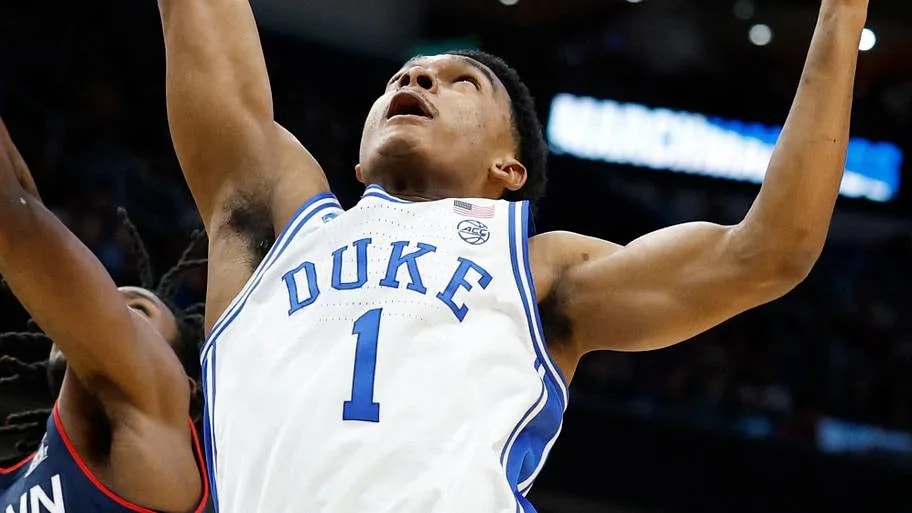
Duke’s postseason experience also gives the season stakes a clear human element. The program’s run last March included Foster playing in an Elite Eight game against UConn at Capital One Arena, according to the event caption attached to the coverage image. That kind of setting is often remembered not only for outcomes, but for the speed at which defenses tighten and possessions shrink, which then becomes a measuring stick for how quickly a team adapts when the margin gets thin.
For Foster specifically, the challenge is to turn “returning core” into tangible stability. When a team brings back major contributors after an ACC title and a No. 1 seed, opponents scout with more conviction, and teammates often feel pressure to match, or at least normalize, the level of play that produced a deep tournament run. A senior guard in that environment is expected to set the tone in practices, but more importantly, to keep the team calm when games tighten.
There is also a recruiting and reputation component, even if it is not always stated directly. Duke’s recent accomplishments place it in the national conversation every season, and a senior like Foster becomes a reference point for how the program develops its most senior pieces. If he can be consistent in high-leverage situations, Duke’s younger players inherit a clearer model for what the program expects at its highest level.
What to watch next for Foster and Duke is how the Blue Devils handle the early rhythm of the season. In these circumstances, the key questions usually narrow quickly, can the team preserve the offensive and defensive structure that carried it to an Elite Eight, and can a senior in the backcourt keep decision-making clean when opponents force uncomfortable looks. Foster’s senior “statement” will likely be measured not by single highlights, but by whether Duke looks like a team built to sustain pressure rather than respond to it.
For now, the coverage positions Foster’s season as a logical follow-through to a remarkable recent chapter. The evidence available here emphasizes Duke’s returning leadership and the program’s postseason and ACC milestones. Until more detailed reporting or official roster and schedule information is confirmed, the specifics of Foster’s statistical role and on-court responsibilities remain secondary to the bigger theme of leadership under an unusually clear standard.
Why It Matters
- Duke’s recent ACC and NCAA success raises the program’s expectations immediately, increasing the importance of senior leadership.
- Returning key starters gives Foster a chance to define stability and consistency rather than rebuild team identity.
- Elite Eight experience against a top national opponent provides a concrete reference point for how Duke must perform in the tournament again.
- In an environment where opponents scout established cores, a senior guard’s decision-making often becomes the difference between “tight games” and collapse.
Sources
Key Facts
- Caleb Foster is entering his true senior season with Duke basketball.
- The Duke program returned three starters from the previous season’s team.
- That prior Duke team won both the ACC regular season and the ACC tournament.
- Duke earned the No. 1 overall seed in the NCAA Tournament and advanced to the Elite Eight.
- A coverage image caption notes Foster playing for Duke against UConn in an Elite Eight game at Capital One Arena in March 2026.