
THE APEX TIMES
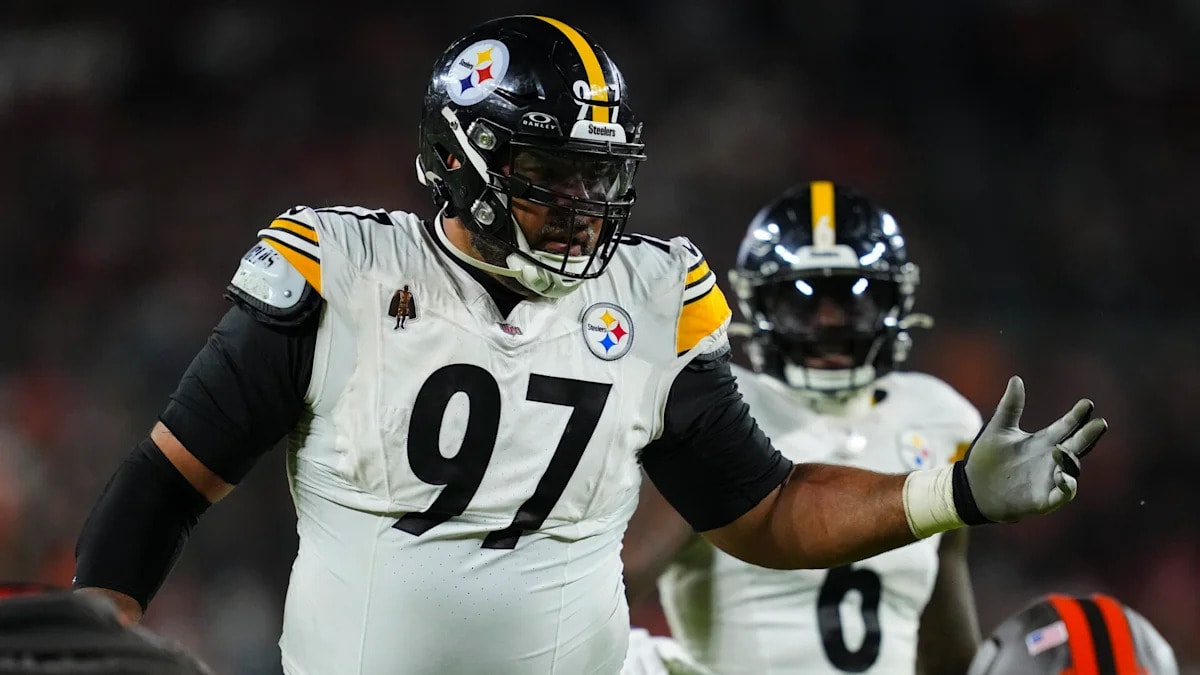
Cam Heyward says Steelers leaders “shouldn’t apologize” after animated moments, including sideline and on-field exchanges
Emotions spilled over during the Steelers’ most recent game week. Heyward pointed to internal frustration and argued that leadership does not have to hide visible intensity.
During the Steelers’ loss to the Browns last Thursday, multiple on-field and sideline moments drew attention, including an exchange between quarterback Aaron Rodgers and head coach Mike McCarthy that was described as profanity-laced and captured on camera. The incident became the headline, but it was not portrayed as the only time emotions ran high for Pittsburgh during the game.
According to Cam Heyward’s comments and additional observations from the broadcast, the team had several animated conversations as play moved from the field to the sideline. Linebacker T.J. Watt was shown talking intensely with defensive coordinator Patrick Graham over a headset at one point, while Heyward was later seen speaking with teammates on the sideline after a Browns touchdown. In other words, the visible volatility was not isolated to a single disagreement.
Heyward addressed the broader tone of the game on Wednesday, saying that “there was a lot bothering me in that game.” He framed the team’s animated communication as part of what leaders are supposed to do when results are not matching expectations. Heyward added that team leaders “shouldn’t apologize” for wearing their hearts on their sleeves during games, positioning the posture of competitiveness as a standard rather than something to be toned down.
The Steelers, as a franchise built on identity and toughness, have often treated intensity as a feature of their week-to-week preparation and in-game adjustments. In this case, Heyward’s remarks suggest that frustration and urgency are not automatically a problem. Instead, the issue for Pittsburgh appears to be what the intensity is attached to, and whether it translates into cleaner execution rather than distraction.
Still, animated conversations are only one slice of what decides outcomes in the NFL, where communication can help a defense respond while also risking further confusion if it becomes counterproductive. The fact that multiple leaders and coordinators were seen speaking in close proximity to major moments suggests Pittsburgh was actively managing the game in real time, not simply reacting after the fact.
What to watch next is how the Steelers handle the same pressure without it becoming a distraction. Heyward’s message, that leadership should not shrink away from visible emotion, points to a team that plans to keep its edge. The bigger question is whether that edge shows up in consistent football, particularly on defense, where Heyward and Watt’s roles make their sideline demeanor and on-field focus especially consequential.
Why It Matters
- Public, high-visibility disagreements and animated communication can shape how a team processes momentum swings during a tight game.
- Heyward’s comments tie visible emotion to leadership, indicating that Pittsburgh intends to keep its intensity even when results are not going its way.
- Watt’s and Graham’s on-field communication highlights the importance of defensive adjustments under pressure, especially after scoring plays.
- The Steelers will likely be judged not by temperament alone, but by whether that urgency produces sharper execution after moments of friction.
Key Facts
- A profanity-laced exchange between Steelers quarterback Aaron Rodgers and head coach Mike McCarthy was described as a notable moment during Pittsburgh’s loss to the Browns last Thursday.
- The report also noted a lively conversation between linebacker T.J. Watt and defensive coordinator Patrick Graham over a headset.
- Defensive lineman Cam Heyward was seen speaking with teammates on the sideline after a Browns touchdown.
- On Wednesday, Cam Heyward said “there was a lot bothering me in that game.”
- Heyward also said team leaders “shouldn’t apologize” for showing emotion during games.