
THE APEX TIMES
Cam Schlittler’s 90-mph curveball reshapes the AL Cy Young question
In a profile built around the pitch that separates elite velocity from elite dominance, MLB’s attention turns to how a pitcher can win the sport’s biggest hardware with more than just fastball volume.
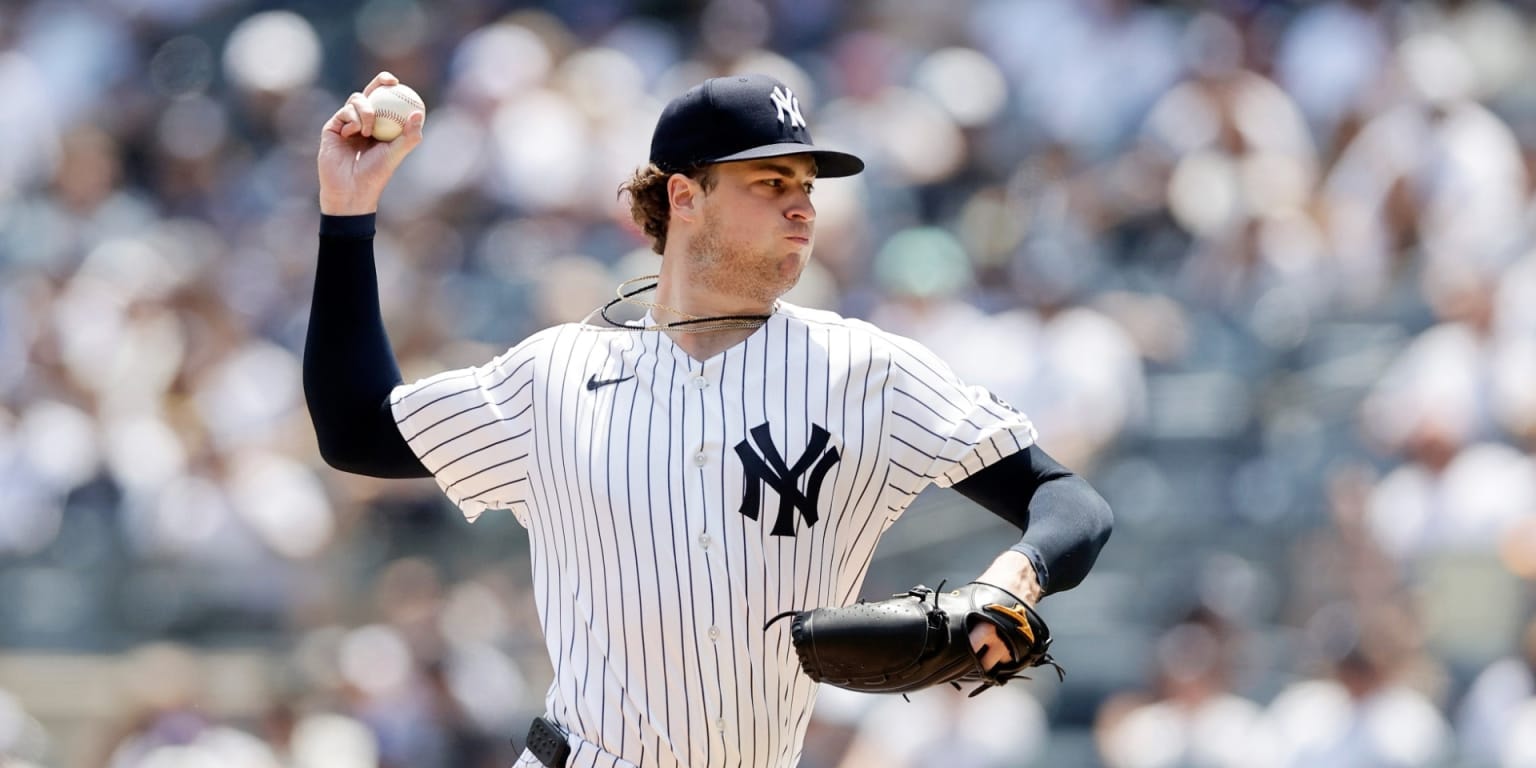
Baseball’s Cy Young conversations often start the same way: how many innings, how many starts, how many strikeouts, how much run prevention. But an MLB Yankees feature published Friday reframes the discussion around a more mechanical and more specific idea, what it actually takes to make hitters fail repeatedly, on enough pitches, often enough to carry a season. The focus is Cam Schlittler and, more precisely, the curveball people rarely think they will see from him.
The story’s premise is blunt. It asks whether an AL Cy Young winner needs a breaking ball, whether offspeed is mandatory, or whether the right version of fastball dominance can do the job by itself. Then it pivots to what makes Schlittler’s arsenal feel different, describing a curveball that reaches 90 mph. That single detail matters because a 90-mph curveball is not merely a “nice” secondary pitch. It suggests a delivery built for speed at multiple levels, where timing disruption can come from both velocity and movement rather than from a dramatic change-up-like slowdown.
What makes the pitch selection question harder is that modern pitching is increasingly about sequencing. If a fastball is overpowering, pitchers still need to decide when to turn hitters from aggressors into guessers. The profile uses Schlittler to illustrate that even in a league full of velo-first strategies, a specific pitch shape can become the swing-and-miss driver that decides at-bats. In that framing, the curveball is not decoration. It is presented as a centerpiece, the one pitch that can make the entire fastball-heavy plan play better.
MLB’s feature also connects the curveball to a bigger evaluation point. Cy Young voting is rarely determined by one pitch alone, but pitchers tend to be rewarded when their most reliable weapon forces consistent damage across lineups. A curveball that can stay in the same velocity neighborhood as the fastball changes what hitters are preparing for. It can reduce the time window for bat lag, and it can complicate pitch recognition, particularly when the pitcher can also throw in a way that makes the offspeed arrive with a similar “look.”
There are also practical implications for how a pitcher’s season is built. If Schlittler can credibly throw a curveball at that speed, it can influence the workload of every other pitch type. Pitchers who command a high-velocity offspeed do not have to rely as heavily on “one mistake” thresholds, where the only penalty comes when an elevated fastball gets barreled or a slower breaking ball gets laid back. Instead, the pitcher can create more neutral at-bats that still end with hitters beating themselves, either swinging through it or missing because the pitch does not behave like it should based on its initial trajectory.
Still, the Cy Young question remains bigger than any single weapon. Vote totals reflect the full season context, including run prevention, strikeout production, and the ability to keep performance steady from start to start. A curveball, even a uniquely fast one, is only one part of the overall pitching profile. What to watch next is how hitters adjust over time to the curveball’s role, and whether Schlittler’s ability to throw it effectively changes opponents’ willingness to chase high fastballs or to commit early in counts.
For fans and evaluators, the real takeaway is that the pitch that looks most “unlikely” can become the one that defines a season. When a pitcher’s offspeed is both fast and disruptive, it can shift the entire math of at-bats, turning what might have been a predictable plan into something closer to a threat from multiple angles. In the end, that may be the clearest answer to how many pitches it takes to win a Cy Young: not a specific number, but the repetition of failure, pitch after pitch, that only a few pitchers can sustain.
Why It Matters
- A 90-mph curveball changes how hitters time and identify pitches, which can alter at-bat outcomes even for fastball-first game plans.
- Pitch sequencing becomes more powerful when a pitcher can deploy an offspeed pitch with near-fastball velocity, potentially increasing swing-and-miss and reducing damage on mistakes.
- Cy Young voting discussions may increasingly reward pitchers whose secondary offerings create consistent disruption, not just those with top-line velocity or whiff totals.
Key Facts
- MLB published a Yankees feature centered on Cam Schlittler as an AL Cy Young candidate.
- The article highlights Schlittler’s curveball, described as reaching 90 mph.
- The piece frames a debate about whether Cy Young-caliber success requires breaking balls and offspeed, or can be achieved with fastball dominance.