
THE APEX TIMES
Camp Q&A: Jordan Stout aims to turn a standout season into the standard for punting
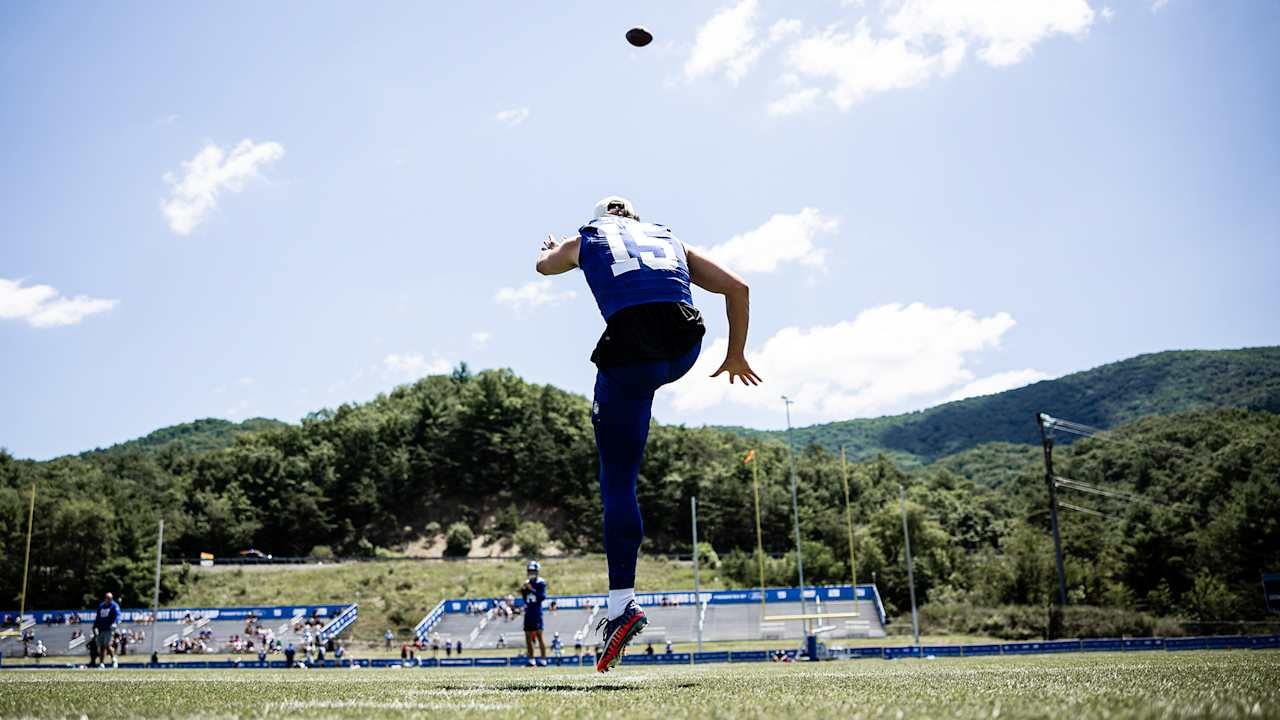
New York’s punter, Jordan Stout, is using training camp conversations to set a simple internal goal, be not just the best in the moment, but the best ever.
Jordan Stout is approaching training camp with the kind of clear-eyed ambition that can define a specialist’s entire season. In a Giants camp Q&A, the punter said his focus has shifted from performing at an elite level to building consistency strong enough to chase a longer legacy goal, being the best punter to ever play.
The starting point for that pursuit is recent production. The Giants described Stout as the best punter in the game last season, framing camp as the next step in maintaining that standard while refining the details that separate good punting from championship-level punting.
Special teams success is rarely the product of a single stat. A punter’s work shows up in the choices he makes before the ball is snapped, the way he controls trajectory when the coverage is speeding downfield, and how he responds to pressure that can alter timing and field position in an instant. The “kicking battery” idea, emphasized in the Giants’ Q&A, reflects that Stout sees punting as a unit responsibility, where timing, communication, and trust are as important as leg strength.
For a team, the value of an elite punter goes beyond field position. A punter changes the math of every opponent drive by forcing offenses to respect distance, manage return windows, and adjust to landing spots that limit run-back options. When a punter is operating at a top tier, opposing offenses are often compelled into more conservative play calling because the margin for error shrinks, even when the drive is moving in chunks.
At training camp, that kind of role also tends to reveal itself in routine details. Coaches and players spend extra time on execution because the specialist position magnifies timing errors. A slightly off snap, a misread coverage look, or a rushed catch-and-kick sequence can swing a punt from a clean weapon to a liability. Stout’s stated intent to be more than “best last season” aligns with that reality, where improvement usually comes from repetition and small corrections rather than dramatic changes.
Stout’s comments also set an expectation for how he wants to measure himself through the rest of camp and into the regular season. Rather than treating the prior season as a finish line, he is positioning it as confirmation of talent and work ethic, then using this summer to turn that ceiling into repeatable outcomes. That mindset matters because punting careers are often judged by the ability to sustain performance across changing circumstances, from weather to opponent tempo to game-plan adjustments.
The next thing to watch is how the Giants’ special teams rhythm looks as camp progresses and as preseason preparations narrow. If Stout’s goal is to make “best ever” a practical benchmark, the evidence will be in how consistently he can control distance and placement under different cover looks, and how cleanly the kicking unit operates when reps become sharper and more game-like.
Why It Matters
- An elite punter can shape every opponent drive by affecting field position and return options.
- Stout’s emphasis on unit execution highlights how special teams performance depends on timing and coordination, not just individual talent.
- If Stout sustains top-tier punting production, it reduces the margin for error the defense faces between field position swings.
- A specialist’s long-term mindset can influence consistency, especially as camp and preseason sharpen game-plan reps.
Key Facts
- The New York Giants published a training camp Q&A featuring punter Jordan Stout.
- The Giants described Stout as the best punter in the game last season.
- Stout’s camp focus includes aiming to be the best punter “ever,” not only in the near term.
- The Q&A frames punting as part of a coordinated kicking unit, referenced as the “kicking battery.”