
THE APEX TIMES
Can Wisconsin back up Colton Joseph’s bold offensive claim? Badgers seek offensive identity under Luke Fickell
After a season that exposed major scoring issues, Wisconsin is leaning on a new offensive look and a new quarterback as it tries to prove it can move the ball and finish drives in 2026.
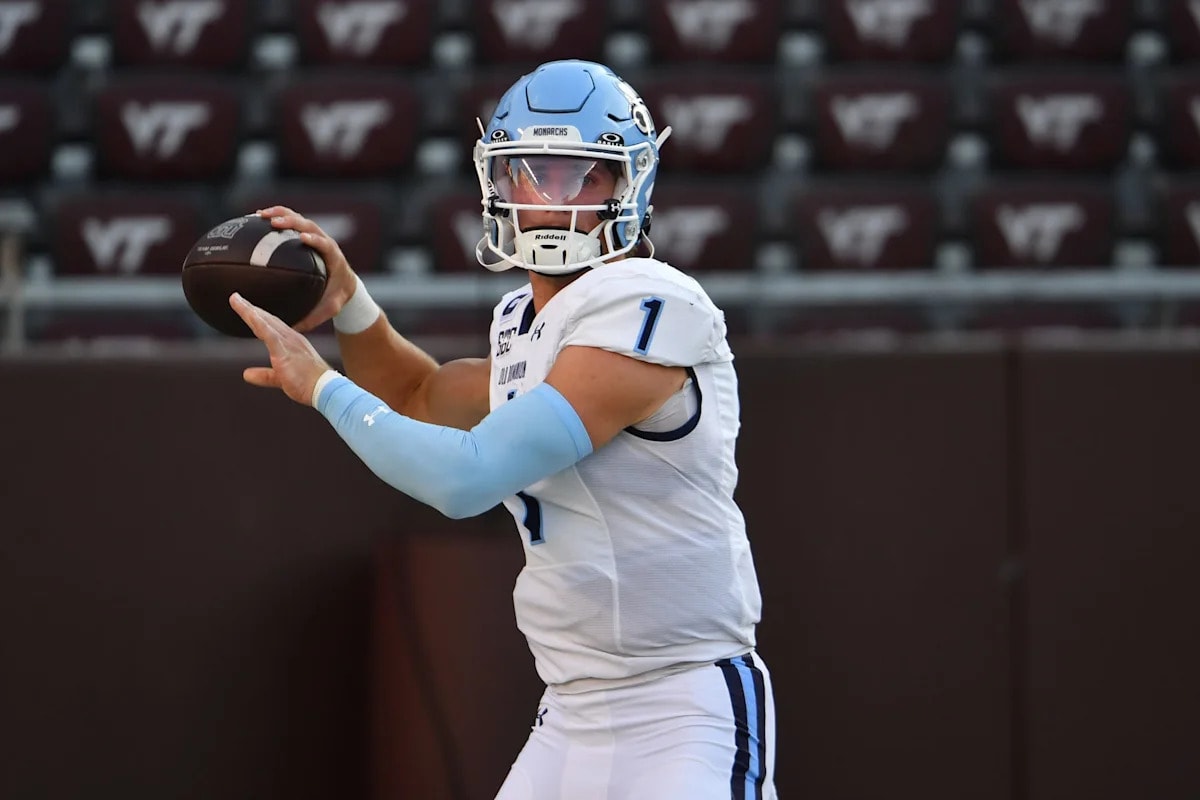
Wisconsin’s offense has carried a heavy burden going into 2026, and the spotlight is now on Colton Joseph. In an appearance tied to Wisconsin’s summer media build-up, the Old Dominion transfer was asked what fans should expect from the Badgers’ offense, and his response set up a simple question for Luke Fickell’s program: can Wisconsin actually translate ambition into points on Saturday? The issue is not theoretical. Last season, Wisconsin finished 4-8 and produced 12.8 points per game, a figure described in the report as the third-worst mark in the nation.
The context matters because Wisconsin is not trying to rebrand itself as a surprise high-scoring team. It is trying to correct a specific failure mode: sustaining drives, turning possessions into touchdowns, and keeping the offense from shrinking against established Big Ten defenses. When a program posts an offense near the bottom of the country, everything from play design to execution detail becomes scrutinized, and preseason statements inevitably get measured against concrete production.
According to the report, Wisconsin has gone through an offensive revamp that includes a new starting quarterback. That quarterback change, combined with the plan to alter how the Badgers attack defenses, is the platform for Joseph’s comments. It also gives Fickell a key offseason theme: the program believes it has hit a “refresh” moment, not just tweaked a few concepts. In college football, those are different undertakings. Rebrands that do not change outcomes often fade quickly, while true offensive changes can take time but become more credible when the basics start showing up consistently.
For Joseph, the pressure is different from a typical offseason spotlight. This is not just about earning reps in the spring or summer, it is about verifying that the offense can do what it needs to do in the conference. The Big Ten’s schedules tend to expose weaknesses, particularly in the middle parts of games where teams can take away what you rely on. A quarterback who offers confidence or a bold outlook can raise expectations inside the building, but the only defense against skepticism is statistical improvement, drive consistency, and efficiency.
The report frames the questions around what Wisconsin fans expect in a “crucial season” for Fickell, which raises the stakes beyond one individual unit. If the Badgers’ offense can produce at a more functional level, it changes how the defense and special teams operate, because teams can stay in games longer and reduce forced, late-game situations. If the offense remains stagnant, the entire team experiences a compression effect, where every third-down stop feels like a referendum and defensive plans are built around shorter offensive possessions.
Wisconsin’s ceiling in 2026 will be defined less by the rhetoric and more by whether the offense can convert its plan into reliable outputs. The most important things to watch early in the season are basic drive success and red-zone efficiency, because those are the areas that tend to move first when a new quarterback and offensive overhaul click. If Joseph’s confidence is matched by progress in those categories, the “refresh button” idea becomes more than a storyline.
Still, it is worth separating offseason expectation from in-season reality. The report does not provide a play-by-play of Joseph’s exact claim, nor does it offer a detailed statistical forecast. It also does not verify the full roster picture beyond noting the quarterback transition and the offensive revamp. That means Wisconsin’s best answer will arrive the old-fashioned way: with opening-week execution and then, more importantly, with repeatable production against Big Ten opponents. If the Badgers can back up the claim, 2026 will start to look like a turning point rather than another attempt to correct the same scoring issues.
Why It Matters
- For Wisconsin, offensive improvement is the most immediate path to changing results in Big Ten play.
- A new starting quarterback plus a broader offensive revamp can reshape game management, third-down rates, and red-zone outcomes.
- Quarterback-led statements raise expectations, but the program will ultimately be judged by efficiency and points against conference defenses.
- If Wisconsin’s offense stabilizes, it can reduce pressure on the defense and special teams across close games.
Key Facts
- Wisconsin is preparing for the 2026 season under head coach Luke Fickell.
- The report says Wisconsin went 4-8 last season and averaged 12.8 points per game.
- The report describes 12.8 points per game as the third-worst scoring offense in the nation.
- The story says Wisconsin has implemented an offensive revamp and has a new starting quarterback.
- Colton Joseph, an Old Dominion transfer, was asked in connection with Big Ten Network about what to expect from the 2026 Wisconsin offense.
- The report frames 2026 as a crucial season for Fickell’s program and positions the offense as central to the storyline.