
THE APEX TIMES
Canadiens forward Oliver Kapanen seeks a steadier sophomore step after an uneven rookie run
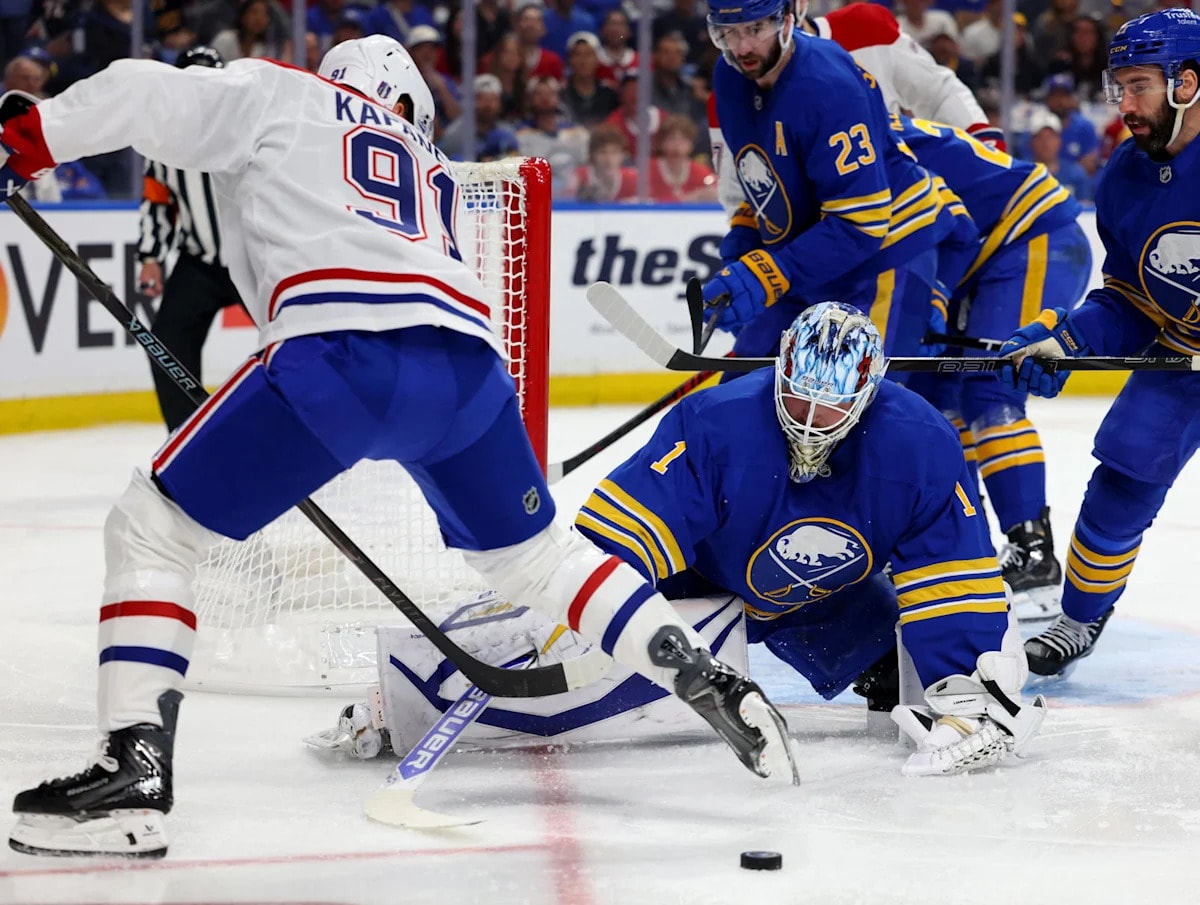
Montreal’s Oliver Kapanen flashed enough as a first-year player to earn a bigger role late in his rookie season, and now the Canadiens will look for that momentum to translate into consistent production and responsibility.
The Montreal Canadiens’ 2025-26 rookie class gave the organization a familiar story line, flashes of upside followed by the usual learning curve. For winger Oliver Kapanen, the takeaway from his first NHL season is that he can handle higher leverage moments, even if the results were not always as smooth as the potential suggested.
Martin St. Louis’ early deployment is a key part of that context. According to the report, the Canadiens opened the season by inserting Kapanen into their third-line group alongside Ivan Demidov and Alex Newhook. It was a placement that indicated Montreal believed the young players could develop without being sheltered, and it also framed Kapanen’s rookie workload as an opportunity to grow through repetition rather than a short audition.
As the season progressed, the Canadiens adjusted. The article notes that shortly after the start of November, St. Louis moved the line up, placing Kapanen and his linemates into the second-line role. That change matters because it reflects more than a matchup tweak. A promotion like that typically follows improvements in details coaches trust, such as pace, retrieval ability, board play, decision-making under pressure, and how reliably a young forward executes assigned responsibilities.
A sophomore season, though, brings its own challenges. For a player like Kapanen, the league is not learning him anymore. Opponents can prepare with more specific scouting and game planning against his release timing, skating routes, and where he tends to look in transition. That means Montreal’s internal question shifts from “Can he play here?” to “Can he play here every night, even when opponents adjust and when the game state becomes harder?”
There is also a chemistry factor in how the Canadiens will judge him. The report ties his jump in role to the line structure that included Demidov and Newhook, so any sophomore performance review is likely connected to whether that group dynamic holds. If the youngsters remain together, Kapanen’s task becomes sharpening role clarity, maintaining pace, and converting chances created by the line’s collective cycle and forecheck. If the group changes, his bounce-back hinges on adapting quickly to a new partner set and keeping his production from falling away during the transition period.
What to watch next for Montreal is not one dramatic outcome, but the pattern. Look for Kapanen to earn stable minutes that match the second-line trust the team showed in the fall. Also watch whether his game evolves from “read, react, and compete” into a more repeatable plan: winning entries, supporting defensive coverage without hesitation, and pushing play at the moments that decide whether the Canadiens’ young core looks like a short-term spark or a sustainable identity.
Why It Matters
- A sophomore bounce-back can determine how quickly the Canadiens solidify their forward group as a long-term core rather than a rotating development experiment.
- Moving from occasional impact to repeatable second-line execution affects how Montreal manages matchup difficulty and game states.
- For young players, consistent responsibility influences future playing time, line placement, and coach trust across the season.
- How Kapanen handles opponents’ adjustments will be a practical measure of whether his first-year improvements are real or situational.
Key Facts
- Oliver Kapanen played for the Montreal Canadiens as a rookie and is entering his sophomore season in the NHL.
- The Canadiens began the season with Kapanen on the third line with Ivan Demidov and Alex Newhook under coach Martin St. Louis.
- The report says St. Louis moved that group up to the second line shortly after the start of November.
- The sophomore focus is framed as whether Kapanen can translate an expanded role into steadier performance and reliability.