
THE APEX TIMES
Canucks’ penalty kill falters again as New Jersey defeats Vancouver 4-1
Vancouver’s power play and goaltending kept it from getting worse, but the Devils cashed in while the Canucks were shorthanded, turning a manageable game into a clear loss.
The Vancouver Canucks saw their penalty-killing problems continue in a 4-1 loss to the New Jersey Devils on Saturday. The central issue was time spent in defensive survival mode, with Vancouver allowing New Jersey to score on the power play in three of its four penalty-kills during the game.
According to the game account, nearly all of New Jersey’s scoring damage came while the Canucks were shorthanded. All but one of the Devils’ goals arrived while Vancouver was on the penalty kill, a pattern that matters in a sport where one or two extra quality looks can swing momentum quickly, especially early in a season.
Vancouver managed to get on the board while in the offensive zone with the man advantage. Linus Karlsson scored the Canucks’ lone goal on the power play, giving the Canucks a brief answer to New Jersey’s ability to score during Vancouver’s penalties.
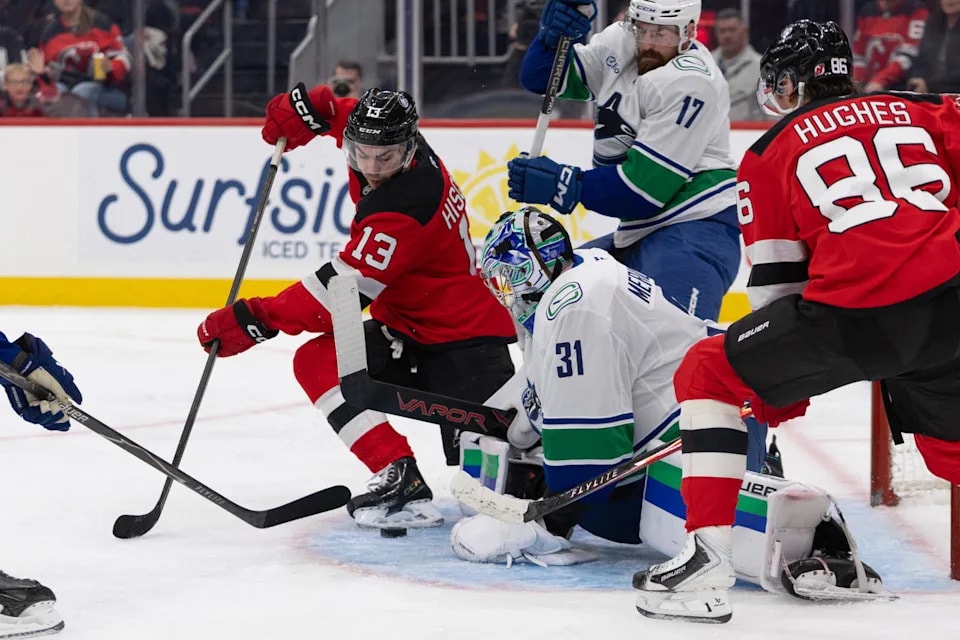
In goal, Leevi Meriläinen posted 31 saves on 34 shots, keeping the deficit from ballooning despite repeated special-teams pressure. The save total underscores that the Canucks were not simply overwhelmed by volume; rather, the damage clustered in the moments that mattered most, when New Jersey had the extra skater.
The result leaves the spotlight on Vancouver’s discipline and structure. A penalty kill is designed to limit chances and suppress shot quality, but the pattern described in the game account suggests the Devils found ways to convert Vancouver’s stints shorthanded. Against strong power-play teams, repeated breakdowns can be less forgiving than even-strength mistakes.
For New Jersey, the performance reinforces the value of special teams execution. Scoring while the opponent is short not only adds goals to the scoreboard, it also forces the coaching staff and players on the other side to change how they play even after the penalty ends, since defensive units become cautious about taking additional risks.
What to watch next is whether Vancouver treats this as a tactical problem on the penalty kill or primarily a discipline problem that leads to too many shorthanded situations. If the Canucks can tighten their penalties and improve their ability to clear the puck, block shots, and collapse into lanes, the penalty kill can recover quickly. If not, the margin for error will remain thin, even when goaltending is holding up.
Why It Matters
- Special teams swings can decide NHL games, and this loss spotlights recurring penalty-killing issues for Vancouver.
- When most goals against come on the power play, it shifts the team’s focus from overall chances to penalty discipline and defensive detail.
- For Vancouver, improving the penalty kill is essential to keeping games winnable, especially against teams that emphasize power-play creation.
- For New Jersey, the ability to convert on the man advantage strengthens their ability to control pace and momentum across multiple game states.
Key Facts
- Vancouver lost 4-1 to the New Jersey Devils.
- The Canucks surrendered power-play goals in three of their four penalty-kills.
- All but one of New Jersey’s goals came while Vancouver was on the penalty kill.
- Linus Karlsson scored the Canucks’ lone goal on the power play.
- Leevi Meriläinen made 31 saves on 34 shots in the game.