
THE APEX TIMES
Cardinals complete first offseason under Mike LaFleur, reshape offense and press reset at quarterback
With a new head coaching hand and coordinator-style overhaul already in place through two minicamps and a series of OTAs, Arizona’s 2026 spring has centered on building a different offensive identity and sorting out who leads it.
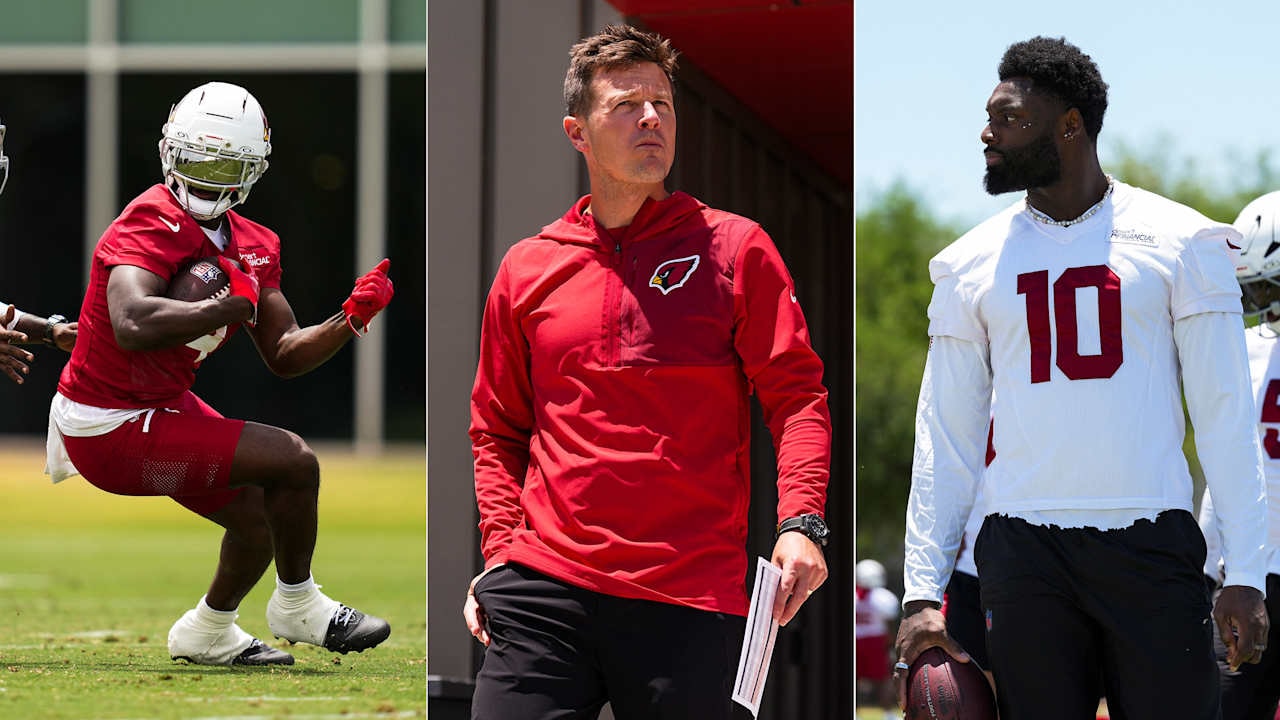
The Arizona Cardinals closed their 2026 offseason program with a clearer picture of what they are trying to build. In a team wrap-up looking back at the spring, the Cardinals said they completed their first full offseason with Mike LaFleur and that the work was defined by installation, reps, and a roster feel that looks different than it did last year.
The most immediate on-field theme is continuity of coaching but change in execution. The Cardinals described two minicamps and a “bunch of OTAs” as part of their first synchronized offseason with LaFleur, emphasizing the time spent installing a different offense. That matters in the NFL because offseason schemes are not just playbooks, they are timing systems, protections, route rhythms, and communication patterns that take multiple months to become automatic.
Within that framework, Arizona’s running back room has emerged as another focal point. The Cardinals characterized the group as “loaded,” suggesting depth and competition as the offense finds its balance. In a team that is also searching for its quarterback answer, a strong ground plan can do more than move the chains. It can protect a developing quarterback, shape second-level reads, and create stable play-action opportunities that reduce the mental load in live-game situations.
The passing game remains the central question. The Cardinals’ offseason recap highlighted a quarterback uncertainty and indicated there will be a different starting quarterback in place for the first time since 2019. That statement frames this spring as more than just evaluation, it indicates a meaningful transition at the position. Even when a starter is “known” before training camp, NFL offseason work typically determines how confidently that starter can operate, how quickly new protections and checks are mastered, and how well the offense can simplify the play-calling process around its players.
A change at quarterback also affects the rest of the roster. It forces adjustments across the receiver and tight end groups, impacts which routes are emphasized, and can alter the timing of deep shots versus intermediate throws. The Cardinals’ emphasis on a revamped roster and a different offensive approach suggests the team is trying to align personnel with the new operational style, not simply bring in new names and hope the timing works itself out.
For Cardinals fans, the offseason wrap-up offers a practical takeaway: the spring has been about workload and identity. When a team completes two minicamps and OTAs under a first-year coordinator fit, the installation phase typically ends and the focus shifts toward execution during the grind of training camp and the preseason. At that point, questions that were theoretical in May and June become concrete. Can the quarterback run the system cleanly? Can the offensive line sustain the protection concepts? Can the running game stay efficient long enough to set up the passing game?
What to watch next is whether the “different offense” described by the Cardinals translates into consistent, repeatable drives under live conditions. The statement about a different starting quarterback since 2019 raises expectations that camp will feature real separation between options, not just reps. Arizona will also be measured by how its “loaded” backfield contributes to ball security, third-down efficiency, and red-zone decision-making, because those areas often reveal whether the offseason work has turned into an operational advantage.
Why It Matters
- A new starting quarterback changes the weekly execution baseline and can reshape how the offense protects, reads, and times routes.
- Installing a different offense during the coordinator’s first offseason increases the odds of smoother operation once training camp and the preseason begin.
- A deep running back room can stabilize the game plan while the quarterback situation is determined.
- The Cardinals’ spring plan suggests the team is prioritizing team identity and repeatable process over quick fixes.
Sources
Key Facts
- The Arizona Cardinals said they completed their first offseason with Mike LaFleur through two minicamps and multiple OTAs.
- The team described its offensive approach as different, with the spring focused on installing a new system.
- Arizona characterized its running back group as “loaded,” emphasizing depth and competition in the room.
- The Cardinals said the quarterback picture remains an open question entering the next phase of the offseason.
- The team indicated there will be a different starting quarterback for Arizona than in each season since 2019.
- The Cardinals referenced a revamped roster as part of the offensive reset.