
THE APEX TIMES
Carlos Rodón’s sinker returns to prominence as Yankees expand a contact-focused fastball plan
Rodón’s heavy sinker usage, at its highest level since 2017, fits a broader Yankees pitching approach that has been refining how the pitch is built and delivered across the staff.
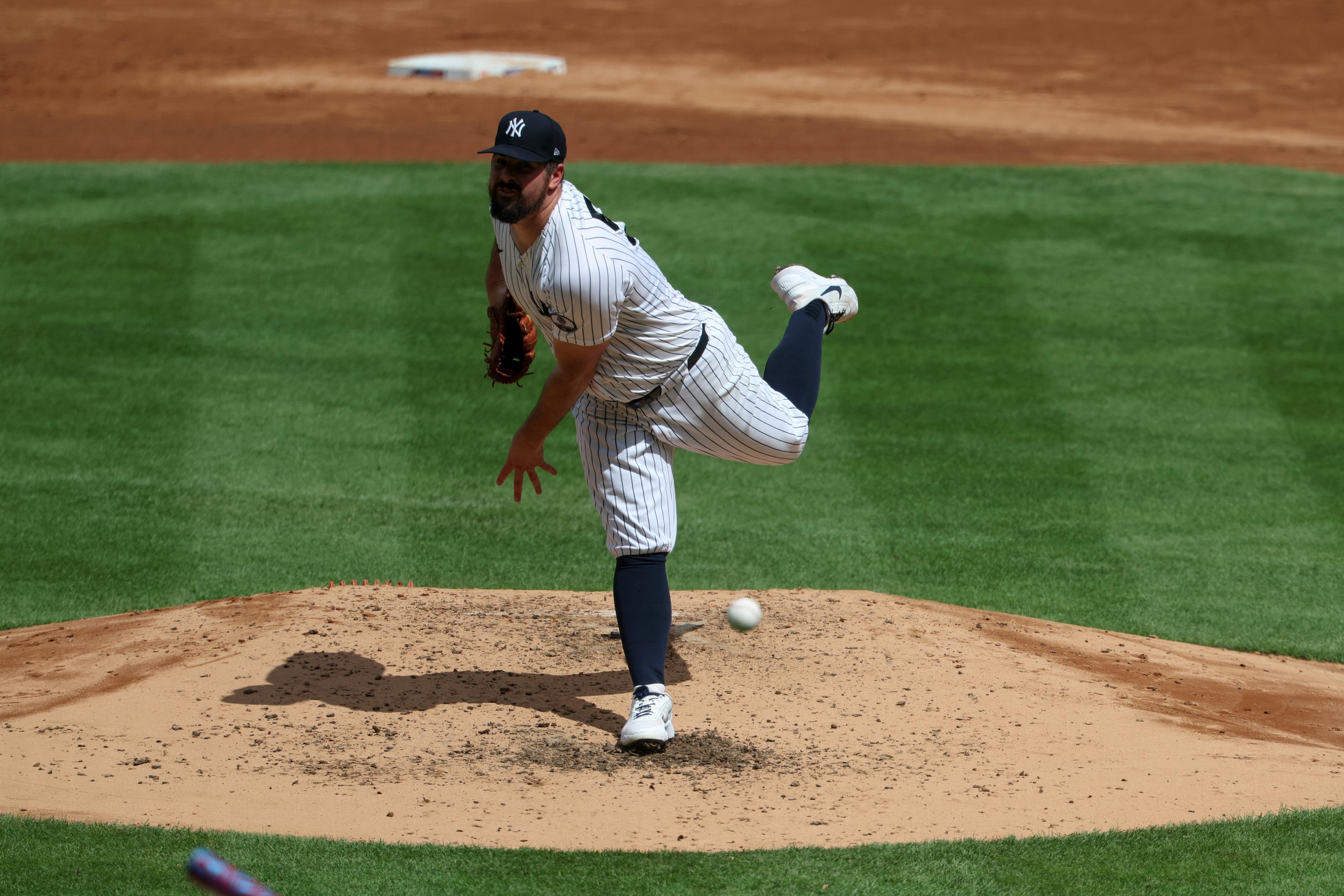
Carlos Rodón is leaning more than he has in years on one of baseball’s simplest pitches, the sinker, and the Yankees are treating that shift as more than a personal tweak. In a recent look at the Yankees pitching department’s evolving sinker emphasis, Yahoo Sports reported that Rodón is throwing his sinker with its highest usage rate since 2017, a sign the veteran left-hander is finding value in letting the pitch play its intended role, turning more of his fastball attempts into ground-ball and soft-contact outcomes.
The Yankees’ interest in the sinker has also been framed as organizational, not isolated. The same report describes an internal process of “dusting off” an approach that had fallen into relative dormancy across the league, then reintroducing it with a renewed push for distribution. In practical terms, that means the Yankees are not only asking for one pitcher to make a change, but encouraging as much of the pitching room as possible to adopt the pitch and the shape that comes with it, increasing the chance that the Yankees can consistently stress hitters with the same theme across different roles and matchups.
Rodón’s presence is particularly relevant because a sinker depends on repetition and location discipline. While the report does not detail a specific statistical line, the key takeaway is the usage indicator: his sinker is getting enough attention to stand out within his own repertoire. Higher usage typically implies the staff has identified a way to get the pitch to behave as intended, and it also suggests Rodón has been able to maintain command or at least accept predictable patterns in exchange for the contact benefits the pitch can create.
The broader series context in the Yahoo report connects Rodón’s ramp with other Yankees pitching development stories from earlier in the year. It points to Cam Schlittler as an example of how a pitcher can incorporate a sinker into his arsenal and see the decision accelerate his performance. It also references Ryan Weathers and how a sinker-focused adjustment was investigated in the context of addressing run prevention issues, and it describes Paul Blackburn’s evolution after transitioning away from a cutter-heavy approach toward treating the sinker as a primary fastball.
Taken together, those examples help explain why the Yankees might be willing to raise the sinker’s priority across multiple pitchers. The sinker can function as an identity pitch for a staff, and it can also act as a bridge between different pitcher types. A power pitcher can use it to trade some velocity focus for better contact results, while a bullpen arm can deploy it in shorter stints where hitters must repeatedly adjust to the same ball shape. The Yankees’ stated aim, as described by Yahoo Sports, appears to be building that shared shape so the organization’s pitching instruction has a clearer through-line from starter planning to bullpen usage.
Even with the sinker’s return to prominence, the practical question is how consistently the Yankees can execute it against varied swing decisions. The report emphasizes adoption and focus, but it does not eliminate the usual concerns that come with any pitch plan, including the need for precise location and the risk that hitters adapt to a common shape. As August moves deeper into the season’s final stretch, the next test for this approach will be whether the Yankees can maintain the same sinker commitment through different lineups and game situations, without forcing pitchers into the kind of mechanical certainty that can backfire when command slips.
Why It Matters
- A staff-wide sinker plan can change how opponents approach the Yankees, especially by encouraging more ground-ball swings instead of strikeout-seeking swings.
- If the Yankees can consistently execute the pitch across roles, it can stabilize run prevention even when matchups vary from starter to bullpen.
- Rodón’s adoption matters because a high-usage version of a pitch from a marquee starter can set the tone for the organization’s coaching priorities.
- The sinker’s impact is often revealed over multiple games, making late-season consistency a key indicator for how effective the Yankees’ plan may be in the postseason.
Key Facts
- Rodón is throwing his sinker with its highest usage rate since 2017, according to Yahoo Sports.
- Yahoo Sports characterizes the Yankees sinker emphasis as an organizational effort, not only a Rodón-specific adjustment.
- The Yankees are described as re-emphasizing a pitch that had experienced a period of league-wide dormancy.
- The Yankees’ plan is portrayed as distributing sinker usage across as many pitchers in their pitching room as possible.
- The same report connects Rodón’s shift to earlier Yankees sinker-related development narratives involving Cam Schlittler, Ryan Weathers, and Paul Blackburn.