
THE APEX TIMES
Carson Beck ties 1956 expectations to a familiar Cardinals challenge
Quarterback Carson Beck says his NFL path began with a specific moment on draft night in 1956, when he sensed the Cardinals would be a recurring test for him and his confidence-building preferences.
Carson Beck’s route to the NFL in 1956 carried an early, highly specific belief about what would come next. According to an Arizona Cardinals team story, Beck looked at the landscape on draft night and decided he had his answer for what to model himself after. The choice was Johnny Unitas, an ideal Beck viewed as the standard for quarterback play.
But the Cardinals connection Beck described was immediate and complicated. He knew, the team story says, that Unitas was already cut and had not thrown a pass in training camp when Beck signed with the Colts in 1956. That detail matters to the kind of confidence Beck was trying to build, because it frames his development not as a smooth mentorship handoff, but as an adjustment to circumstance. In other words, Beck’s plan did not match the NFL calendar in the way he hoped, so he had to extract lessons from the absence itself.
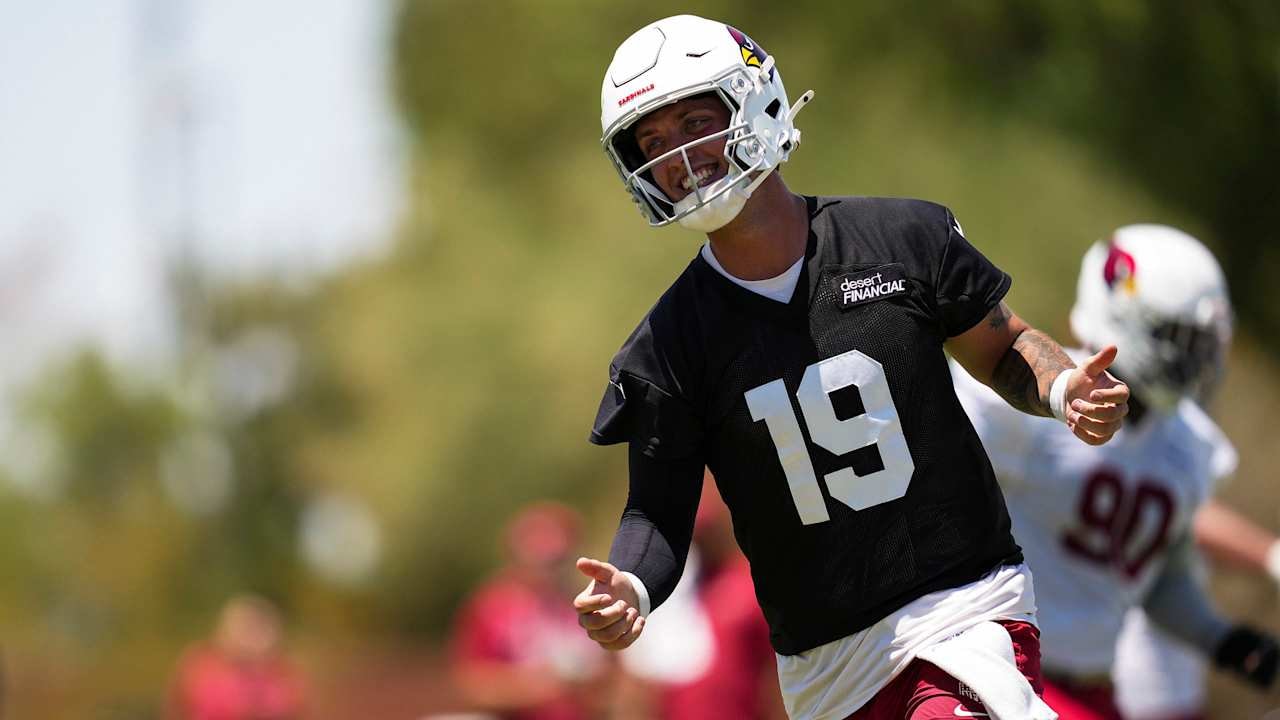
The jersey symbolism added another layer to the story. Beck was assigned No. 19 with the Colts, and the Cardinals team story ties that assignment to his conviction that the Cardinals “have his number” for success. The phrase is informal, but the underlying claim is straightforward: Beck felt from the start that matchups with Arizona would repeatedly stand between him and the breakthrough he wanted.
To understand why a belief like that can become a football narrative, it helps to remember how early career quarterbacks are evaluated in the NFL. Teams test them in practice and preseason, then compress the margin for error once the regular season begins. If a quarterback expects a particular opponent to be unusually difficult, the expectation can shape preparation habits, film study, and how a player handles pressure when a game stops feeling like development and starts feeling like proof.
Beck’s comments also place the Cardinals within a broader draft-night and roster-building context. In 1956, the NFL’s player personnel pipeline was more volatile than it is today, and the story emphasizes the precarious nature of quarterbacks finding their role. Unitas, the figure Beck pointed to as his preferred model, was not in a position of immediate availability. For Beck, that meant his “numbers to study” had to be separated from “numbers on the field,” and he still had to turn the promise of a new career into real production.
There is also a practical, football-mechanics angle to what Beck said, even if the team story does not spell out play-by-play. When quarterbacks believe an opponent has their tendencies pegged, it typically reflects prior experiences like coverage patterns that confuse reads, pressure looks that shrink decision time, or defensive schemes that force uncomfortable throws. Beck’s belief about the Cardinals suggests that he expected at least some of those problems to repeat, which would influence both how he practices and how he processes game-plan adjustments.
For fans, the takeaway is not a score or a roster move, but a lens on how history and competition can attach to one quarterback’s mindset. The Cardinals’ story presents Beck’s draft-night convictions as a starting point for his NFL identity, including the symbolic jersey number and the idea that Arizona’s defense would not be easy to outrun, even when Beck’s preferred template, Unitas, was out of training-camp action. What to watch next is whether Beck’s preparation and public comments over time continue to emphasize that specific Cardinals difficulty, because that is often where the most revealing coaching adjustments show up.
Why It Matters
- Early career quarterback expectations can shape preparation, especially against perceived matchups.
- The Unitas detail highlights how NFL opportunities for mentorship and role models are not always aligned with a player’s timing.
- Jersey assignments and personal narratives can become an organizing theme for how fans and teams interpret a quarterback’s development.
- A belief that one opponent “has your number” often indicates a need for distinct in-game adjustments and faster problem-solving.
Key Facts
- Arizona’s team story says quarterback Carson Beck believed the Cardinals would be a recurring problem for his success.
- The story places Beck’s mindset on draft night in 1956.
- Beck told the story that he preferred Johnny Unitas as a model for quarterback play.
- According to the team story, Unitas was already cut and had not thrown a pass in training camp when Beck signed with the Colts in 1956.
- Beck was assigned jersey No. 19 with the Colts in 1956.