
THE APEX TIMES
Chargers’ left guard rotation continues as Trey Pipkins works in front of Justin Herbert during Day 3 of camp
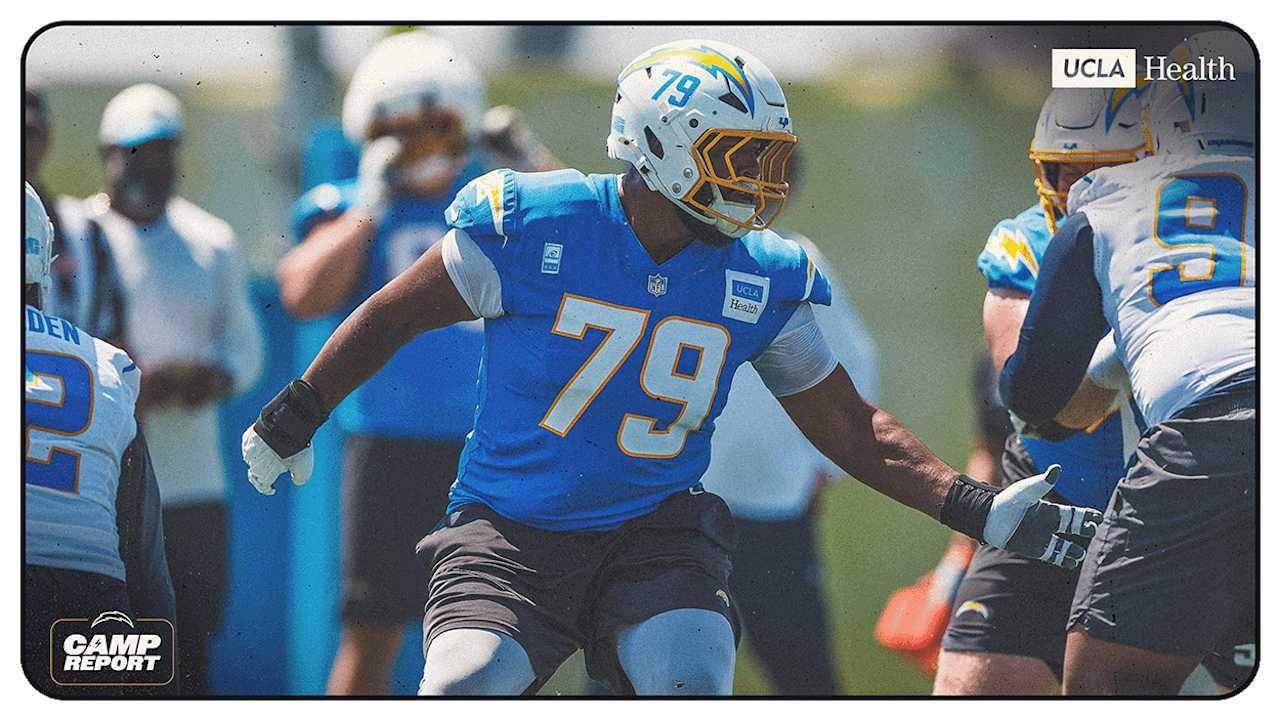
On a lighter, no-pads practice day, Los Angeles kept moving personnel inside the offensive line, with Pipkins the fourth different player used at left guard in front of its quarterback.
The Los Angeles Chargers wrapped up Day 3 of their 2026 training camp session with another look at the interior of the offensive line, continuing an open competition at left guard. According to the team’s official camp report, Trey Pipkins became the fourth player to line up at left guard in front of Justin Herbert during camp.
The practice itself was structured as a lighter day. The team said the third practice lasted about 90 minutes and was conducted without pads, a format commonly used early in camp to emphasize assignments, footwork, and coordination rather than contact. With no pads, repetitions like these tend to matter for timing and communication, particularly for linemen who are learning to coordinate pulls, double-team angles, and pass-protection rules.
Herbert’s presence as the point of reference underscored what the Chargers were focused on during the work at left guard. In the report, the team specifically framed Pipkins’ snaps in that role as happening “in front of” the quarterback, indicating that the staff is evaluating how the left side holds up in coordinated pass sets and protections while they sort through multiple options.
By using Pipkins as the fourth different left-guard option at this stage, the Chargers appear to be treating the role as unsettled and still being defined by who best fits the scheme and the group’s chemistry. In many training-camp contexts, early rotations at a single position are designed to reduce the risk of settling too early, before the coaching staff has enough live work to separate consistency from short-term chemistry.
The report did not provide additional detail on what the rotation looked like beyond the left guard count, nor did it describe specific individual outcomes from Day 3. What it did confirm was that the team’s evaluation process is ongoing and that Pipkins’ turn was part of a broader, deliberate cycle of reps rather than a one-off change.
For Chargers fans, the most practical takeaway from the Day 3 session is that the staff is still chasing the right fit for left guard as camp progresses. That matters because interior line play is central to both the pass rush plan and the run-game identity, and the left guard position often serves as a hinge point in protection calls and run fits.
As the Chargers move deeper into camp, the most important question to watch is whether the rotation narrows after additional practices, particularly once the program shifts further into more contact-heavy periods. If the team continues alternating multiple players at left guard, it would suggest the competition remains close; if it starts to concentrate reps, it would indicate the coaching staff has identified a clearer baseline.
Until then, Day 3’s details point to a simple storyline in camp: another no-pads session, another round of offensive-line evaluation, and Pipkins adding his name to the list of players getting chances at left guard in front of Herbert.
Why It Matters
- Interior protection starts with how the left side communicates and holds up, so an unresolved left guard spot can affect the offense’s early rhythm.
- Rotating multiple linemen in camp suggests the coaching staff is prioritizing evaluation before narrowing roles.
- The quarterback-centered setup of the reps emphasizes how the left guard fit can influence Herbert’s comfort in pass sets.
- If the rotation continues to change, it implies competition remains open; if it stabilizes, it can foreshadow the group the Chargers trust in later camp and preseason prep.
Key Facts
- Trey Pipkins lined up at left guard during Day 3 of the Chargers’ 2026 training camp.
- Pipkins was the fourth different player to take left guard snaps in front of Justin Herbert in camp.
- The Chargers’ third practice lasted about 90 minutes.
- Day 3 practice was conducted without pads.