
THE APEX TIMES
Chiefs defensive unit taking time to sync up, staff says during early August work
Kansas City’s offseason emphasis has brought new wrinkles to both sides of the ball, but reports out of camp suggest the defense is still finding its timing as the season approaches.
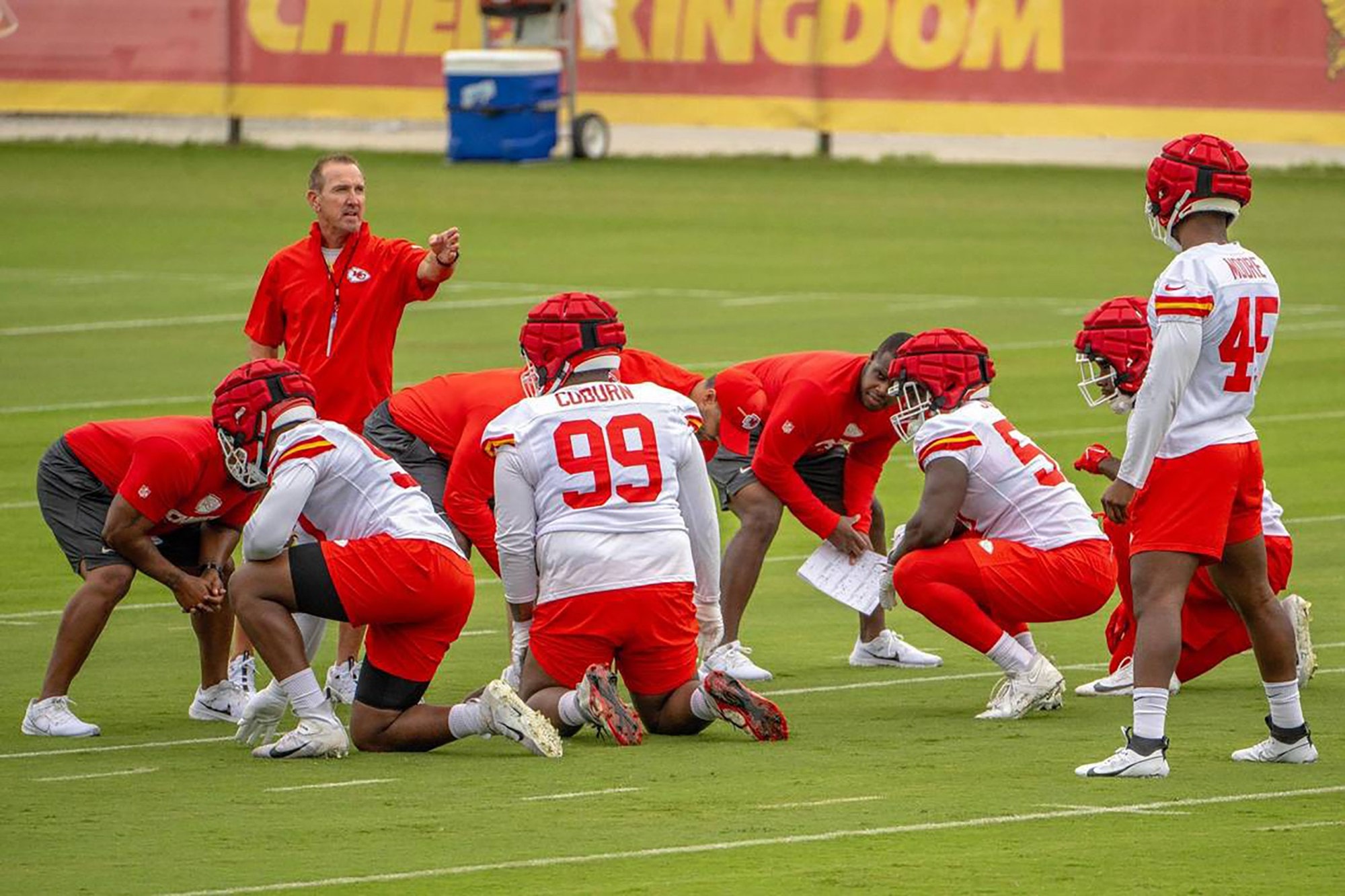
The Kansas City Chiefs’ early camp focus has centered on reshaping how quickly the team plays as a single unit, and the defensive side of the ball is still catching up, according to reporting tied to the team’s preparations. In discussion of training-camp tempo and communication, the theme was that the defense’s synchronization has been “a little slow-moving,” a characterization that points to a group still calibrating responsibilities and reactions rather than simply executing known calls.
The context matters because the Chiefs’ offseason included at least one major shift on offense, with a new offensive coaching staff installed and a new lead running back expected to be central to how Kansas City balances its play-calling. When a team changes who runs the offense and how the ground game is organized, the flow of practice changes as well, particularly for defensive play callers who must anticipate patterns built on new personnel tendencies and scheme preferences.
In practical terms, “syncing up” on defense is usually less about fundamentals and more about speed of decision-making. Coverage rotations, run-fit assignments, third-down checks, and situational audibles are all processes that require repetition. Early in camp, even strong veterans can lose a beat while learning new prompts, mesh points, and the way a defensive coordinator wants the group to distribute leverage or communicate when the offense varies formation and cadence.
For the Chiefs, this is also a time when the regular-season rhythm is being reconstructed. Offensive changes can affect the defense even when the defensive personnel stays stable, because the offense’s personnel packages can alter protections, which can alter defensive pressure timing. A defense that is still getting comfortable with how quickly the offense transitions between looks may be slower to match disguises, and that can show up in walkthroughs and early-team periods as hesitation or misalignment rather than a clean, immediate response.
The reported assessment also suggests a coaching priority for the next phase of camp: tightening the pipeline between what the players are told and what they do at full speed. In training camp, that gap is often bridged through condensed reps, clearer report usage, and repeated third-down and red-zone sequences that force every player to understand not only the call, but the trigger for the call. If the defense is indeed “slow-moving” right now, the immediate watch item is whether practice days begin to show fewer late adjustments and more consistent leverage at the snap.
What to watch next is how quickly Kansas City turns the defensive syncing effort into consistent execution. The most important indicator will be whether communication improves in the situations that tend to expose misreads, such as play-action sequences, condensed formations near the goal line, and third-and-medium or third-and-long scenarios where the offense can force the defense to choose between risk and precision. If the defense keeps progressing, the “slow-moving” phase can become a short-lived camp narrative rather than a recurring limitation.
There is a caveat in interpreting early-August observations. Camp reporting often reflects a specific window of installation, not the full arc of a team’s preparation. Without additional official detail or a broader set of practice reports, the takeaway is best kept narrow: Kansas City’s defensive unit is still finding cohesion in the new environment, and the team’s next steps will likely focus on compressing that learning curve as the preseason and the regular season approach.
Why It Matters
- Defensive cohesion is often measured by speed of recognition and correct leverage, especially on third downs and in compressed spaces.
- When offense personnel and coaching change, the defense must adjust its pre-snap expectations, which can slow execution early in camp.
- If the defense improves quickly, the “slow-moving” label may simply reflect the normal installation curve; if not, it can carry into preseason work.
- Kansas City’s ability to adapt its coverage and run-fit communication will be a key barometer for readiness as the season nears.
Key Facts
- Reporting tied to Kansas City’s training camp indicates the Chiefs’ defense has been “a little slow-moving” in syncing up.
- The early camp discussion is framed against an offseason that included changes to the Chiefs’ offensive coaching staff.
- The Chiefs’ offseason also featured a new lead running back, which can change practice flow and defensive anticipation.
- The situation described points to communication and timing issues rather than a single, specific on-field incident.