
THE APEX TIMES
Chiefs must reshape the receiving rotation after Tyquan Thornton injury timeline
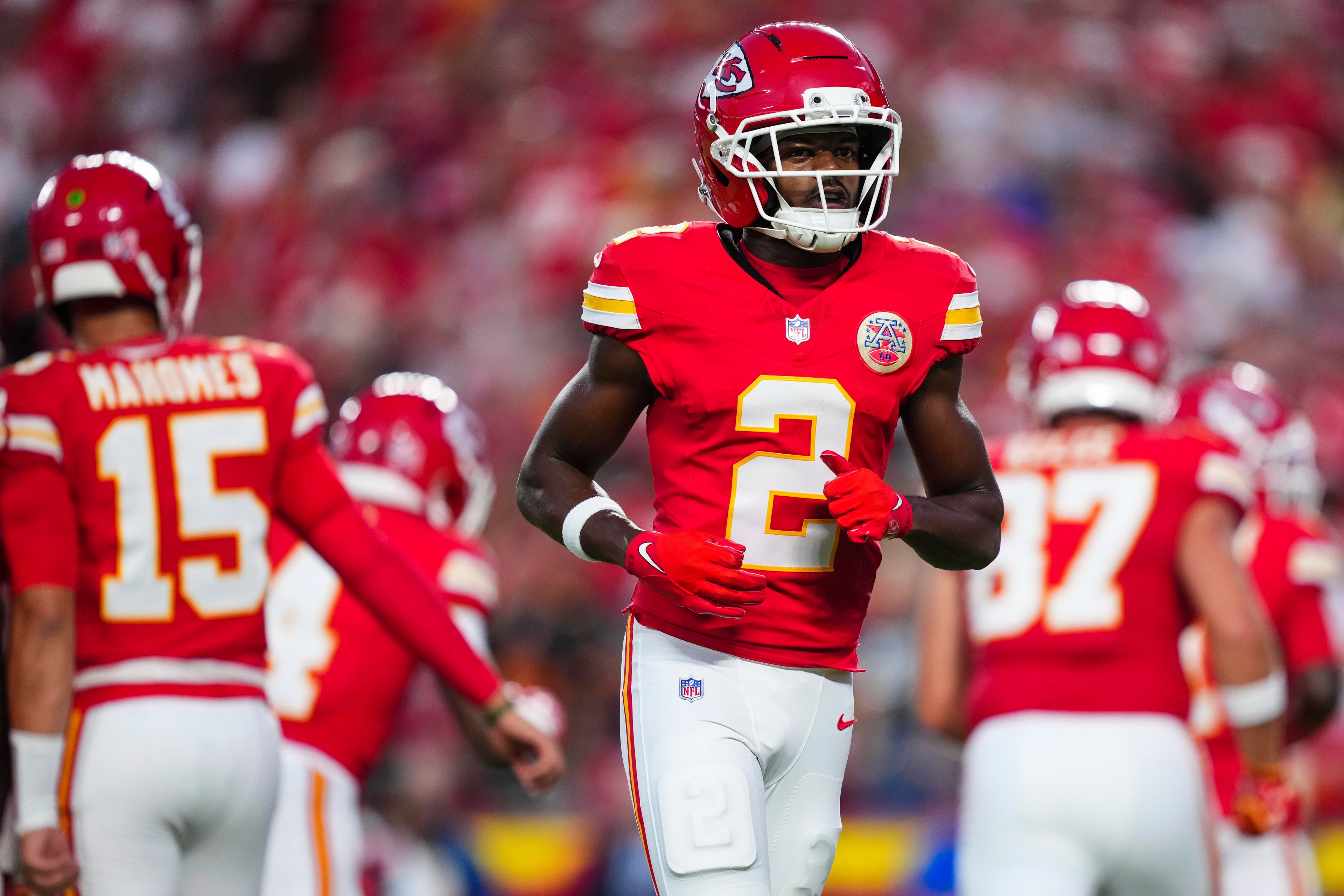
Kansas City will likely lean harder on its remaining wideout depth and tighter pass-game patterns while Tyquan Thornton is expected to miss multiple weeks following an ankle dislocation, according to NFL Network’s Ian Rapoport.
The Kansas City Chiefs face an immediate personnel wrinkle at receiver after wideout Tyquan Thornton suffered an ankle dislocation, a setback that, as NFL Network’s Ian Rapoport reported, carries a projected 12-to-16-week recovery timeline. For an offense built on timing, matchup planning, and the ability to stress coverage across the field, the absence of any rotational piece forces change, even when the overall skill group remains intact.
Thornton’s specific role in Kansas City’s passing game matters less than what his injury removes from the rotation. A player expected to return on a multi-month timetable can alter how often the Chiefs call certain routes, how they distribute snaps between receivers, and which personnel packages become default versus situational. The Chiefs do not have to overhaul their entire identity, but they likely need to re-balance who runs high-leverage concepts and who becomes the primary option by coverage type.
Rapoport’s report, framed around “receiver rotation” rather than a single-player replacement, points to an offense that is still calibrating its best group of pass catchers. When a receiver that had been part of the weekly mix goes out, targets typically do not disappear. They move, usually in two directions: toward teammates who were already earning snaps, and toward players whose roles expand as the team narrows its rotation.
For Kansas City, that expansion can show up in ordinary game-day mechanics. More routes can be added to the “next man up” wideouts, and the tight end or slot opportunities can rise if the offense tries to replace lost spacing with different leverage and route combinations. Even without specific snap or target figures in the available reporting, the logical effect of a prolonged absence is a redistribution of responsibilities across the remaining receiving corps.
The Chiefs’ next weeks will also test how quickly they can match in-game rhythms. Receiver rotation is not only about who is on the roster. It is about who is prepared to execute the timing windows on third downs, who knows the adjustment protections on the move, and who can run reliably through coverage the offense did not originally anticipate pre-snap.
From a broader NFL standpoint, the timing is significant. A 12-to-16-week timeline can span much of the regular season, which means Kansas City may need the rotation to stabilize rather than treat the issue as a short-term patch. In that setting, the coaching staff’s priority typically becomes building continuity with the healthy group, limiting experimental back-and-forth changes that can slow a passing offense’s development.
What to watch next is whether Kansas City’s passing attack begins to show a consistent “second rotation” unit while Thornton is out. If the Chiefs settle on a predictable set of receivers for key downs and red zone possessions, that would suggest the offense is adapting successfully. If, instead, roles continue to fluctuate widely, it may indicate the team is still searching for the most reliable combination of route runners and matchup wins.
For fans and opponents alike, Thornton’s absence becomes a practical scouting variable. Opposing defenses can prepare for the Chiefs’ likely receiver tendencies and personnel groupings, but the Chiefs can still counter with formation changes, shifting who works in the slot, and using the rest of their skill players to create new geometry. The next stretch of games will reveal whether Kansas City’s receiving corps can convert that forced adjustment into steady production rather than a mid-season disruption.
Why It Matters
- A multi-month absence can force an offense to re-structure timing-based route combinations rather than making a quick swap.
- Receiver rotations influence third-down conversion efficiency and red-zone usage, areas where small personnel differences carry large consequences.
- Defenses will have more clarity on how to scheme against Kansas City’s likely receiving packages, increasing the value of consistent replacements.
- The Chiefs’ ability to stabilize roles during Thornton’s absence can affect how smoothly the team maintains offensive rhythm through the playoff stretch.
Key Facts
- Tyquan Thornton suffered an ankle dislocation.
- NFL Network’s Ian Rapoport reported Thornton’s recovery timeline as 12 to 16 weeks.
- The story focuses on how the Chiefs’ receiver rotation could adjust without Thornton.
- The impact is expected to be on Kansas City’s offense moving forward, not only a single game.
- Kansas City will likely redistribute roles among the remaining wide receivers and pass-catching options while Thornton is sidelined.