
THE APEX TIMES
College Football 27 buzz points to a brighter 2026 outlook for BYU, at least in the game’s dynasty mode
A new round of College Football 27 simulations has fans comparing BYU’s roster-and-season projections against the wider college football landscape, turning a fictional ratings exercise into a real conversation about momentum and expectations.
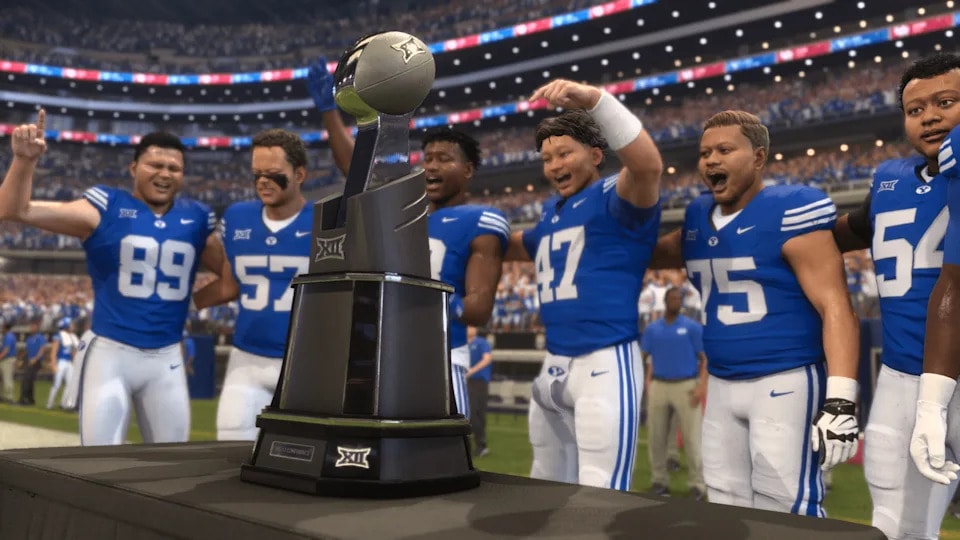
College Football 27 is here, and with it comes the annual ritual of dynasty-mode projection, roster comparison, and “what if” debates that fans typically treat as harmless fun. In a new write-up shared by Yahoo Sports, the focus lands on BYU’s 2026 outlook within the game, framing the Cougars as a team positioned for a particularly strong run rather than a sideline storyline.
The core premise is straightforward: the game’s player and team ratings are, by design, best understood as estimates rather than measurement of real-world form. Still, those ratings become a shorthand for how players and units might stack up when the season is simulated, and that comparison is what drives the conversation. For BYU fans, the appeal is less about literal prediction and more about whether the roster profile inside the game suggests a dynasty path, or at least a season where the Cougars can hang with teams outside their immediate circle.
Within this kind of projection, BYU’s appeal is the same one fans point to in the real sport: a program identity built around recruiting, development, and coherent team-building. In the College Football 27 lens described in the Yahoo Sports piece, BYU’s construction is portrayed as good enough to generate optimism for 2026, even as the article acknowledges that ratings are arbitrary and the comparisons can only be “guesses” in a fictional environment.
That difference matters. When players are rated and outcomes are generated, the results reflect the game’s internal assumptions about talent distribution and performance weighting, not necessarily the actual readiness of any specific real-life athlete at any moment. So while the “rosy run” framing may read like a forecast, it is more accurately a celebration of how the game’s database currently imagines BYU’s ceiling.
If there is a practical takeaway beyond entertainment, it is how fans use simulations to talk through expectations. In the BYU context, supporters often anchor their program hopes to the idea that the team can build momentum over time, refine scheme execution, and show enough consistency to stay relevant in the national picture. A simulation that casts BYU as a high-upside team in 2026 becomes a convenient narrative tool, one that can spark discussion about what fans believe the Cougars need most to sustain success.
Looking ahead, the question for BYU supporters is not whether College Football 27 “gets it right,” but what the enthusiasm says about the fan base’s priorities heading into the 2026 season. Once real-world recruiting, roster turnover, and early-season results begin to clarify the team’s actual trajectory, the game’s dynasty-mode optimism will either look like a fun mirror of the program’s direction or a reminder that fiction is not form.
For now, the best way to read the moment is as an offseason story powered by comparisons and imagination. The Yahoo Sports piece captures that specific tradition, and it gives BYU a starring role in a storyline that begins with the click of a controller and ends, as always, with fans arguing about what “could” happen.
In the weeks after release, expect more cross-team debates as players test different dynasty settings and compare how the game ranks BYU against conference rivals and national contenders. The Cougars’ 2026 storyline in College Football 27 is positioned as an early example of that ongoing, increasingly public imagination cycle. Whether BYU’s real-world season can match that energy is a separate question, one that will have to be answered on the field.
Why It Matters
- For college football fans, video game simulations increasingly shape offseason conversations about team identity and season expectations, even when they are not factual forecasts.
- BYU’s portrayal as a high-upside team in 2026 adds a storyline to the program’s broader recruiting-and-development narrative.
- These debates can influence how fans interpret early news about team-building priorities, even though outcomes must ultimately be confirmed in real games.
- The comparison format also reflects how rivalries and national relevance are discussed year to year, with BYU used as a case study in the game’s “dynasty” framing.
Sources
Key Facts
- Yahoo Sports highlighted a College Football 27 dynasty-mode style discussion focused on BYU’s 2026 outlook.
- The article frames the game’s player ratings as inherently arbitrary and not a factual forecast.
- The appeal for fans is in comparing BYU’s simulated matchups against other teams inside the game’s ecosystem.
- The piece presents BYU as positioned for a particularly strong 2026 run within the game’s assumptions.
- The emphasis is on entertainment and roster-stacking comparison rather than verified real-world prediction.